Continuous Writing
Key Concepts
1. Purpose of Continuous Writing
Continuous Writing in PSLE Paper 1 tests your ability to write a complete, clear and interesting composition. You must:
- answer the topic directly
- develop a full story, not a list of events
- organise ideas clearly
- use accurate grammar, punctuation and spelling
- engage the reader with vivid language
A strong composition is not just about “big words”. It must have:
- a clear plot
- believable characters
- a suitable setting
- a meaningful ending
- accurate language
2. Story Writing Structure
A good narrative has four main parts:
a. Strong opening
Your opening must grab the reader’s attention immediately. Do not waste time with dull introductions such as:
- “One day, I woke up and went to school.”
- “I am going to tell you a story about…”
Use one of these effective openings:
i. In medias res
This means starting in the middle of the action.
Example:
The crash shattered the morning silence, and I froze at the gate, my heart pounding.
Why it works:
- immediate action
- creates suspense
- makes the reader want to know what happened
ii. Dialogue opening
Start with speech to create instant interest.
Example:
“Don’t let go!” my brother shouted as the bicycle wobbled wildly down the slope.
Why it works:
- sounds lively
- introduces conflict quickly
- reveals character naturally
iii. Description opening
Begin with a strong description of the setting or mood.
Example:
Dark clouds swallowed the sky, and the playground, usually filled with laughter, lay silent and empty.
Why it works:
- creates atmosphere
- sets the mood
- prepares the reader for the events ahead
b. Rising action
This is the build-up of the story. A problem appears, and tension grows.
A good rising action:
- introduces the conflict clearly
- adds obstacles or complications
- keeps the story moving
- makes the climax feel important
Example:
I wanted to return the lost wallet, but the only clue was a faded membership card with no phone number.
c. Climax
The climax is the most exciting or important moment in the story. It is where the main problem reaches its peak.
A strong climax:
- is emotionally intense
- is clear and focused
- is not too long
- leads naturally to the ending
Example:
Just as the toddler stepped off the kerb, a car sped round the corner. Without thinking, I lunged forward and pulled him back.
d. Resolution
The resolution is the ending of the story. It shows what happened after the climax and what lesson was learnt.
A strong resolution:
- solves the main problem
- shows the result of the characters’ actions
- links back to the theme
- does not feel rushed
Weak ending:
Then everything was okay. I went home happily.
Strong ending:
As the child’s mother hugged him tightly, relief washed over me. For the first time, I understood that courage does not mean being fearless; it means acting even when you are afraid.
3. Descriptive Writing Techniques
a. Show, don’t tell
Do not simply state feelings or qualities. Show them through actions, expressions, body language and reactions.
Telling:
I was scared.
Showing:
My knees trembled, and my fingers tightened around the railing until my knuckles turned white.
Telling:
She was angry.
Showing:
She slammed her books onto the table and glared at me, her lips pressed into a thin line.
This makes the writing more vivid and helps the reader feel the emotion.
b. Sensory details
Use the five senses to make scenes come alive:
- sight
- sound
- smell
- touch
- taste
Example:
The sharp smell of smoke stung my nose as warm ash floated through the air. In the distance, sirens wailed louder and louder.
Sensory details create realism and atmosphere.
c. Varied sentence structure
Do not write many short, similar sentences in a row.
Weak:
I ran to the hall. I opened the door. I saw my friend. He was crying. I felt worried.
Better:
I ran to the hall and pushed the door open. There, in the far corner, sat my friend, his shoulders shaking as he cried. A wave of worry swept over me.
Use:
- short sentences for tension
- longer sentences for description
- sentence fragments sparingly for effect
Example:
The footsteps grew louder. Closer. Closer.
4. Character Development
A good story includes believable characters. Do not only describe them using labels such as “kind”, “brave” or “selfish”. Prove these qualities through what they do and say.
Reveal character through action
Instead of:
Amir was kind.
Write:
Amir took off his own raincoat and draped it over the shivering puppy.
Reveal character through dialogue
Instead of:
Mei Lin was responsible.
Write:
“You two go ahead,” Mei Lin said, glancing at the overflowing dustbins. “I promised Mr Tan I’d help clean up.”
Reveal character through thoughts and reactions
Example:
I wanted to pretend I had not seen the old man struggling with his bags, but guilt tugged at me. I turned back.
This shows an internal conflict and makes the character more realistic.
5. Setting Descriptions That Create Mood and Atmosphere
The setting is where and when the story happens. A strong setting does more than tell the place. It creates mood.
Mood examples:
- cheerful
- tense
- lonely
- frightening
- peaceful
- mysterious
How to create mood:
- choose specific details
- use sensory description
- match the setting to the emotion of the scene
Cheerful setting:
Sunlight spilled across the field, and the air rang with the shrieks of children chasing one another.
Tense setting:
The corridor was dim and silent, except for the steady drip of water from a leaking pipe.
A setting should support the story. If the story is about fear or danger, the description should build suspense. If the story is about friendship or hope, the setting may feel warmer and brighter.
6. Vocabulary for Narrative Writing
a. Precise verbs
Precise verbs are stronger than weak, general verbs.
Weak verb:
- went
Precise verbs:
- hurried
- dashed
- crept
- stumbled
- marched
- drifted
Weak verb:
- said
Precise verbs:
- whispered
- muttered
- exclaimed
- snapped
- pleaded
- replied
Strong verbs make writing clearer and more vivid.
b. Vivid adjectives
Use adjectives carefully. One precise adjective is better than many ordinary ones.
Weak:
a nice day
Better:
a breezy morning
Weak:
a bad smell
Better:
a foul smell
Do not overload every noun with adjectives. Choose only the most effective ones.
c. Sentence openers
Vary the way your sentences begin.
Instead of always starting with “I”, try:
- Without warning, …
- A moment later, …
- To my horror, …
- Across the road, …
- Clutching the envelope, …
- Although I was nervous, …
- As the rain poured down, …
Varied sentence openers improve fluency and style.
7. Common Topics Tested
PSLE Continuous Writing often focuses on everyday themes that allow you to show values and personal growth.
a. Friendship
Stories may involve:
- misunderstanding and forgiveness
- helping a friend
- loyalty
- learning to trust
b. Perseverance
Stories may involve:
- failing at first
- practising hard
- not giving up
- succeeding after effort
c. Helping others
Stories may involve:
- assisting an elderly person
- returning a lost item
- standing up for someone
- helping in an emergency
d. Unexpected events
Stories may involve:
- sudden accidents
- getting lost
- surprise encounters
- a problem appearing at the worst moment
e. Lessons learned
Stories often end with a lesson such as:
- honesty matters
- kindness has impact
- courage can be quiet
- actions have consequences
- teamwork is important
Your lesson must grow naturally from the events. Do not suddenly force a moral at the end.
8. Timed Writing Strategy
For Continuous Writing in Paper 1 (1 hour 10 minutes total for the whole paper), aim for approximately 40-45 minutes on your composition. Use time wisely:
Planning: 5 minutes
You must plan before writing. A short plan prevents weak plots and rushed endings.
In 5 minutes:
- choose the question carefully
- identify the key theme
- decide the main conflict
- plan opening, rising action, climax and resolution
- choose the lesson or final message
Writing: 60 minutes
While writing:
- follow your plan
- keep the story focused
- spend most effort on the key scenes
- develop the climax properly
- leave enough time for the ending
Suggested flow:
- Opening: 1 paragraph
- Rising action: 2 paragraphs
- Climax: 1–2 paragraphs
- Resolution: 1 paragraph
Checking: 10 minutes
In the final 10 minutes, check:
- tense consistency
- spelling
- punctuation
- paragraphing
- missing words
- repeated words
- whether the ending matches the story
9. Common Writing Conventions
Use one clear tense
Narrative compositions are usually written in the past tense.
Correct:
I walked to the bus stop and noticed a wallet on the bench.
Incorrect:
I walked to the bus stop and notice a wallet on the bench.
Do not shift tense unless there is a clear reason, such as dialogue or a general truth.
Use clear paragraphing
Start a new paragraph when:
- a new event begins
- the setting changes
- a different person speaks
- the focus shifts
Use dialogue correctly
Correct:
“I’m sorry,” Ben murmured, lowering his head.
Rules:
- begin speech with a capital letter
- put spoken words inside inverted commas
- use a comma before the closing inverted comma if a reporting clause follows
- start a new paragraph for a new speaker
10. Do Not Write a Plot Summary
A composition must feel like a real story unfolding. It must not sound like notes.
Plot summary:
First, I saw a boy crying. Next, I helped him. Then, we found his mother. Finally, he thanked me.
Story:
A soft sob caught my attention. Near the information counter stood a little boy, tears rolling down his cheeks as he clutched a crumpled toy car. I hesitated for a moment before walking towards him.
The second version is better because it includes scene, emotion and action.
Important Definitions
- Continuous Writing: a full composition in which ideas are connected smoothly from beginning to end.
- Narrative: a story with characters, events, conflict and resolution.
- Opening: the beginning of the composition that introduces action, mood or situation.
- In medias res: starting a story in the middle of the action.
- Dialogue: spoken words written in inverted commas.
- Description: language that helps the reader imagine people, places and events clearly.
- Rising action: the part of the story where tension or conflict builds up.
- Climax: the most intense or important part of the story.
- Resolution: the ending where the problem is solved and the story is completed.
- Conflict: the main problem, struggle or challenge in the story.
- Character development: showing what a character is like through actions, speech, thoughts and choices.
- Setting: the time and place where the story happens.
- Mood: the feeling created in the reader, such as fear, joy or suspense.
- Atmosphere: the overall emotional effect created by the setting and description.
- Show, don’t tell: a technique where feelings or qualities are revealed through action and detail instead of direct statements.
- Sensory details: details linked to sight, sound, smell, touch and taste.
- Sentence structure: the way words and clauses are arranged in a sentence.
- Varied sentence structure: using different sentence lengths and patterns to make writing more effective.
- Precise verbs: strong, exact action words that create a clear picture.
- Vivid adjectives: descriptive words that give specific and lively detail.
- Sentence opener: the word or phrase at the beginning of a sentence.
- Past tense: a verb form used to describe actions that already happened.
- Consistency of tense: keeping the same tense throughout the story unless there is a clear reason to change it.
- Paragraphing: dividing writing into separate sections to organise ideas clearly.
- Plot summary: a brief listing of events without full development, description or emotion.
- Theme: the central idea in a story, such as friendship, honesty or perseverance.
- Moral: the lesson learnt from the events of the story.
Worked Examples
Worked Example 1: Friendship and misunderstanding
Exam-style topic
Write about a time when a misunderstanding nearly ruined a friendship.
Step 1: Plan the story
- Theme: friendship
- Main characters: narrator and best friend, Daniel
- Problem: narrator thinks Daniel shared a secret
- Climax: narrator confronts Daniel angrily
- Resolution: truth comes out; another classmate was responsible
- Lesson: trust and honest communication matter
Step 2: Build the structure
- Opening: dialogue opening
- Rising action: narrator hears classmates gossiping
- Climax: heated confrontation
- Resolution: apology and stronger friendship
Step 3: Model composition
“I can’t believe you told them!” I burst out, my voice echoing across the empty classroom.
Daniel stared at me, stunned. “What are you talking about?”
I clenched my fists. All morning, my classmates had been whispering about the drawing competition I had secretly entered. I had told only one person about it—Daniel. To me, the answer was obvious.
“Don’t pretend,” I snapped. “You were the only one who knew!”
Hurt flashed across his face. “I didn’t tell anyone.”
I turned away, too angry to listen. During recess, I sat alone, replaying every moment in my head. The laughter around me seemed distant. All I could think about was the sting of betrayal.
Just then, Sarah hurried over. “I need to apologise,” she said, twisting her fingers nervously. “Yesterday, I saw your sketchbook on your desk. I told a few people because I thought your drawings were amazing. I didn’t mean to upset you.”
My heart sank. A hot wave of shame washed over me. Daniel had been telling the truth all along.
I found him at the basketball court, shooting hoops by himself. For a moment, I could not speak. Then I forced the words out. “Daniel, I’m really sorry. I blamed you without even listening.”
He caught the ball and looked at me quietly. “That really hurt,” he said, “but I’m glad you came.”
“Can you forgive me?” I asked.
After a pause, he nodded. Relief flooded through me.
As we walked back to class together, I learnt a lesson I would never forget: a strong friendship needs trust, but it also needs the courage to listen before jumping to conclusions.
Step 4: Why this works
- Strong opening: starts with conflict through dialogue
- Character development: narrator’s anger and regret are shown through actions and thoughts
- Climax: emotional confrontation
- Resolution: believable and meaningful
- Lesson: grows naturally from the story
Worked Example 2: Helping others in an unexpected event
Exam-style topic
Write about an unexpected event during which you helped someone.
Step 1: Plan the story
- Theme: helping others
- Setting: crowded wet market on a rainy morning
- Problem: elderly woman slips and drops her groceries
- Climax: narrator notices she is in danger near moving vehicles
- Resolution: narrator helps her to safety and contacts her daughter
- Lesson: small acts of kindness matter
Step 2: Language goals
- use sensory details
- use precise verbs
- create a tense atmosphere
Step 3: Model composition
Rain hammered against the awnings of the wet market, drowning out the chatter of shoppers. The slippery floor gleamed under the harsh lights, and the air was thick with the smell of fish, vegetables and damp cardboard.
Clutching a bag of oranges, I weaved through the crowd behind my mother when a sudden cry made me spin around. An elderly woman had slipped near the entrance. Her groceries rolled in every direction—tomatoes burst open, spring onions scattered, and a carton of eggs cracked on the ground.
Most people glanced at her and moved on. For a second, I hesitated. Then I rushed over.
“Are you hurt?” I asked, kneeling beside her.
She winced as she tried to sit up. “I’m all right,” she murmured, though her trembling hands said otherwise.
I helped her to a bench near the entrance and gathered the remaining groceries. Just as I bent to pick up a can, my blood ran cold. Her walking stick had rolled off the kerb and onto the road outside, where delivery vans were pulling in.
Without it, she would not be able to walk properly.
Before I could think twice, I dashed forwards, keeping close to the side. A van rumbled towards the loading bay. My heart pounded wildly as I snatched up the walking stick and leapt back onto the pavement.
“That was dangerous!” my mother exclaimed, hurrying over.
I handed the stick to the old woman, who gripped it tightly. Tears shimmered in her eyes. “Thank you,” she whispered. “I was on my way home, but I must have lost my footing.”
We found her daughter’s number in her phone and called for help. While waiting, I bought her a bottle of water and stayed by her side. When her daughter arrived, she bowed repeatedly, gratitude written all over her face.
As we finally left the market, the rain had softened to a gentle drizzle. I looked back at the old woman, now smiling weakly beside her daughter, and felt a quiet warmth spread through me. That day, I realised that kindness is often needed most in the middle of ordinary moments.
Step 4: Why this works
- Setting creates mood: rain, slippery floor, noisy market
- Show, don’t tell: fear is shown by “my blood ran cold” and “my heart pounded”
- Clear climax: retrieving the walking stick near moving vehicles
- Resolution: complete and satisfying
Worked Example 3: Perseverance
Exam-style topic
Write about a time when you wanted to give up but did not.
Step 1: Plan the story
- Theme: perseverance
- Situation: school relay race selection
- Problem: narrator keeps failing baton exchange practice
- Climax: final selection trial
- Resolution: narrator remains calm, succeeds, gets selected
- Lesson: improvement comes through persistence
Step 2: Model composition
The baton slipped from my fingers for the third time and clattered onto the track. Groans rose from my teammates. Heat rushed to my face as I bent to pick it up.
“Again,” Mr Lim called from the sidelines, his voice firm but calm.
I nodded, though discouragement weighed heavily on me. For the past week, I had stayed back every afternoon for relay practice, yet I still could not master the baton exchange. Each failure chipped away at my confidence.
During water break, I sank onto the bench. “Maybe I’m just not meant for this,” I muttered.
My friend Jia Yi sat beside me. “You’ve improved,” she said. “You only notice your mistakes because you care so much.”
Her words stayed with me. Instead of giving up, I spent that evening practising my hand position in front of a mirror and visualising the exchange again and again.
The next day was the final trial. If I failed, I would not make the team. As I stood on the track, the baton felt unusually heavy in my hand. My mouth was dry, and my stomach twisted into knots.
“Ready!” Mr Lim shouted.
We sprang forwards. My legs pumped hard as I approached Jia Yi. “Hand!” she called.
This was the moment that had defeated me so many times before. I forced myself to stay calm. Reaching out steadily, I placed the baton into her waiting palm. Smooth. Clean. Perfect.
She shot ahead, and seconds later, our team crossed the finish line.
“Well done,” Mr Lim said, a rare smile appearing on his face. “You earned your place.”
Relief and joy flooded through me. All the frustration of the past week seemed to melt away. At that moment, I understood that perseverance does not mean never failing. It means refusing to let failure have the final word.
Step 3: Why this works
- Strong opening: begins at a moment of failure
- Rising action: repeated setbacks build tension
- Climax: final baton exchange
- Theme: perseverance is clearly shown through effort, not just stated
Worked Example 4: Unexpected event and lesson learnt
Exam-style topic
Write about an unexpected event that taught you an important lesson.
Step 1: Plan the story
- Theme: honesty and responsibility
- Setting: library
- Problem: narrator accidentally damages a book
- Climax: narrator must decide whether to hide the truth
- Resolution: narrator admits mistake and learns from it
Step 2: Model composition
The tearing sound was soft, but to me, it was as loud as thunder.
I stared in horror at the library book in my hands. A page had ripped near the corner while I was trying to turn it too quickly. For a few seconds, I could not move. My only thought was simple and terrible: What if I get into trouble?
The library was unusually quiet that afternoon. Rows of shelves stood around me like silent judges. Even the air-conditioning seemed to hum accusingly.
I slipped the torn page back into place and glanced around. No one had seen me. I could easily return the book and walk away.
My feet carried me towards the returns counter, but each step felt heavier than the last. Guilt gnawed at me. If someone else borrowed the book later, the blame might fall on that person instead.
I stopped. Taking a deep breath, I turned and walked to the librarian’s desk.
“Excuse me,” I said quietly, placing the book down. “I accidentally tore this page. I’m very sorry.”
The librarian adjusted her glasses and examined the damage. I braced myself for a scolding. Instead, she looked up and said, “Thank you for being honest. Accidents happen. We’ll help you report it properly.”
My shoulders loosened at once. She explained the procedure and reminded me to handle books more carefully. I apologised again and paid for the damage.
As I left the library, the fear that had gripped me earlier was gone. In its place was something steadier—relief, and a quiet sense of pride. That day, I learnt that admitting a mistake may feel frightening at first, but honesty always leaves you lighter than a lie.
Step 3: Why this works
- Description creates atmosphere: quiet library feels tense
- Character development: inner struggle shows growth
- Lesson: honesty emerges naturally from the event
- Resolution: complete and realistic
Common Mistakes to Avoid
11. Writing a plot summary instead of a story
✗ Wrong:
First, I went to the park. Then I saw a boy fall down. Next, I helped him. After that, his mother came. Finally, I went home.
✓ Correct:
As I was cutting through the park, a sharp cry pierced the air. I turned and saw a small boy sprawled on the ground, his bicycle tipped over beside him. Tears streamed down his face as he clutched his knee.
Why it is wrong:
The wrong version only lists events. It does not create a scene, mood or emotional impact.
12. Rushed endings
✗ Wrong:
Then the teacher came and solved everything. I was happy. The end.
✓ Correct:
When the teacher finally arrived, she listened carefully and helped us clear up the misunderstanding. As I apologised to my friend, I realised how quickly careless words can hurt someone.
Why it is wrong:
The ending must resolve the main conflict properly and show the result or lesson. A sudden ending feels incomplete.
13. Inconsistent tense
✗ Wrong:
I walked into the hall and see my friend crying.
✓ Correct:
I walked into the hall and saw my friend crying.
Why it is wrong:
A story written in the past tense must stay in the past tense unless there is a clear reason to change.
14. Telling instead of showing
✗ Wrong:
I was nervous during the competition.
✓ Correct:
My palms were sweaty, and my stomach twisted into knots as I waited for my turn.
Why it is wrong:
The corrected version helps the reader feel the emotion instead of simply being told.
15. Flat character description
✗ Wrong:
Ben was kind and helpful.
✓ Correct:
Ben noticed the cleaner struggling with a heavy pail and immediately rushed over to help her carry it up the stairs.
Why it is wrong:
A character should be revealed through behaviour, not labels alone.
16. Overusing weak verbs
✗ Wrong:
I went to the gate and said to my mother that I was scared.
✓ Correct:
I crept towards the gate and whispered to my mother that I was afraid.
Why it is wrong:
Precise verbs make the scene more vivid and accurate.
17. Repeating the same sentence opener
✗ Wrong:
I ran to the bus stop. I looked behind me. I saw the bus arriving. I waved my hand.
✓ Correct:
I ran to the bus stop. To my dismay, the bus was already pulling in. Waving my hand desperately, I sprinted the last few steps.
Why it is wrong:
Repeated sentence openings make the writing dull and mechanical.
18. Unrealistic events or exaggerated heroism
✗ Wrong:
I jumped in front of the train, stopped it with my hands and saved everyone.
✓ Correct:
I quickly alerted the station staff when I noticed an elderly man collapse near the platform edge.
Why it is wrong:
PSLE compositions should be believable. Realistic actions are more effective and mature.
19. Weak or irrelevant opening
✗ Wrong:
My name is Ali. I am twelve years old. I study in Primary 6.
✓ Correct:
“Move aside!” someone yelled, just as a football came flying straight towards me.
Why it is wrong:
The first version wastes time and does not engage the reader.
20. Dialogue punctuation errors
✗ Wrong:
“I am sorry” he said.
✓ Correct:
“I am sorry,” he said.
Why it is wrong:
Dialogue must be punctuated correctly. The comma is needed before the reporting clause.
Exam Tips
21. Exact PSLE mark allocation
PSLE Paper 1 (Writing) is worth 50 marks in total (25% of the overall English score), to be completed in 1 hour 10 minutes:
- Situational Writing: 14 marks
- Continuous Writing: 36 marks
Continuous Writing is worth 36 marks. This means it carries significantly more weight than Situational Writing, so you must manage time carefully and produce a complete, developed composition.
22. Time management for Paper 1
Paper 1 lasts 1 hour 10 minutes.
A strong time plan (Paper 1 is 1 hour 10 minutes = 70 minutes total):
- Situational Writing: 25 minutes
- Continuous Writing: 40 minutes
- Buffer / review: 5 minutes
Within those 40 minutes for Continuous Writing:
- Planning: 5 minutes
- Writing: 30 minutes
- Checking: 5 minutes
You must not spend too long choosing a topic. Decide quickly and commit to one clear idea.
23. Choose the question wisely
Pick the topic that allows you to:
- think of a clear plot quickly
- include a believable conflict
- show feelings and character growth
- end with a meaningful resolution
Do not choose a topic just because it seems exciting. Choose the one you can develop best.
24. Use the given topic closely
Every part of your story must connect to the question.
If the topic is about perseverance, your story must show:
- difficulty
- effort
- not giving up
- a result or lesson
If the topic is about helping others, the help must be central, not a small side detail.
25. Keywords that score
Examiners reward writing that is:
- relevant
- clear
- well-organised
- vivid
- accurate
- engaging
High-scoring compositions usually include:
- a strong opening
- focused development
- a clear climax
- a complete resolution
- realistic characters
- varied vocabulary
- correct grammar and punctuation
26. Plan before writing
A simple plan is enough. Write:
- characters
- setting
- problem
- climax
- ending
- lesson
This prevents:
- wandering plots
- repeated ideas
- sudden endings
- forgetting the main theme
27. Keep the plot simple but well developed
A simple story written well scores better than a complicated story written badly.
Good PSLE plot:
- one main problem
- one important turning point
- one clear lesson
Weak PSLE plot:
- too many characters
- too many unrelated events
- dramatic but unrealistic twists
28. Use paragraphs purposefully
A clear paragraph structure improves organisation.
Suggested structure:
- Opening
- Problem begins
- Tension builds
- Climax
- Resolution and lesson
29. Leave time to check
In the last 5 minutes, check for:
- missing punctuation
- spelling mistakes
- wrong tense
- repeated words
- awkward sentences
- incomplete ending
- whether you answered the question directly
30. Write legibly and neatly
If the examiner cannot read a word clearly, you may lose credit for language accuracy. Handwriting must be neat enough to be read easily.
Quick Summary
- Continuous Writing in PSLE Paper 1 is worth 36 marks (Paper 1 total = 50 marks).
- Use a clear story structure: opening, rising action, climax, resolution.
- Start strongly with in medias res, dialogue or description.
- Build tension in the rising action before reaching the climax.
- End properly with a full resolution; never rush the ending.
- Use show, don’t tell to reveal feelings and character.
- Include sensory details to make the setting vivid and create mood.
- Reveal character through actions, dialogue and thoughts, not labels alone.
- Choose precise verbs, vivid adjectives and varied sentence openers.
- Common PSLE themes include friendship, perseverance, helping others, unexpected events and lessons learned.
- Manage time strictly: 5 minutes planning, 30 minutes writing, 5 minutes checking (Paper 1 is 1h10m total).
- Avoid common errors such as plot summaries, inconsistent tense, weak openings and flat endings.
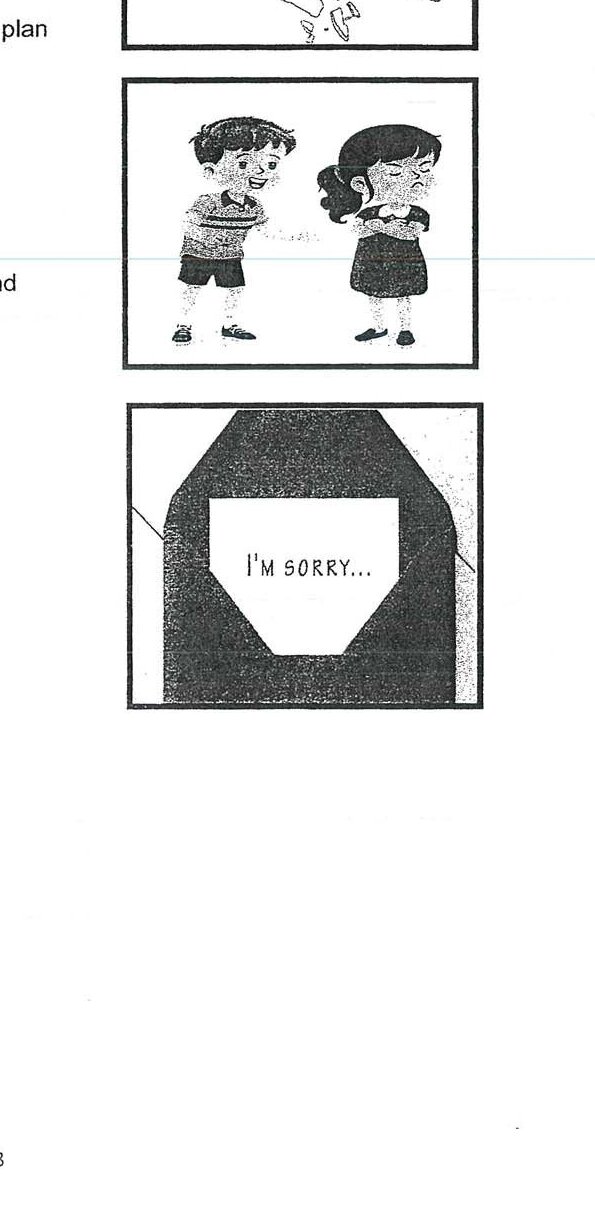
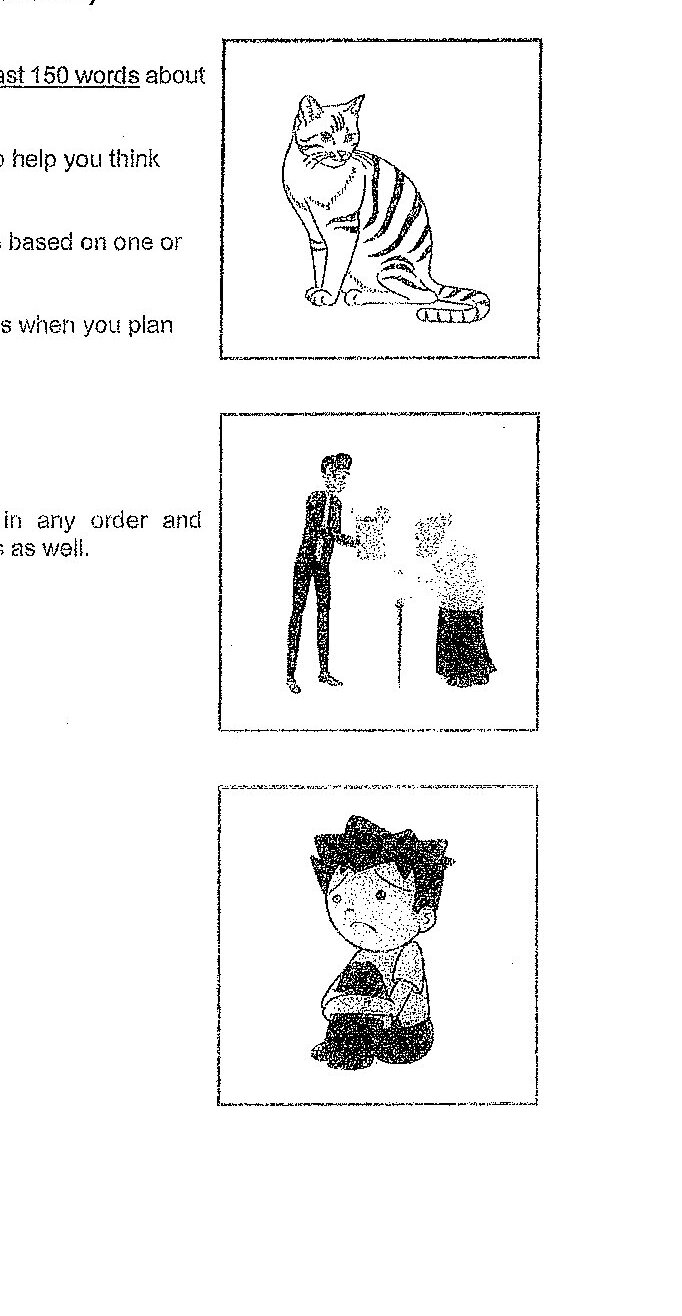
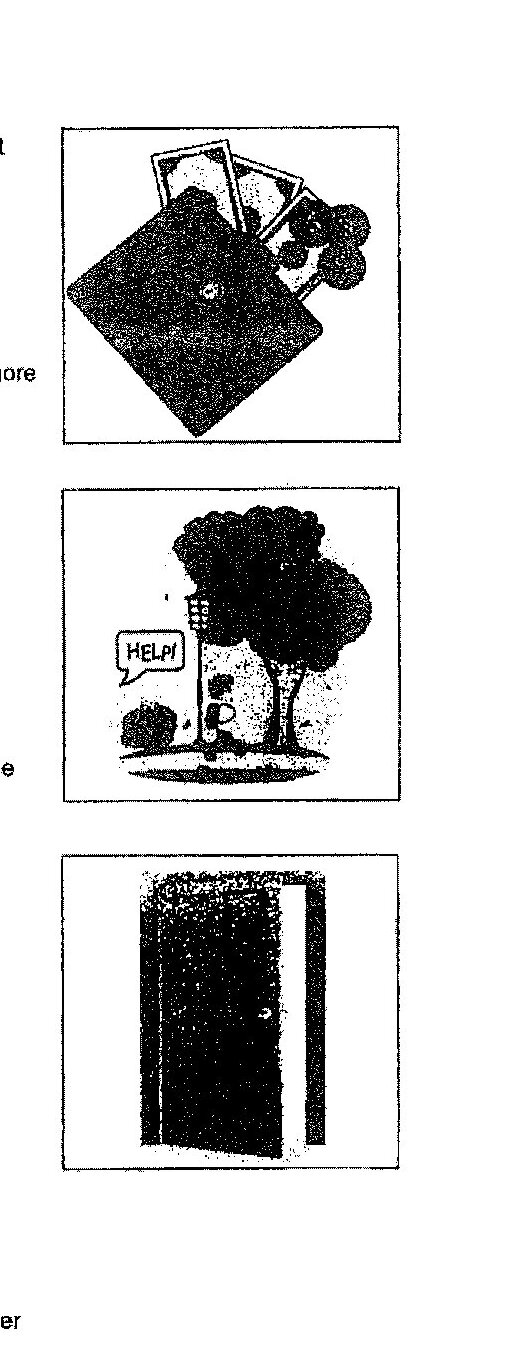
Write a composition of at least 150 words about forgiveness. The pictures are provided to help you think about this topic. Your composition should be based on one or more of these pictures. Consider the following points when you plan your composition: - Why was forgiveness needed? - Was the forgiveness given? You may use the points in any order and include other relevant points as well.
The image of my frail grandmother in the hospital appeared vividly in my head. I had promised Grandmother that I would give this game my best shot.
The crowd roared the moment I stepped onto the court. As I raised my racket, the roar increased in intensity, and I relished the moment. Soon the game began and I started off reasonably well.
However, my opponent Kyle was considered by many to be a fearsome force. Each time he hit the ball, it bolted towards me like a bullet.
Unfortunately, I hit the ball at the wrong angle several times and it landed outside the court. I soon realised that I was losing the game. I was worried that this loss would have an enduring impact on me.
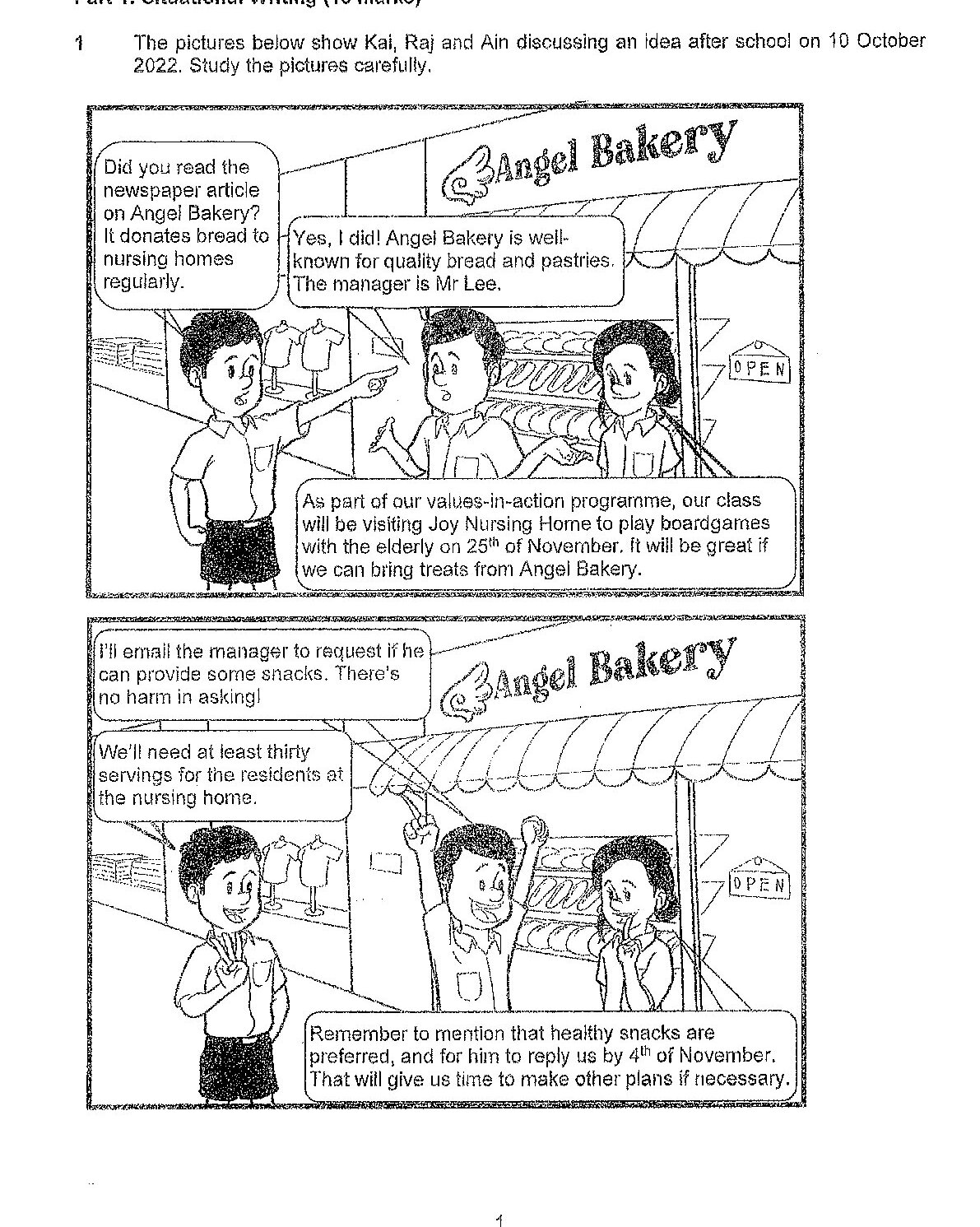
The pictures below show Kai, Raj and Ain discussing an idea after school on 10 October 2022. Study the pictures carefully.
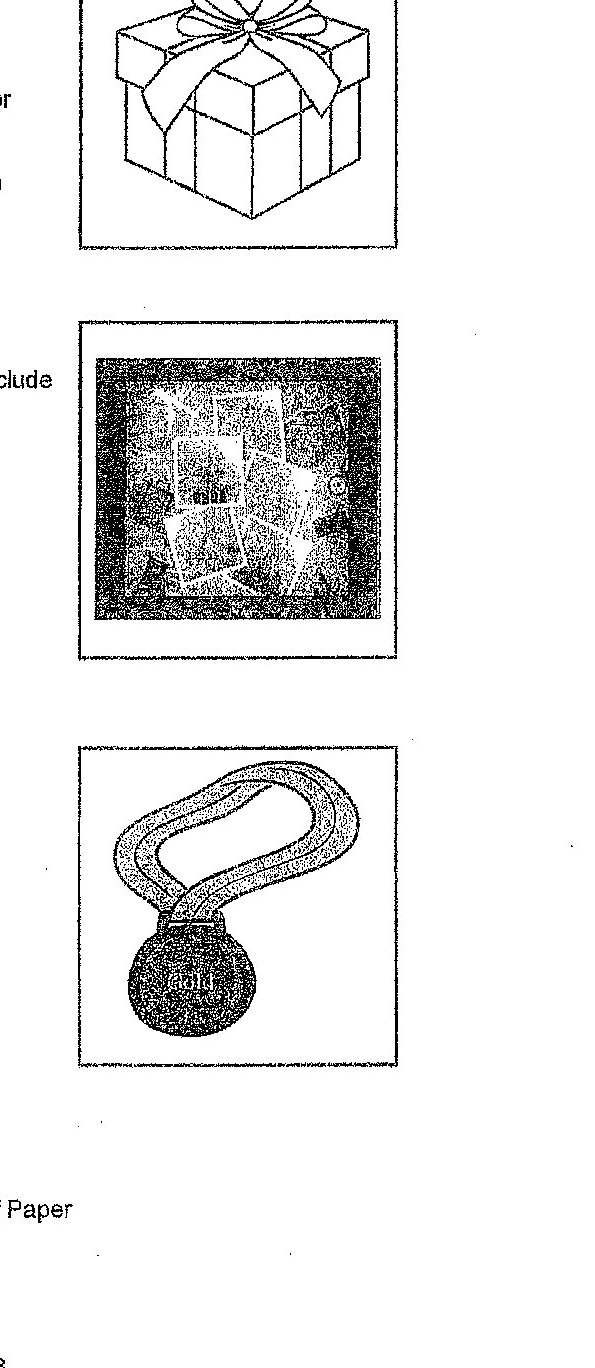
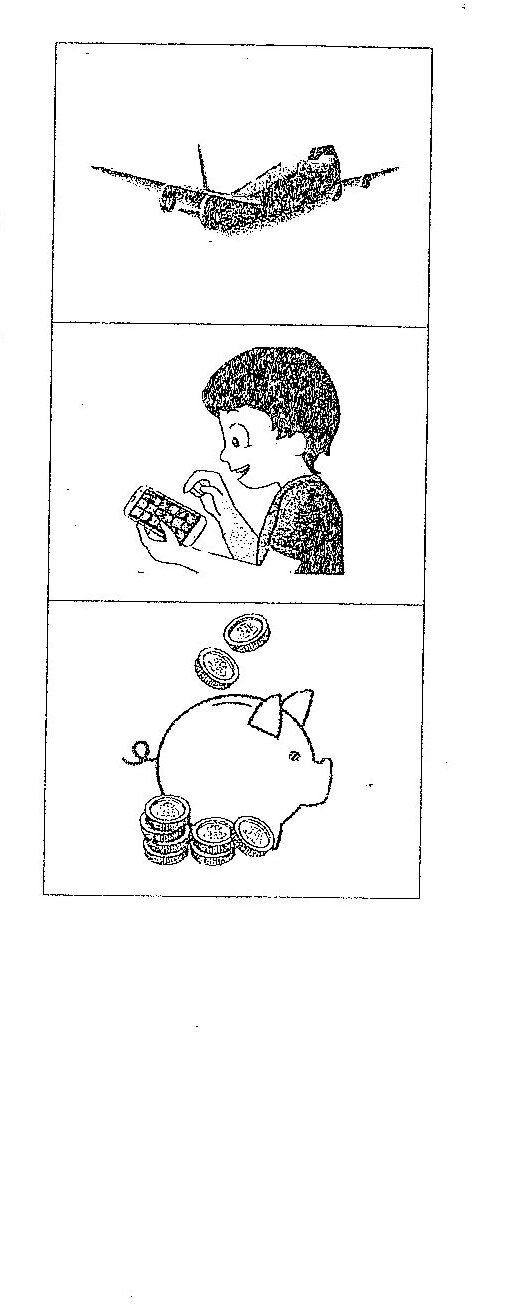
Write a composition of at least 150 words about something precious. The pictures are provided to help you think about this topic. Your composition should be based on one or more of these pictures. Consider the following points when you plan your composition: • What was precious? • Why was it precious? You may use the points in any order and include other relevant points as well.
At once, it scampered to the front of the class and squeaked. Stupefied to see the mouse, Mrs Chan screamed. The whole class roared with laughter. (18)
Unamused, she declared angrily, "If no one admits to playing this trick, I shall punish the whole class!" (19)
As soon as the class heard that, they stopped laughing and turned to look at Max, expecting him to own up. Max knew that he was in hot soup. (20)
Write a composition of at least 150 words about feeling grateful. The pictures are provided to help you think about this topic. Your composition should be based on one or more of these pictures. Consider the following points when you plan your composition: • Who was grateful? • Why was the person feeling grateful? You may use the points in any order and include other relevant points as well.
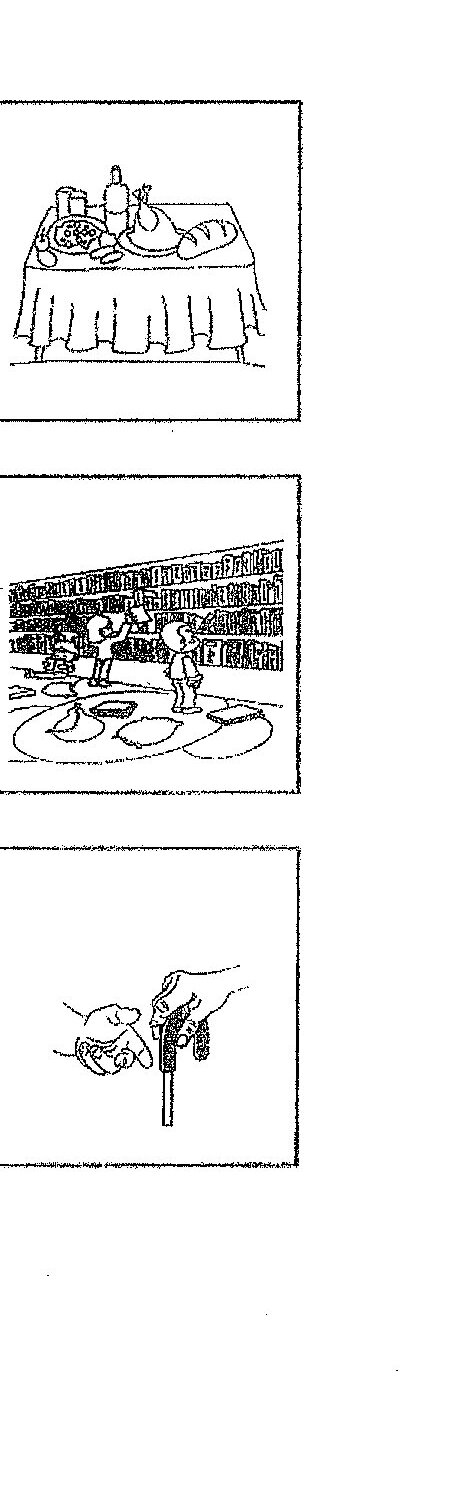
Write a composition of at least 150 words about an unexpected discovery. The pictures are provided to help you think about the topic. Your composition should be based on one or more of these pictures. Consider the following points when you plan your composition: - What was the unexpected discovery? - Why was it an unexpected discovery? You may use the points in any order and include other relevant points as well.
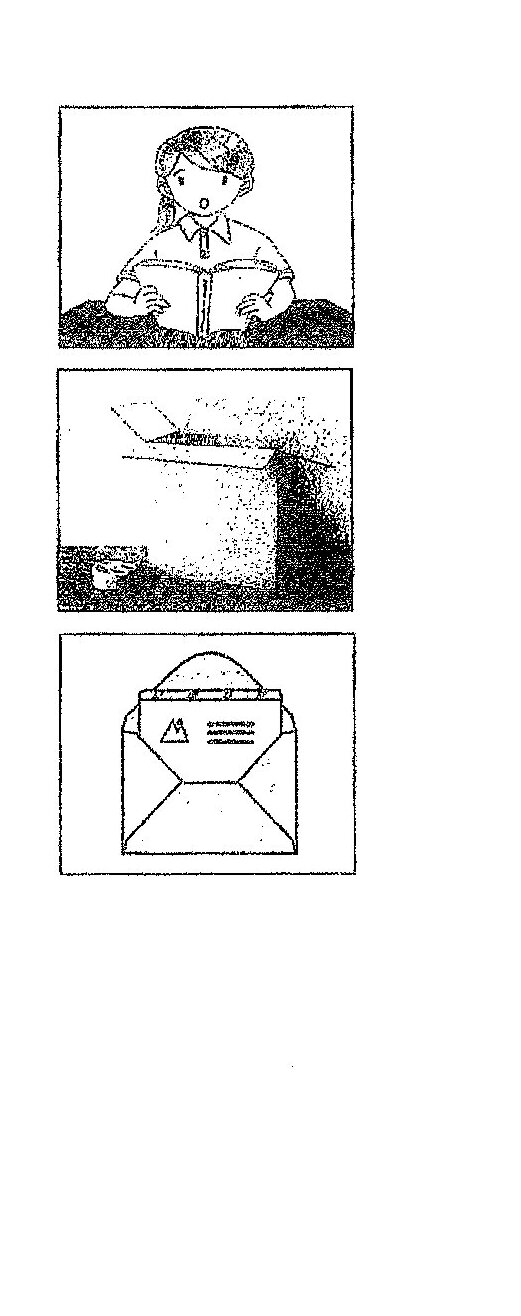
Write a composition of at least 150 words about a thoughtful act. This pictures are provided to help you think about this topic. Your composition should be based on one or more of these pictures. Consider the following points when you plan your composition: - What was the act? - Why was it thoughtful? You may use the points in any order and include other relevant points as well.
Write a composition of at least 150 words about something that was forgotten. The pictures are provided to help you think about this topic. Your composition should be based on one or more of these pictures. Consider the following points when you plan your composition: • Why did you forget it? • What happened in the end? You may use the points in any order and include other relevant points as well.
Walking in the garden, a man found a cocoon of a butterfly. He noticed a small opening appear in the cocoon. He watched the butterfly struggle to force its body through it. Eventually, the butterfly stopped making progress. Deciding to help the butterfly, he took a pair of scissors and snipped off the remaining bit of the cocoon. The butterfly then emerged without a hitch, but it had a swollen body and small, shrivelled wings. The man continued to watch the butterfly. He was expecting the wings to enlarge to support the weight of the body, which would shrink in time. Neither happened! In fact, the butterfly spent the rest of its life crawling around with a swollen body and shrivelled wings. For question 16, choose the word closest in meaning to the underlined word(s): opening
Write a composition of at least 150 words about trying something new. The pictures are provided to help you think about this topic. Your composition should be based on one or more of these pictures. Consider the following points when you plan your composition: • What was the new thing? • What happened in the end? You may use the points in any order and include other relevant points as well.
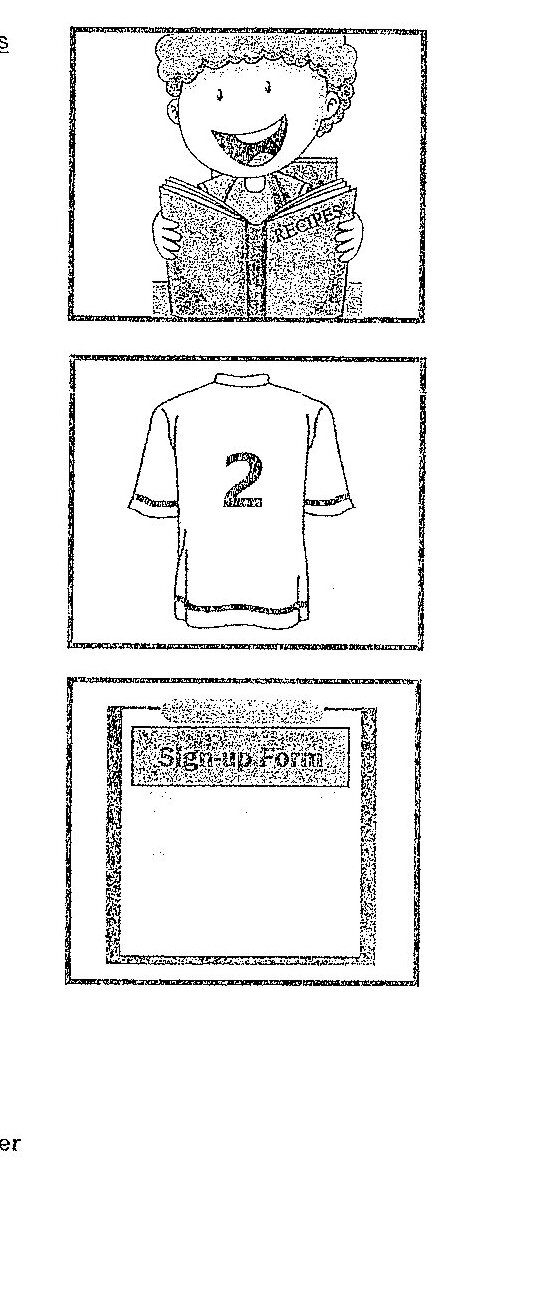
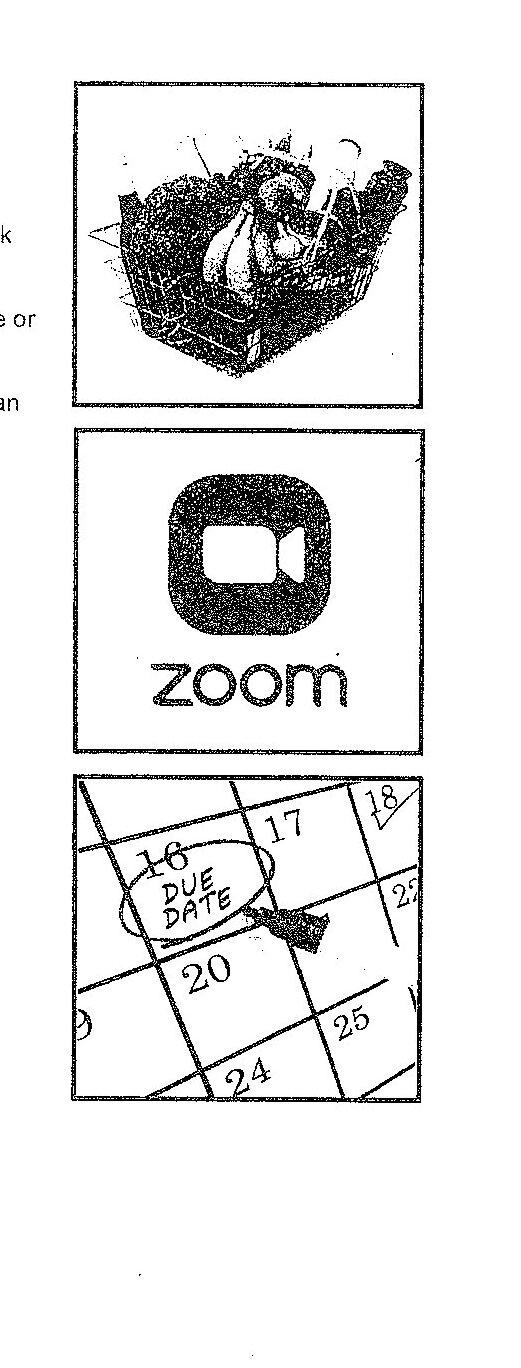
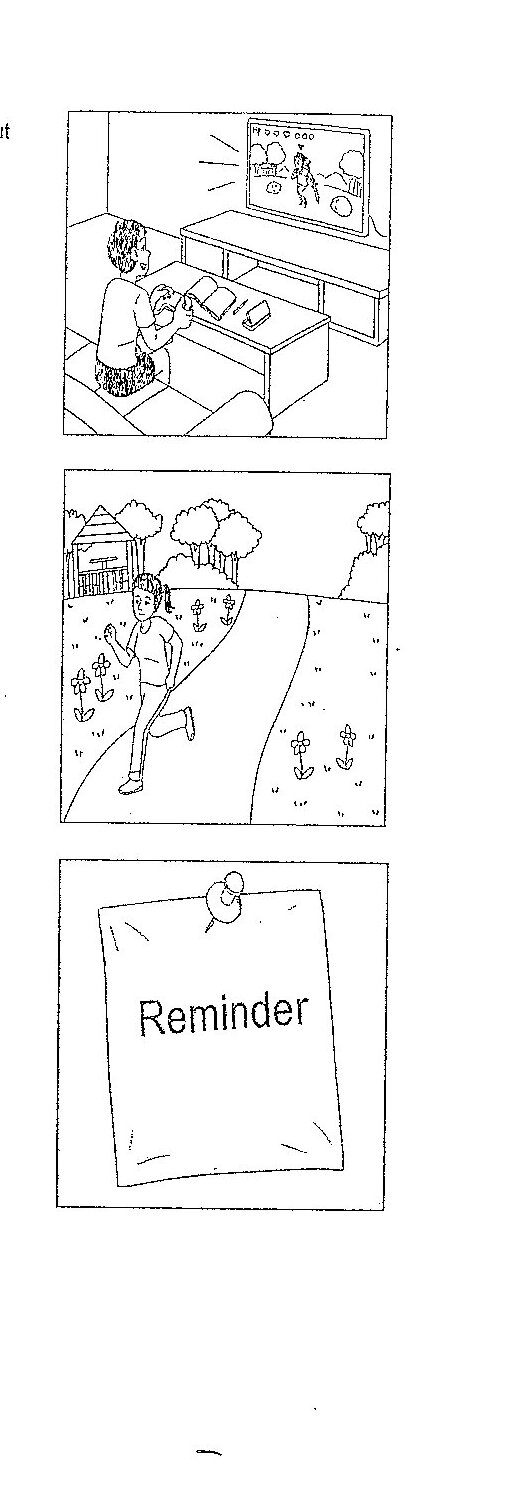
Write a composition of at least 150 words about developing a good habit. The pictures are provided to help you think about this topic. Your composition should be based on one or more of those pictures. Consider the following points when you plan your composition: • What was the good habit? • Why was the good habit developed? You may use the points in any order and include other relevant points as well.
Finally, it was her turn. She ordered a plate of fried char kway teow and watched the stall owner work his magic. He skilfully tossed the flat rice noodles and other ingredients into the sizzling wok, infusing them with sauces and seasonings. Jennie could not wait to devour the aromatic and flavourful dish. skilfully
I eagerly tore open the packaging to unveil the surprise inside when I received the parcel.
Write a composition of at least 150 words about an opportunity. The pictures are provided to help you think about this topic. Your composition should be based on one or more of these pictures. Consider the following points when you plan your composition: - What was the opportunity? - How was the opportunity used? You may use the points in any order and include other relevant points as well.
Gus's keen eyes detected the reflection of the dog's collar tags in the flash of his headlights.
Write a composition of at least 150 words about an unexpected friendship. The pictures are provided to help you think about this topic. Your composition should be based on one or more of these pictures. Consider the following points when you plan your composition: • How was the friendship formed? • Why was it unexpected? You may use the points in any order and include other relevant points as well.
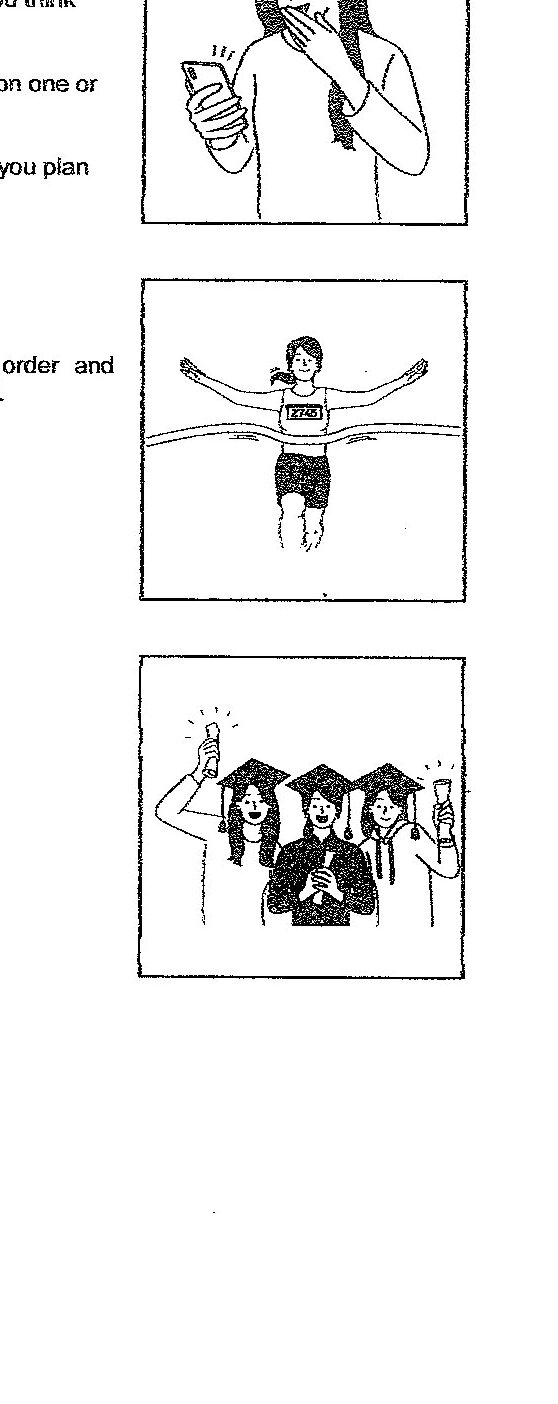
Write a composition of at least 150 words about an important event. The pictures are provided to help you think about this topic. Your composition should be based on one or more of those pictures. Consider the following points when you plan your composition: • What was the important event? • Why was it important? You may use the points in any order and include other relevant points as well.
Sighing in frustration, Betty lamented that she was making little progress in her project.
When he was trekking alone in the woods, he spotted something shiny at a distance.
Write a composition of at least 150 words about a foolish act. The pictures are provided to help you think about this topic. Your composition should be based on one or more of these pictures. Consider the following points when you plan your composition: What was the foolish act? Why was/ were the person(s) foolish? You may use the points in any order and include other relevant points as well.
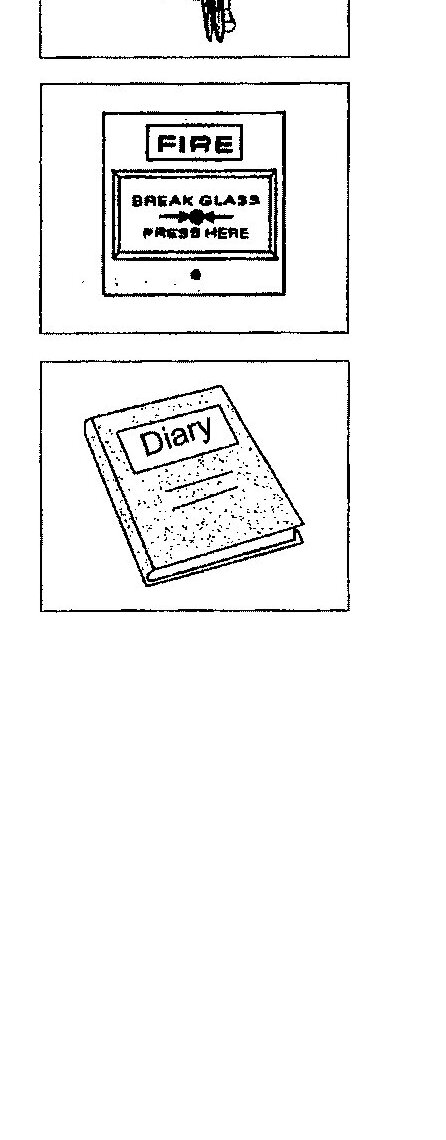
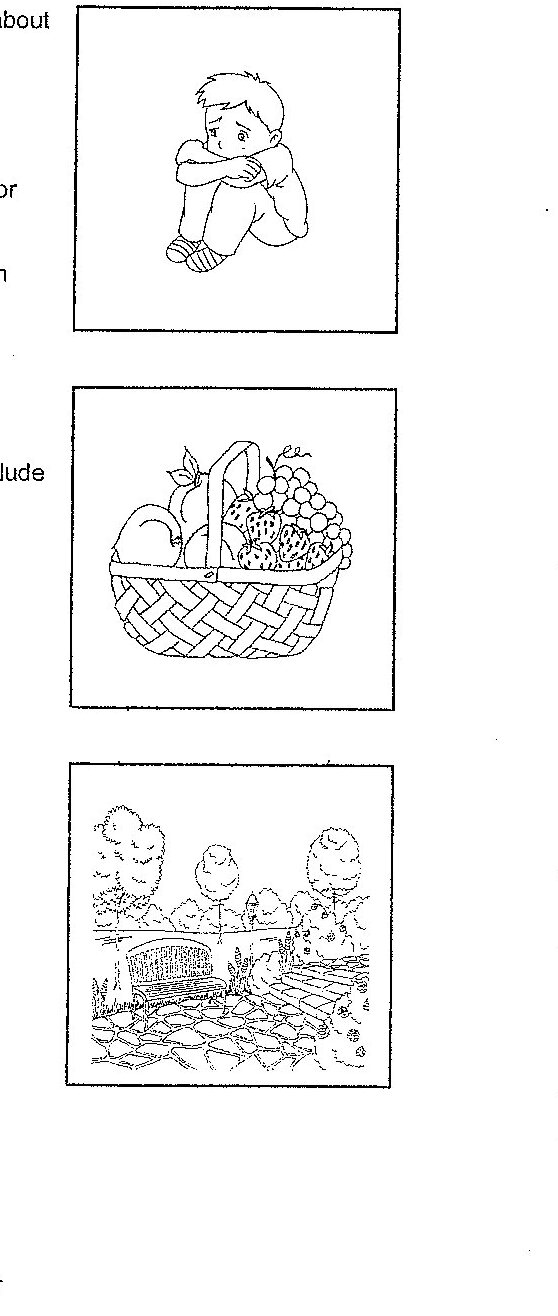
Write a composition of at least 150 words about a second chance. The pictures are provided to help you think about this topic. Your composition should be based on one or more of these pictures. Consider the following points when you plan your composition: • What was the second chance? • How did you feel about it? • What happened in the end? You may use the points in any order and include other relevant points as well.
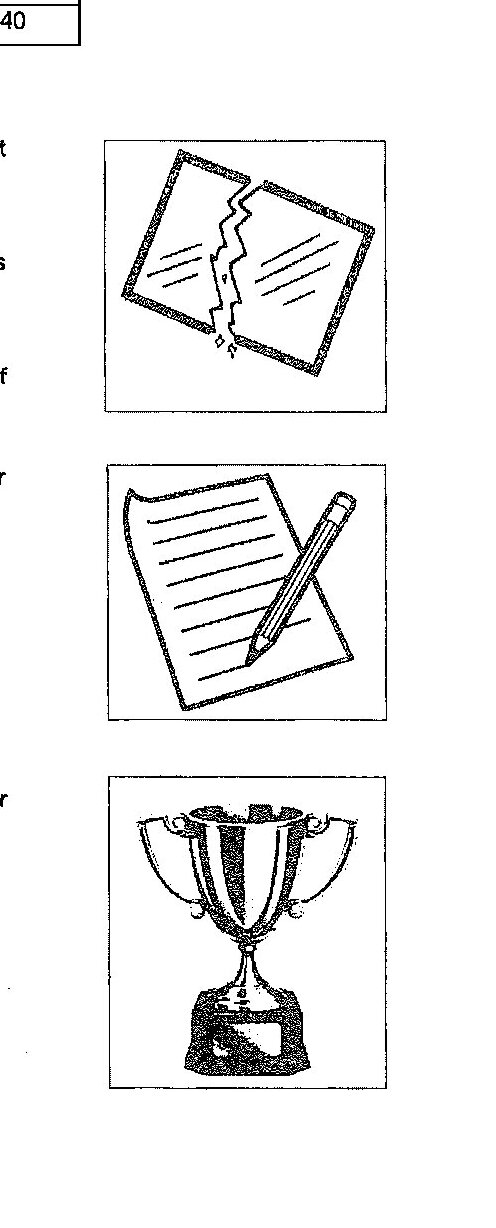
Your heart is thumping and your mind is racing with a million thoughts.
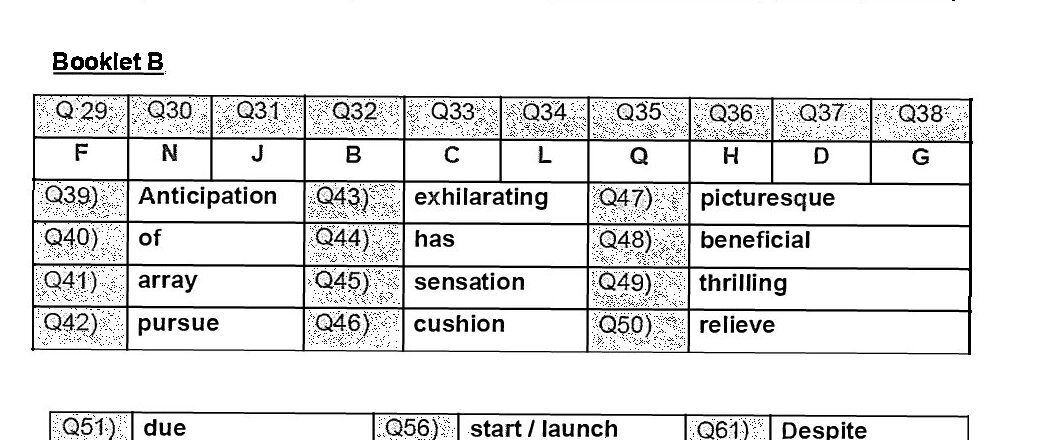
Write a composition of at least 150 words about an unexpected situation. The pictures are provided to help you think about this topic. Your composition should be based on one or more of these pictures. Consider the following points when you plan your composition: - What was the unexpected situation? - How did the character(s) react to the situation? You may use the points in any order and include other relevant points as well.
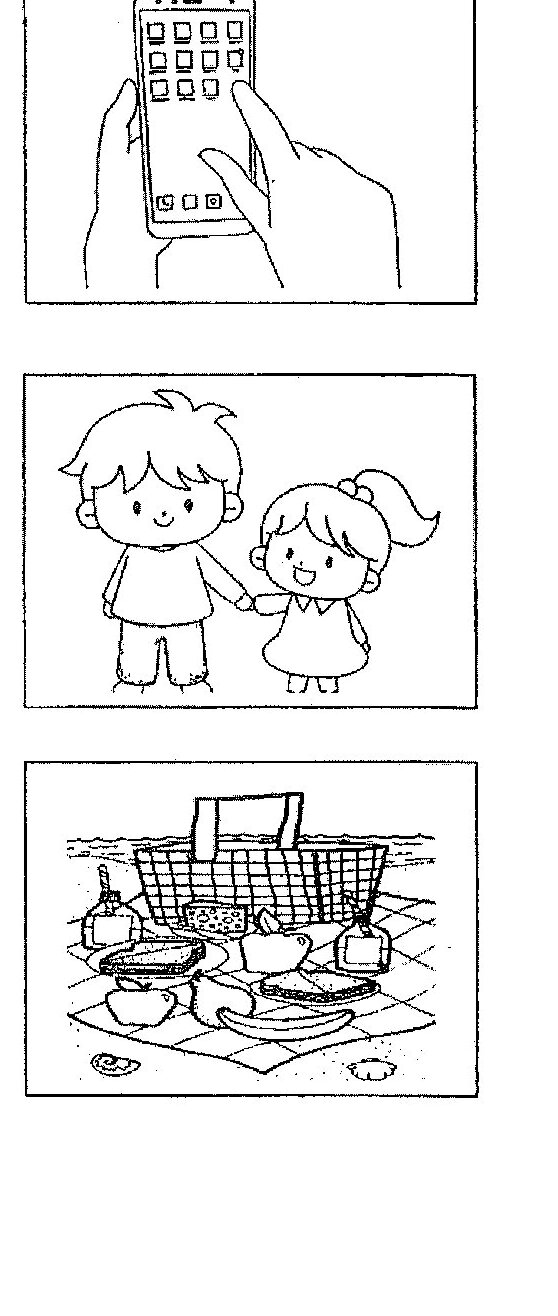
Write a composition of at least 150 words about doing the right thing. The pictures are provided to help you think about this topic. Your composition should be based on one or more of these pictures. Consider the following points when you plan your composition: • What was the right thing? • Why was it the right thing? You may use the points in any order and include other relevant points as well.
Past year papers cover the full exam — browse by subject below.