2D Shapes
2D Shapes
Key Concepts
1. What are 2D shapes?
- 2D shapes are flat shapes.
- They have:
- length
- width
- They do not have thickness.
- 2D shapes are drawn on a flat surface such as paper.
2. Sides, vertices and angles
- A side is a straight line forming part of a shape.
- A vertex (plural: vertices) is a corner point where 2 sides meet.
- An angle is the amount of turn between 2 sides.
- Shapes can be grouped by:
- number of sides
- length of sides
- size of angles
- whether sides are parallel
3. Properties of triangles
A triangle is a 2D shape with:
- 3 sides
- 3 vertices
- 3 angles
Types of triangles
Equilateral triangle
- Has 3 equal sides
- Has 3 equal angles
- Each angle is 60°
- Has 3 lines of symmetry
Isosceles triangle
- Has 2 equal sides
- The 2 angles opposite the equal sides are equal
- Has 1 line of symmetry if it is not equilateral
Right-angled triangle
- Has 1 right angle
- A right angle is 90°
- The other 2 angles are less than 90°
- It may also be isosceles if 2 sides are equal
Scalene triangle
- Has 3 unequal sides
- Has 3 unequal angles
- Has no line of symmetry
Important triangle facts
- The sum of the angles in any triangle is 180°
- A triangle can be described using more than one property:
- for example, a triangle can be right-angled and isosceles
4. Properties of quadrilaterals
A quadrilateral is a 2D shape with:
- 4 sides
- 4 vertices
- 4 angles
Square
- Has 4 equal sides
- Has 4 right angles
- Opposite sides are parallel
- Has 4 lines of symmetry
Rectangle
- Has 2 pairs of equal opposite sides
- Has 4 right angles
- Opposite sides are parallel
- Has 2 lines of symmetry
Parallelogram
- Has 2 pairs of opposite sides parallel
- Opposite sides are equal
- Opposite angles are equal
- Usually does not have right angles
- Has 0 lines of symmetry
Rhombus
- Has 4 equal sides
- Opposite sides are parallel
- Opposite angles are equal
- Usually does not have 4 right angles
- Has 2 lines of symmetry
Trapezium
- Has 1 pair of parallel sides
- The other pair of sides is not parallel
- Can have different side lengths and angle sizes
- Usually has no line of symmetry, though some special trapeziums may have 1
Important quadrilateral facts
- The sum of the angles in any quadrilateral is 360°
- A square is also:
- a rectangle
- a parallelogram
- a rhombus
- A rectangle is also:
- a parallelogram
- A rhombus is also:
- a parallelogram
5. Parallel and perpendicular lines
Parallel lines
- Parallel lines are lines that:
- stay the same distance apart
- never meet, even if extended
Perpendicular lines
- Perpendicular lines meet at a right angle
- The angle formed is 90°
6. Symmetry
Symmetry means one part of a shape matches another part exactly.
Line symmetry
- A shape has line symmetry if it can be folded into 2 matching halves.
- The fold line is called a line of symmetry.
Examples:
- Square: 4 lines of symmetry
- Rectangle: 2 lines of symmetry
- Equilateral triangle: 3 lines of symmetry
- Isosceles triangle: 1 line of symmetry
- Scalene triangle: 0 lines of symmetry
Rotational symmetry
- A shape has rotational symmetry if it matches itself when turned about a point.
- The shape must fit exactly before completing a full turn of 360°.
Examples:
- Square: rotational symmetry of order 4
- Rectangle: rotational symmetry of order 2
- Equilateral triangle: rotational symmetry of order 3
At PSLE level, students are often asked more about line symmetry, but rotational symmetry may also be useful to know.
7. Nets of 3D shapes
A net is a flat 2D pattern that can be folded to form a 3D shape.
Why nets are important
- They help us see:
- the number of faces
- the shape of each face
- how faces are connected
Common 3D shapes and their nets
Cube
- Has 6 faces
- All faces are squares
- A net of a cube has 6 squares
Cuboid
- Has 6 faces
- Faces are rectangles
- Some faces may be equal in size
- A net of a cuboid has 6 rectangles or a mix of rectangles with matching opposite faces
Triangular prism
- Has 2 triangular faces
- Has 3 rectangular faces
- A net has:
- 2 triangles
- 3 rectangles
Square-based pyramid
- Has 1 square base
- Has 4 triangular faces
- A net has:
- 1 square
- 4 triangles
What makes a correct net?
A correct net must:
- have the correct number of faces
- have faces of the correct shape
- have faces joined in the correct positions
- be able to fold without overlapping
What makes an incorrect net?
A wrong net may:
- have too many or too few faces
- have the wrong face shapes
- place faces in unsuitable positions
- cause overlapping when folded
Important Definitions
- 2D shape: a flat shape with length and width only.
- 3D shape: a solid shape with length, width and height.
- Side: a straight edge of a 2D shape.
- Vertex: the point where 2 sides meet.
- Angle: the amount of turn between 2 lines or sides.
- Right angle: an angle of 90°.
- Parallel lines: lines that stay the same distance apart and never meet.
- Perpendicular lines: lines that meet at 90°.
- Triangle: a 2D shape with 3 sides.
- Quadrilateral: a 2D shape with 4 sides.
- Equilateral triangle: a triangle with 3 equal sides and 3 equal angles.
- Isosceles triangle: a triangle with 2 equal sides.
- Right-angled triangle: a triangle with 1 right angle.
- Scalene triangle: a triangle with 3 unequal sides.
- Square: a quadrilateral with 4 equal sides and 4 right angles.
- Rectangle: a quadrilateral with opposite sides equal and parallel, and 4 right angles.
- Parallelogram: a quadrilateral with 2 pairs of opposite sides parallel.
- Rhombus: a quadrilateral with 4 equal sides and opposite sides parallel.
- Trapezium: a quadrilateral with 1 pair of parallel sides.
- Symmetry: when a shape can be divided so parts match exactly.
- Line of symmetry: a line that divides a shape into 2 matching halves.
- Rotational symmetry: when a shape matches itself after being turned.
- Net: a flat pattern that can be folded to make a 3D shape.
- Face: a flat surface of a 3D shape.
Worked Examples
Example 1: Identifying a triangle
A triangle has:
- 2 equal sides
- 2 equal angles
What type of triangle is it?
Step-by-step solution
- Look at the side lengths.
- The triangle has 2 equal sides.
- A triangle with 2 equal sides is an isosceles triangle.
- The 2 equal angles also match the property of an isosceles triangle.
Answer: It is an isosceles triangle.
Example 2: Identifying a quadrilateral
A shape has:
- 4 equal sides
- 4 right angles
What is the shape?
Step-by-step solution
- A shape with 4 sides is a quadrilateral.
- 4 equal sides suggests it might be a square or rhombus.
- 4 right angles is an important clue.
- A rhombus does not need to have 4 right angles.
- A quadrilateral with 4 equal sides and 4 right angles is a square.
Answer: The shape is a square.
Example 3: Identifying a net
A net has:
- 1 square
- 4 triangles attached around the square
What 3D shape does it form?
Step-by-step solution
- Count and identify the faces.
- There is 1 square face.
- There are 4 triangular faces.
- A 3D shape with 1 square base and 4 triangular sides is a square-based pyramid.
Answer: The net forms a square-based pyramid.
Common Mistakes to Avoid
- Confusing a square with a rectangle and saying they are completely different.
- A square is a special type of rectangle because it has 4 right angles.
- Thinking a rhombus must always look like a “diamond”.
- The important property is 4 equal sides, not the way it is tilted.
- Forgetting that a trapezium has 1 pair of parallel sides.
- Saying an isosceles triangle has 3 equal sides.
- That is an equilateral triangle.
- Mixing up parallel and perpendicular lines.
- Counting only visible shape appearance instead of checking properties carefully.
- Forgetting to count angles as well as sides when identifying shapes.
- Drawing a line of symmetry that does not divide the shape into 2 exact matching halves.
- Choosing a wrong net because the faces look correct but would overlap when folded.
- Forgetting that a cube net must have 6 square faces.
- Saying a scalene triangle has a line of symmetry.
- It has none.
Exam Tips
- When identifying a shape, always state its properties:
- “It has 4 equal sides and 4 right angles, so it is a square.”
- Use correct mathematical words such as:
- equal sides
- right angles
- parallel sides
- line of symmetry
- vertices
- For symmetry questions, imagine folding the shape.
- For net questions, check:
- number of faces
- shape of faces
- arrangement of faces
- If a question asks how you know, do not just name the shape.
- Give the property that proves it.
- Read carefully:
- “at least”
- “exactly”
- “only” These words change the meaning.
- In shape-sorting questions, remember that some shapes belong to more than one group.
- Example: a square is also a rectangle and a rhombus.
- If a diagram is slanted, do not let that confuse you.
- A rectangle tilted sideways is still a rectangle if it has 4 right angles.
Quick Summary
- A triangle has 3 sides; a quadrilateral has 4 sides.
- Equilateral triangle: 3 equal sides, 3 equal angles, each angle 60°.
- Isosceles triangle: 2 equal sides and 2 equal angles.
- Right-angled triangle: has 1 angle of 90°.
- Scalene triangle: 3 unequal sides and 3 unequal angles.
- Square: 4 equal sides, 4 right angles, opposite sides parallel.
- Rectangle: opposite sides equal and parallel, 4 right angles.
- Parallelogram: 2 pairs of opposite sides parallel.
- Rhombus: 4 equal sides, opposite sides parallel.
- Trapezium: 1 pair of parallel sides.
- Line symmetry means a shape can be folded into 2 matching halves.
- A net is a flat pattern that folds to form a 3D shape.
- A cube has 6 square faces; its net must have 6 squares.
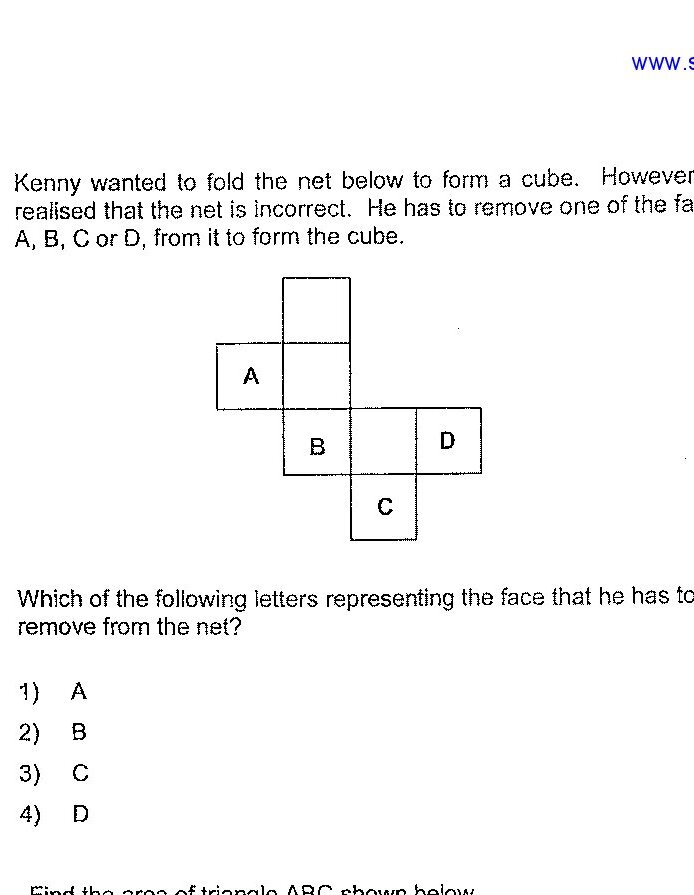
Kenny wanted to fold the net below to form a cube. However, he realised that the net is incorrect. He has to remove one of the faces, A, B, C or D, from it to form the cube. Which of the following letters representing the face that he has to remove from the net?
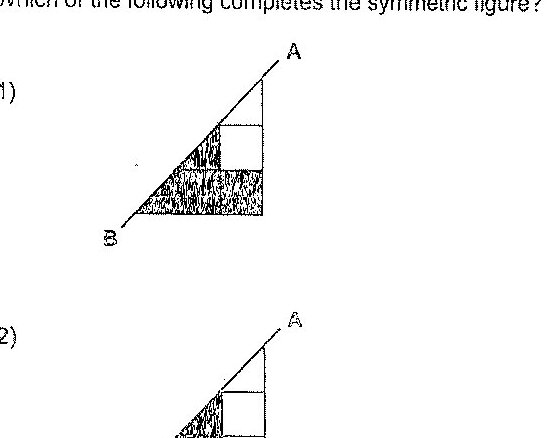
Half of a symmetric figure is shown above. AB is the line of symmetry. Which of the following completes the symmetric figure?
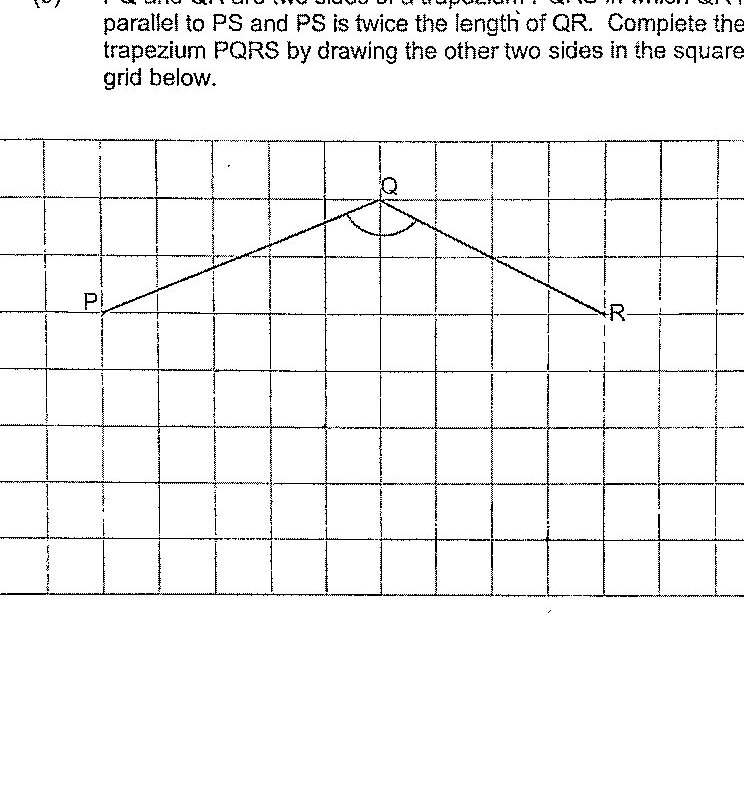
PQ and QR are two sides of a trapezium PQRS in which QR is parallel to PS and PS is twice the length of QR. Complete the trapezium PQRS by drawing the other two sides in the square grid below.
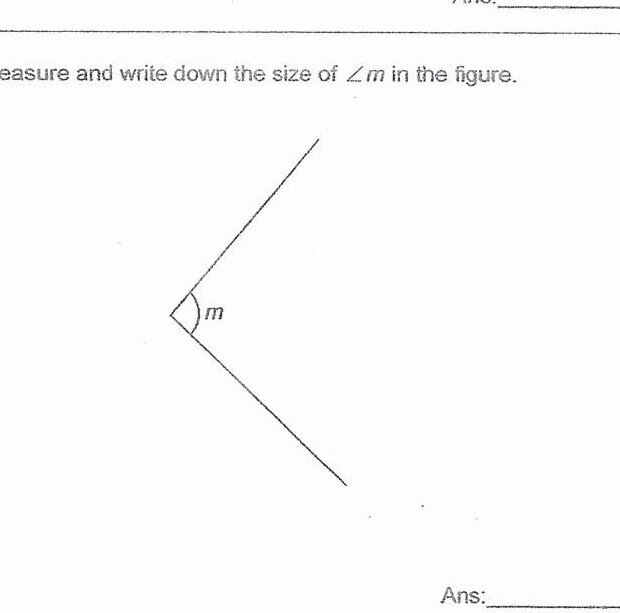
Measure and write down the size of ∠m in the figure.
The figure above is not drawn to scale. Each of the statements below is either true, false or not possible to tell from the information given. For each statement, put a tick (✓) to indicate your answer. Statement 1: BCEF is a parallelogram. Statement 2: BE is perpendicular to EC.
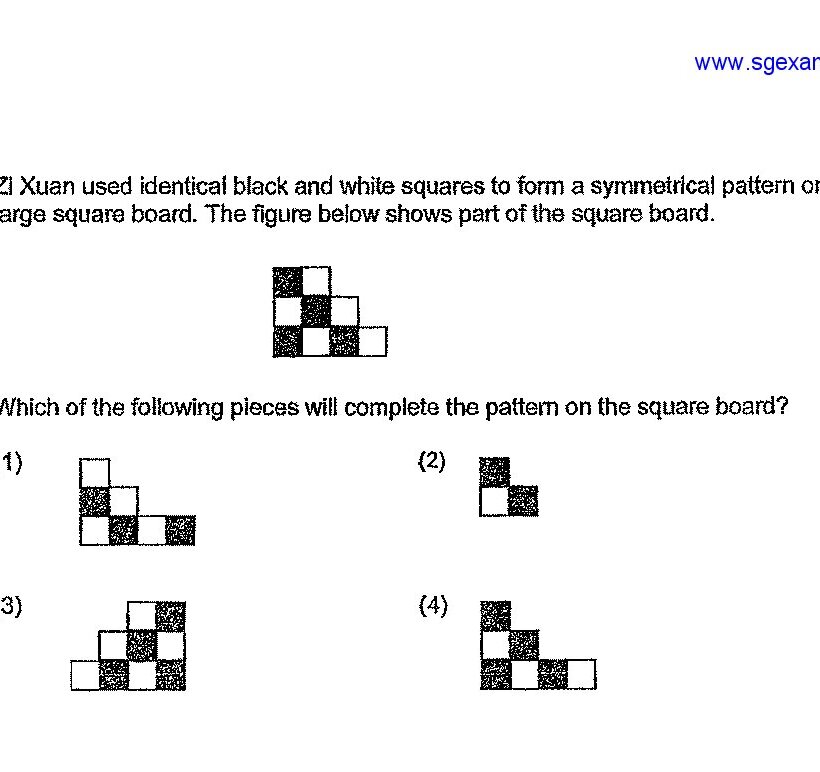
Zi Xuan used identical black and white squares to form a symmetrical pattern on a large square board. The figure below shows part of the square board. Which of the following pieces will complete the pattern on the square board?
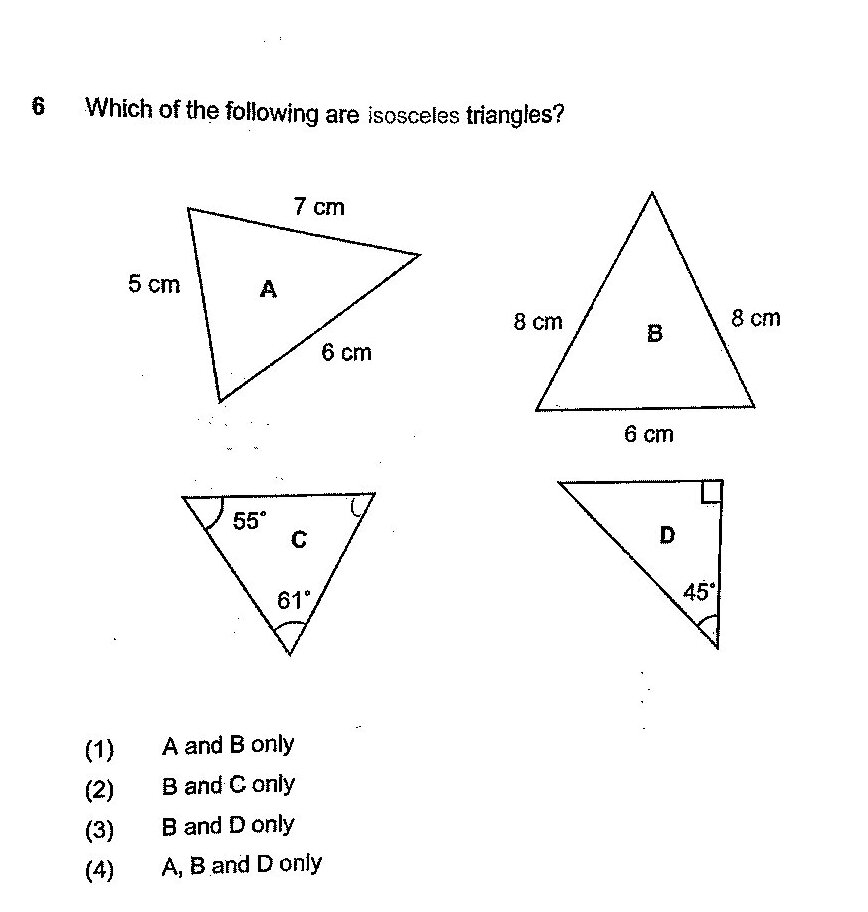
Which of the following are isosceles triangles?
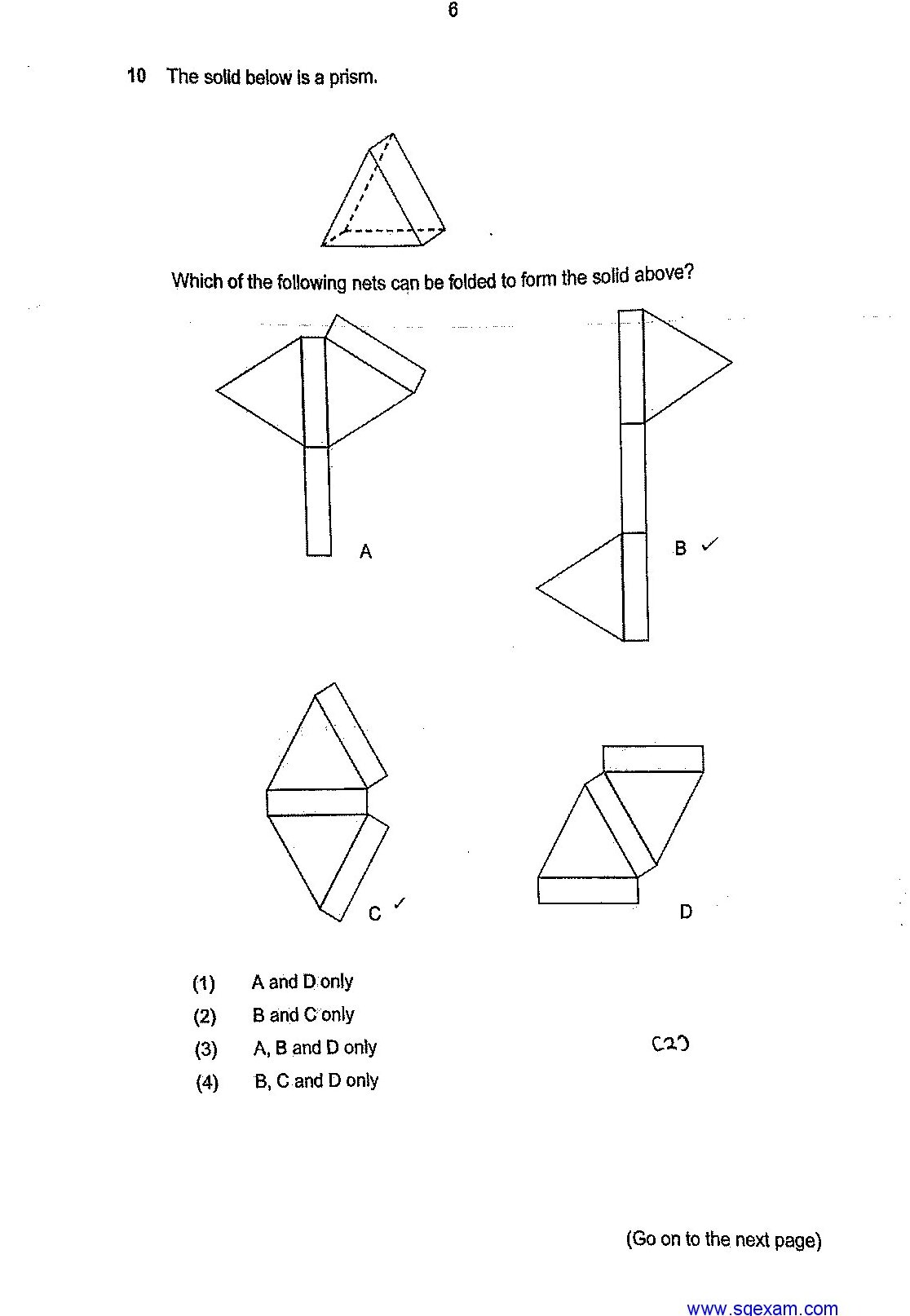
The solid below is a prism. Which of the following nets can be folded to form the solid above?
Using the given dotted line as the line of symmetry, complete the symmetric figure by shading the correct square(s) below.
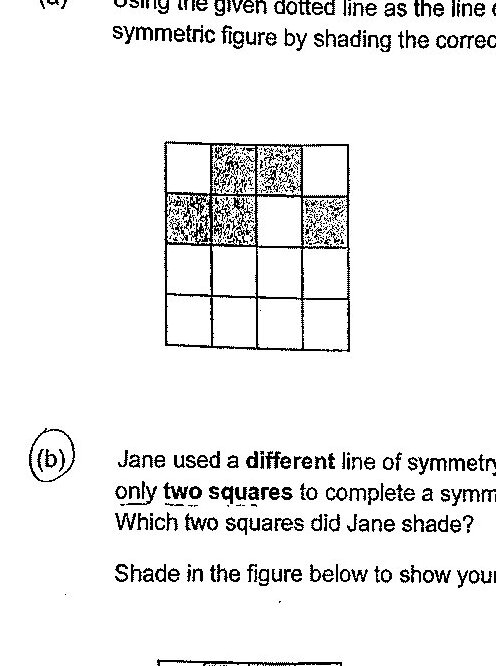
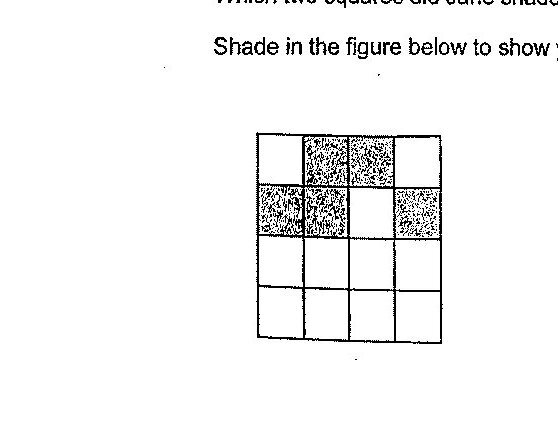
Jane used a different line of symmetry that required her to shade only two squares to complete a symmetric figure. Which two squares did Jane shade? Shade in the figure below to show your answer.
Circle the words that describe Triangle LOP correctly in the following statement: Triangle LOP ( is / is not ) an isosceles triangle because ∠LOP ( is / is not ) the same as ∠PLO.
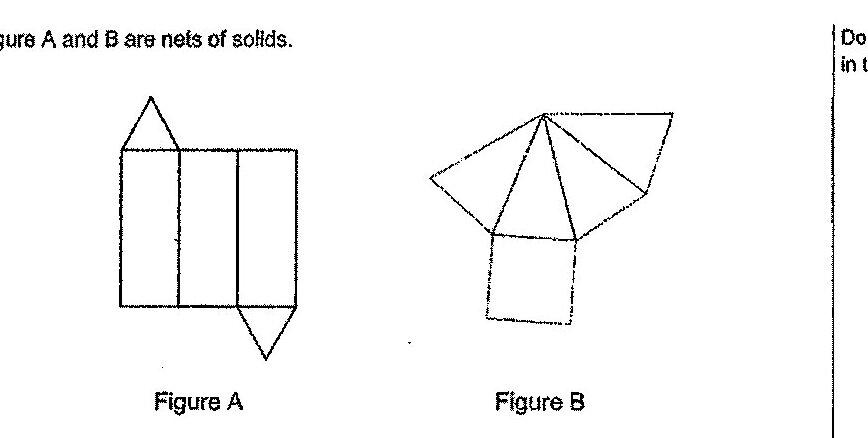
Figure A and B are nets of solids. Circle the words that describe the figures above. Figure A is a net of a ( prism / pyramid ). Figure B is a net of a ( prism / pyramid ).
There are 4 shaded squares in the figure. Shade 3 more squares to form a symmetric figure with AB as the line of symmetry.
A triangle ABC is drawn on a square grid.
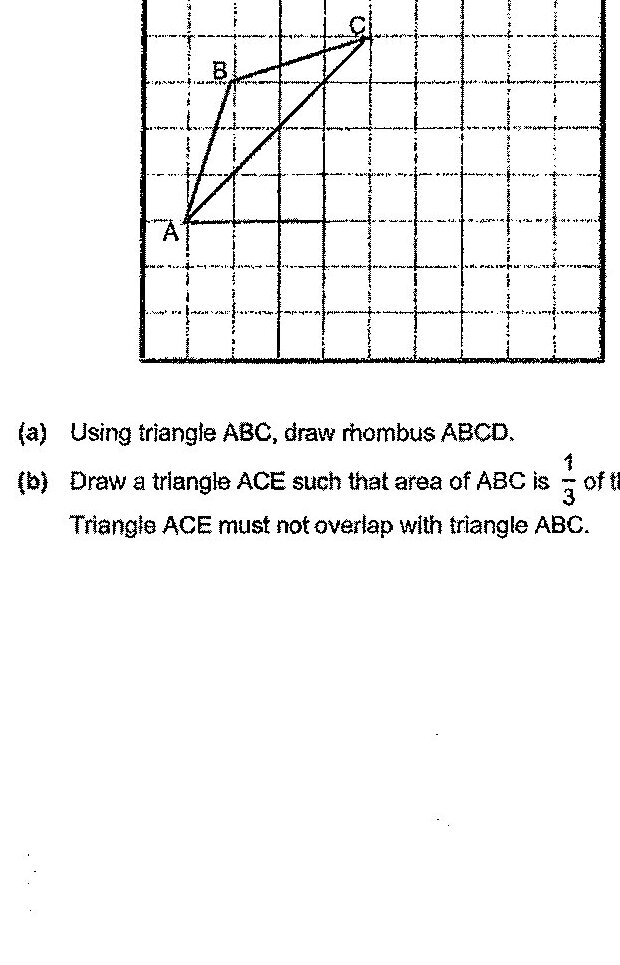
Using triangle ABC, draw rhombus ABCD.
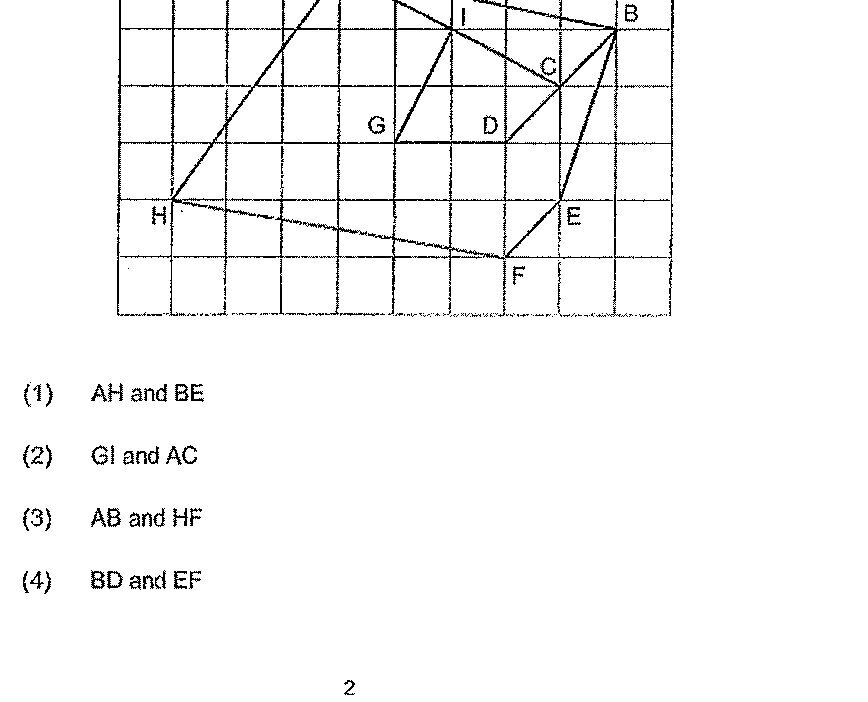
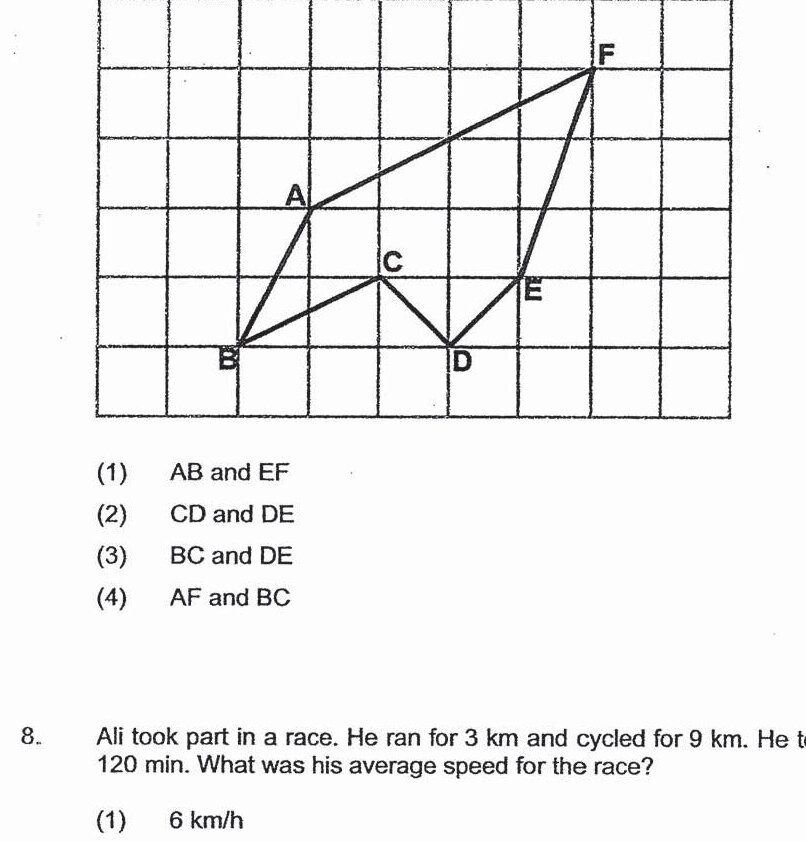
Which pair of lines in the square grid are parallel?
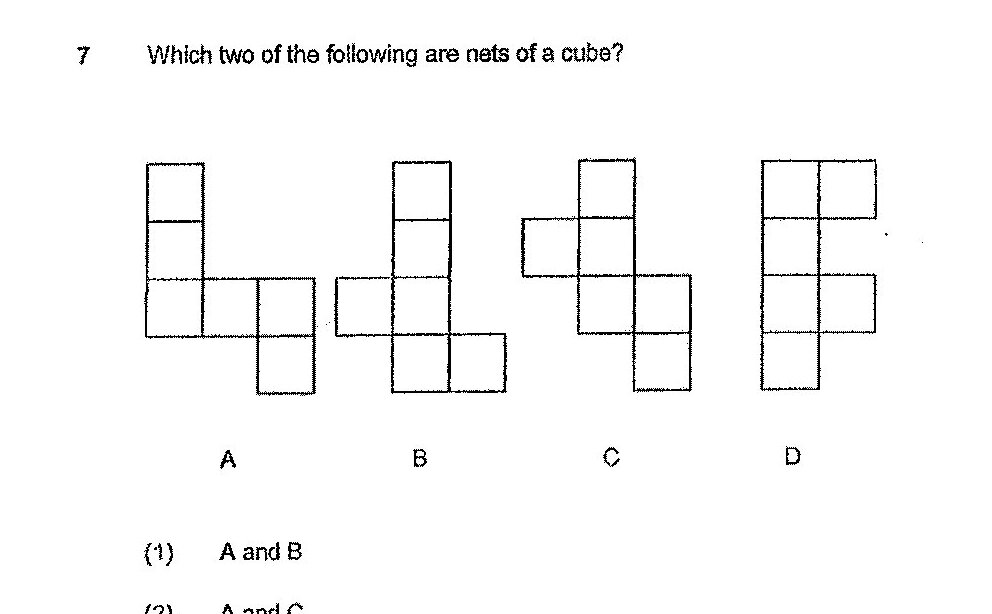
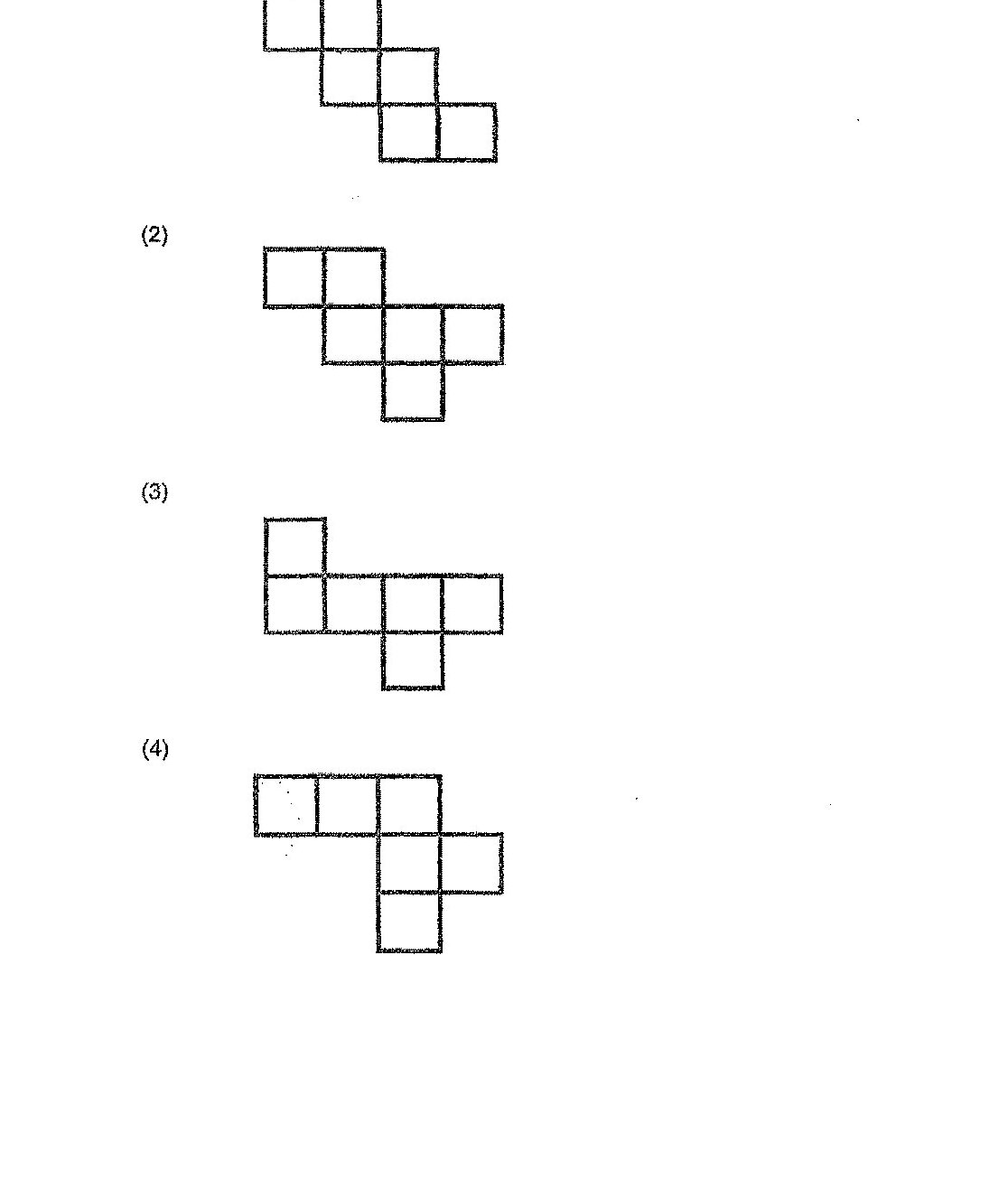
Which two of the following are nets of a cube?
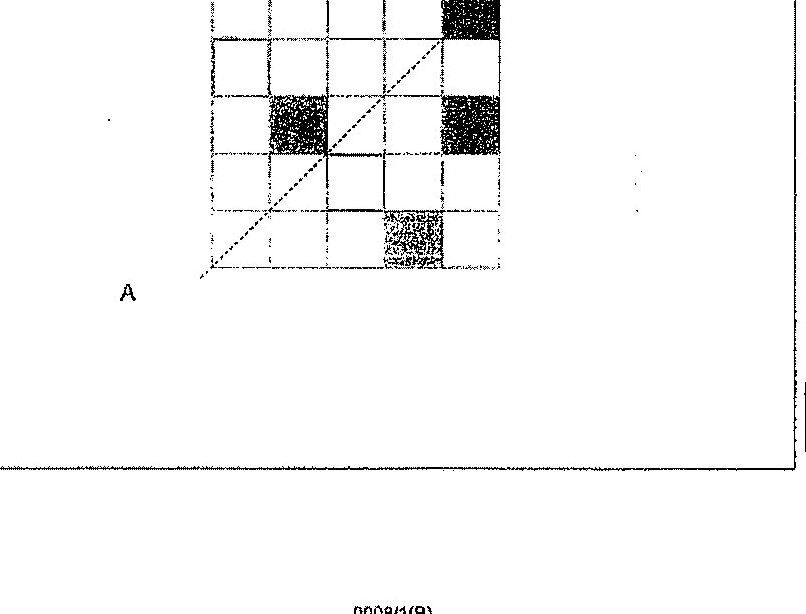
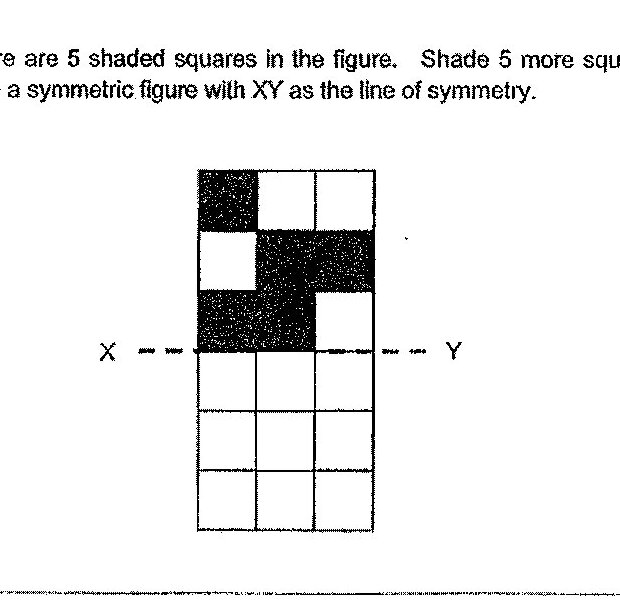
There are 5 shaded squares in the figure. Shade 5 more squares to form a symmetric figure with XY as the line of symmetry.
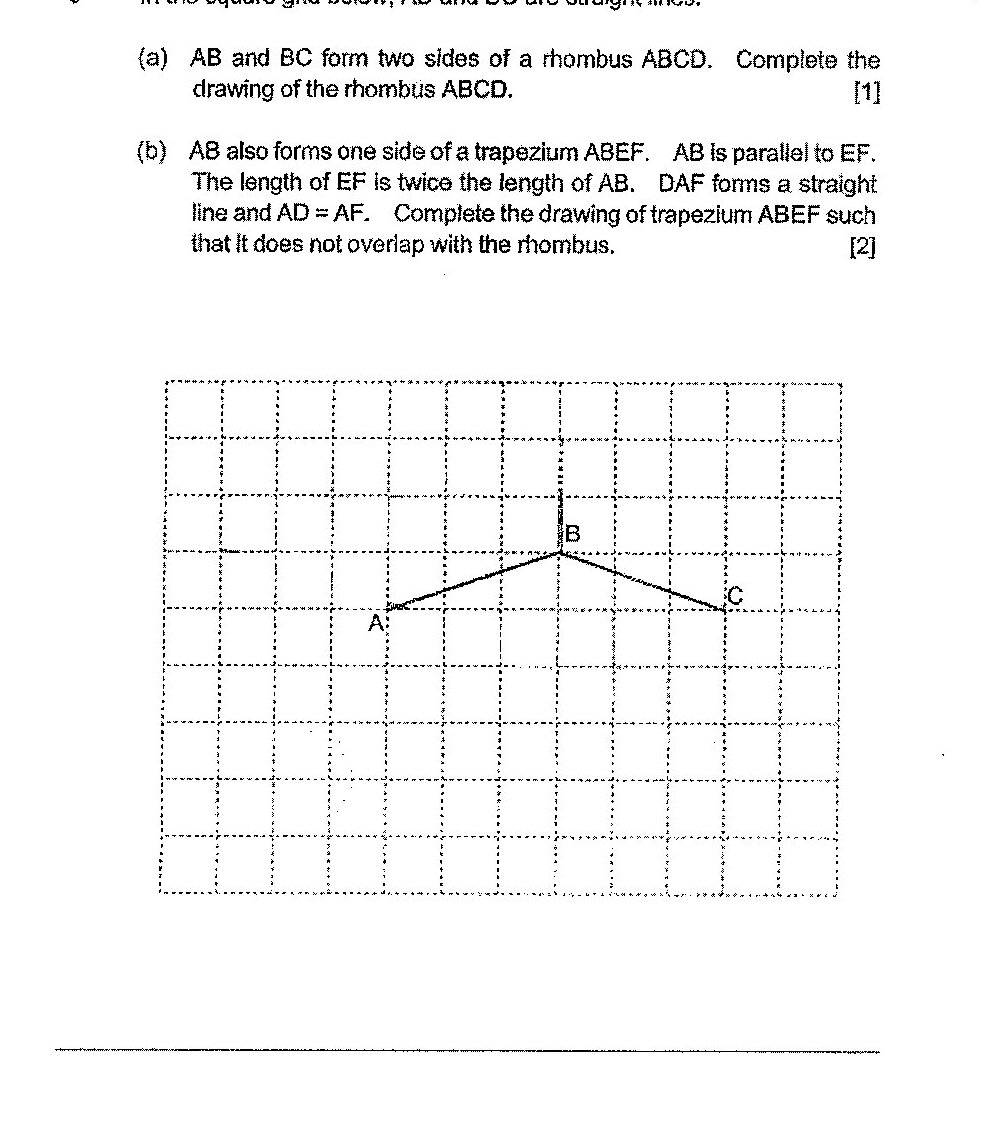
AB and BC form two sides of a rhombus ABCD. Complete the drawing of the rhombus ABCD.
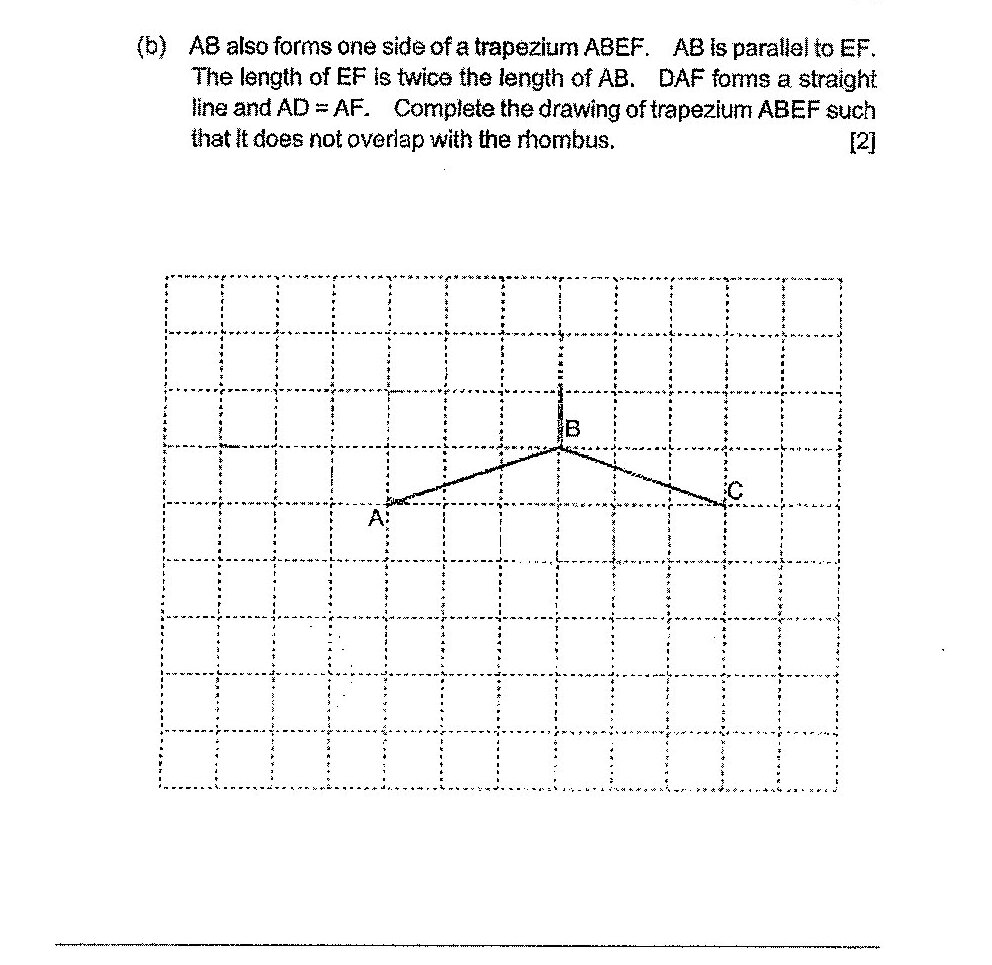
AB also forms one side of a trapezium ABEF. AB is parallel to EF. The length of EF is twice the length of AB. DAF forms a straight line and AD = AF. Complete the drawing of trapezium ABEF such that it does not overlap with the rhombus.
PQRS is a trapezium and STUV is a parallelogram. Which of the following pair of angles is/are a pair of 180°?
Which of the following is not the net of a cube?
Circle the word that describes triangle BCE.
The figure below is made up of triangles and rectangles. Shade the figure so that the figure has AB as its line of symmetry with 2/3 of the figure shaded.
Name the solid.
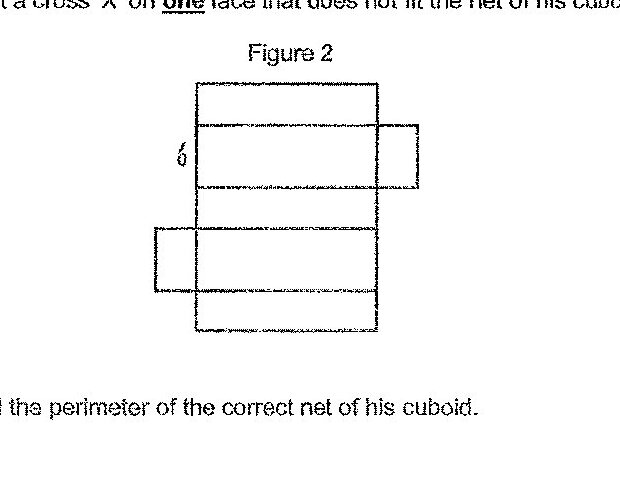
Easons drew the net of his cuboid in Figure 2 and it is incorrect. Put a cross 'X' on one face that does not fit the net of his cuboid.
Which pair of lines are parallel?
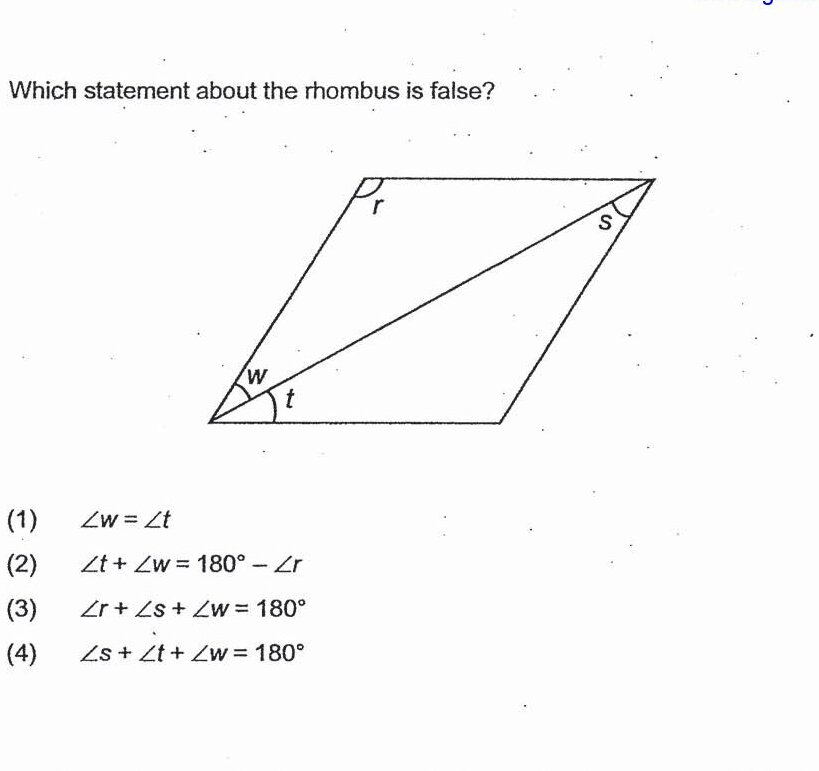
Which statement about the rhombus is false?
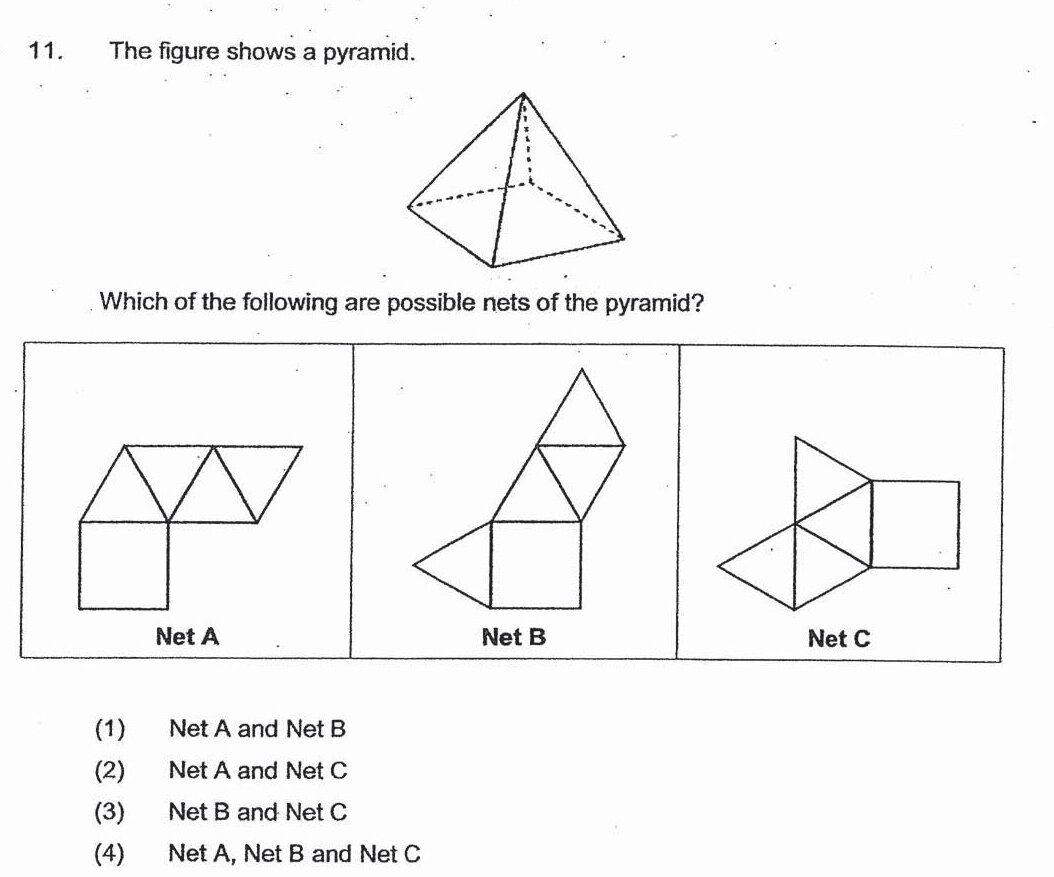
The figure shows a pyramid. Which of the following are possible nets of the pyramid?
The figure below shows 2 parallelograms, ABCD and JKLM. Which of the following statements is true?

Past year papers cover the full exam — browse by subject below.