Probability
Probability — Secondary 2 E-Mathematics Study Notes
Probability is about chance. It helps us describe how likely something is to happen. In Secondary 2 E-Mathematics, probability questions often involve everyday situations such as coins, dice, cards, coloured counters, spinning wheels, and selecting objects from a bag.
These notes will help you understand the key ideas clearly and prepare for exam-style questions.
Key Concepts
Probability is one of the most important parts of Statistics and Probability. To do well, you must understand what an event is, how to list outcomes properly, and how to calculate probability accurately.
1. What is probability?
- Probability measures how likely an event is to happen.
- It is written as a number from 0 to 1.
- It can also be expressed as:
- a fraction
- a decimal
- a percentage
2. Range of probability
The probability of any event must satisfy:
where
This means:
- 0 means the event is impossible
- Example: rolling a 7 on a fair six-sided die
- 1 means the event is certain
- Example: rolling a number less than 7 on a fair six-sided die
- A probability between 0 and 1 means the event is possible
- Example: rolling an even number on a die has probability
- Example: rolling an even number on a die has probability
3. Probability of a single event
For equally likely outcomes, the basic formula is:
Example
A fair die is rolled. Find the probability of getting a 4.
- Total possible outcomes: 6
- Favourable outcomes: 1, because only the outcome 4 works
Another example
A bag contains 3 red marbles, 5 blue marbles, and 2 green marbles. One marble is chosen at random. Find the probability of choosing a blue marble.
- Total marbles:
- Number of blue marbles: 5
4. Equally likely outcomes
This formula works when all outcomes are equally likely.
For example:
- A fair coin has 2 equally likely outcomes: Head, Tail
- A fair die has 6 equally likely outcomes: 1, 2, 3, 4, 5, 6
- A well-shuffled deck gives each card an equal chance of being picked
If outcomes are not equally likely, you cannot simply count outcomes in the same way.
5. Probability written as a fraction, decimal, or percentage
A probability can be written in different forms.
For example:
All three forms mean the same thing.
Example conversions
In many school questions, leaving probability as a fraction in simplest form is usually best unless the question asks for a decimal or percentage.
6. Sample space
The sample space is the set of all possible outcomes of an experiment.
Example 1: Tossing one coin
Sample space:
Example 2: Rolling one die
Sample space:
Example 3: Tossing two coins
Sample space:
Notice that:
means first coin Head, second coin Tail means first coin Tail, second coin Head - These are different outcomes
Listing the sample space carefully is very important. Many probability mistakes happen because students forget some outcomes.
7. Events
An event is a result or a group of results that we are interested in.
Examples
- “Getting a 5 on a die” is an event
- “Getting an even number on a die” is an event
- “Choosing a red marble” is an event
If the sample space is
- Event A = getting an even number =
- Event B = getting a number greater than 4 =
8. Complementary events
The complement of an event means “not the event”.
If event
Formula:
This is useful when it is easier to find the probability of the opposite event.
Example
A bag contains 7 white balls and 3 black balls. Find the probability of not choosing a white ball.
First find:
Then:
This makes sense because “not white” means black.
9. Mutually exclusive events
Two events are mutually exclusive if they cannot happen at the same time.
Example
When rolling one die:
- Event A: get a 2
- Event B: get a 5
You cannot get both 2 and 5 in one roll, so these are mutually exclusive.
For mutually exclusive events:
Example
Roll one die. Find the probability of getting a 1 or a 6.
10. “Or” in probability
In probability, “or” usually means one event happens, the other event happens, or both if possible.
But at Sec 2 level, many questions involve mutually exclusive events, where both cannot happen together.
Example
From a bag, choose one marble. Find the probability that it is red or blue.
A single marble cannot be both red and blue, so these events are mutually exclusive.
11. Probability in word problems
Probability often appears in real-life contexts:
- marbles in a bag
- letters from a word
- numbered cards
- coloured counters
- spinners
- buses arriving
- weather statements
To solve word problems:
- Read carefully
- Identify the total number of possible outcomes
- Identify the favourable outcomes
- Use the probability formula
- Simplify the final answer
12. Importance of listing outcomes accurately
When outcomes are not obvious, list them systematically.
Example: Two coins
Possible outcomes:
- HH
- HT
- TH
- TT
If asked for the probability of getting exactly one head:
- favourable outcomes: HT, TH
- total outcomes: 4
Systematic listing helps prevent missing outcomes.
Important Definitions
Below are the key definitions you must know for this topic.
-
Probability: the measure of how likely an event is to occur, expressed as a number between 0 and 1.
- Example: The probability of getting Head when tossing a fair coin is
.
- Example: The probability of getting Head when tossing a fair coin is
-
Experiment: an action or process that leads to one or more possible outcomes.
- Example: rolling a die, tossing a coin, choosing a marble.
-
Outcome: one possible result of an experiment.
- Example: When rolling a die, getting 3 is one outcome.
-
Sample Space: the set of all possible outcomes of an experiment.
- Example: For one coin toss, the sample space is
.
- Example: For one coin toss, the sample space is
-
Event: an outcome or a set of outcomes that satisfy a condition.
- Example: Getting an even number when rolling a die is the event
.
- Example: Getting an even number when rolling a die is the event
-
Favourable Outcomes: outcomes that match the event asked for in the question.
- Example: If the event is “getting a vowel” from the letters A, B, C, E, then favourable outcomes are A and E.
-
Equally Likely Outcomes: outcomes that each have the same chance of happening.
- Example: In a fair die, each number from 1 to 6 is equally likely.
-
Single Event: an event involving one condition in one experiment.
- Example: Getting a red ball when choosing one ball from a bag.
-
Complement of an Event: all outcomes in the sample space that are not in the event.
- Example: If event A is “getting an odd number” on a die, then the complement is “not getting an odd number”, which means
.
- Example: If event A is “getting an odd number” on a die, then the complement is “not getting an odd number”, which means
-
Complementary Events: a pair of events where one event happens if and only if the other does not happen.
- Example: “Choosing a green counter” and “not choosing a green counter”.
-
Mutually Exclusive Events: events that cannot happen at the same time.
- Example: In one roll of a die, getting 2 and getting 5 are mutually exclusive.
-
Impossible Event: an event with probability 0.
- Example: Rolling an 8 on a six-sided die.
-
Certain Event: an event with probability 1.
- Example: Rolling a number less than 7 on a six-sided die.
-
Random: every outcome has a fair chance of being selected according to the situation described.
- Example: choosing one card at random from a well-shuffled set of cards.
-
Probability of an Event: for equally likely outcomes, [ P(E)=\frac{\text{number of favourable outcomes}}{\text{total number of possible outcomes}} ]
Diagrams and Structures
Diagrams are very useful in probability because they help you organise information clearly and avoid missing outcomes.
13. Sample Space Listing
A sample space can be listed using brackets or a table.
Example: Tossing two coins
You can write the sample space as:
This tells you:
- there are 4 possible outcomes
- each outcome is equally likely if the coins are fair
If the question asks for “at least one head”, the favourable outcomes are:
- HH
- HT
- TH
So the probability is:
Why this diagram helps
- It shows every outcome clearly
- It helps with “exactly one”, “at least one”, and “no” type questions
- It reduces the chance of forgetting an arrangement such as TH
14. Sample Space Table or Grid
A table is useful when two experiments happen together, such as rolling two dice or tossing two coins.
Example: Rolling two dice
Draw a 6 by 6 table:
- Rows represent the first die: 1, 2, 3, 4, 5, 6
- Columns represent the second die: 1, 2, 3, 4, 5, 6
Inside each box, write the ordered pair:
- (1,1), (1,2), (1,3), …, (6,6)
This gives:
- total outcomes =
If the question asks for the probability that the sum is 7, the favourable outcomes are:
- (1,6)
- (2,5)
- (3,4)
- (4,3)
- (5,2)
- (6,1)
So:
Why this diagram helps
- It organises paired outcomes neatly
- It helps count combinations accurately
- It is especially useful when dealing with sums or comparisons
15. Probability Tree Diagram
A probability tree shows outcomes step by step.
Example: Tossing a coin, then rolling a die
Start with two branches from the first stage:
- H
- T
From each branch, draw six more branches:
- 1, 2, 3, 4, 5, 6
This gives 12 final outcomes:
- H1, H2, H3, H4, H5, H6
- T1, T2, T3, T4, T5, T6
If asked for the probability of getting Head and an even number:
- favourable outcomes: H2, H4, H6
- total outcomes: 12
Why this diagram helps
- It shows the order of events clearly
- It helps with multi-stage experiments
- It makes it easier to list all outcomes without missing any
16. Number Line for Probability Values
A simple number line from 0 to 1 helps you understand the meaning of probability.
- 0 = impossible
- 0.5 = equally likely to happen or not happen
- 1 = certain
Example positions:
- 0.1 means unlikely
- 0.8 means likely
- 0.25 means less likely than 0.5
Why this structure helps
- It builds intuition
- It helps you check whether an answer is reasonable
- It reminds you that probability cannot be less than 0 or more than 1
Worked Examples
Below are full step-by-step solutions to different types of probability questions.
Worked Example 1: Probability of a single event
A fair six-sided die is rolled once. Find the probability of getting an odd number.
Step 1: List the sample space
For a fair die:
Total number of outcomes = 6
Step 2: Identify favourable outcomes
Odd numbers are:
Number of favourable outcomes = 3
Step 3: Use the formula
Step 4: Simplify
Answer
Worked Example 2: Probability as fraction, decimal, and percentage
A box contains 4 red pens and 16 blue pens. One pen is selected at random. Find the probability of selecting a red pen:
- as a fraction
- as a decimal
- as a percentage
Step 1: Find the total number of pens
Step 2: Write the probability as a fraction
Step 3: Convert to decimal
Step 4: Convert to percentage
Answer
- Fraction:
- Decimal:
- Percentage:
Worked Example 3: Complementary events
A bag contains 9 yellow beads and 6 green beads. One bead is chosen at random. Find the probability that the bead chosen is not green.
Step 1: Understand the event
“Not green” is the complement of “green”.
Step 2: Find the total number of beads
Step 3: Find
Step 4: Use the complement rule
Write 1 as
Step 5: Check using direct counting
“Not green” means yellow. There are 9 yellow beads out of 15.
So the answer is correct.
Answer
Worked Example 4: Mutually exclusive events
A spinner is divided into 8 equal sections numbered 1 to 8. Find the probability of getting a number less than 3 or a number greater than 6.
Step 1: List the sample space
Total outcomes = 8
Step 2: Find each event
Number less than 3: [ {1,2} ]
Number greater than 6: [ {7,8} ]
Step 3: Check whether the events are mutually exclusive
A number cannot be both less than 3 and greater than 6 at the same time.
So the events are mutually exclusive.
Step 4: Count favourable outcomes
Favourable outcomes are:
Number of favourable outcomes = 4
Step 5: Calculate the probability
Answer
Worked Example 5: Sample space and word problem
Two coins are tossed. Find the probability of getting exactly one tail.
Step 1: List all possible outcomes
The sample space is:
Total outcomes = 4
Step 2: Identify outcomes with exactly one tail
Exactly one tail means:
- HT
- TH
Number of favourable outcomes = 2
Step 3: Calculate the probability
Answer
Worked Example 6: Word problem with letters
A letter is chosen at random from the word STATISTICS. Find the probability that the letter chosen is:
- a vowel
- not a vowel
Step 1: List the letters carefully
The word STATISTICS has these letters:
S, T, A, T, I, S, T, I, C, S
Total letters = 10
Step 2: Identify the vowels
Vowels are A, E, I, O, U.
In the word:
- A appears 1 time
- I appears 2 times
So number of vowels = 3
Step 3: Probability of a vowel
Step 4: Probability of not a vowel
Use the complement:
Answer
Common Mistakes to Avoid
Probability is often easy once you understand it, but students lose marks because of small errors. Here are common mistakes and how to avoid them.
17. Using the wrong total number of outcomes
Wrong approach
A bag has 3 red balls and 5 blue balls. Student writes:
This is wrong because 5 is the number of blue balls, not the total number of balls.
Correct approach
Total balls:
So:
18. Forgetting to simplify fractions
Wrong approach
Student leaves the answer as
Correct approach
Always simplify unless the question tells you otherwise.
19. Missing outcomes in the sample space
Wrong approach
Two coins are tossed. Student writes sample space as:
They forgot TH.
Correct approach
Remember that order matters when listing outcomes from repeated experiments.
20. Confusing “and” with “or”
Wrong approach
Roll one die. Find probability of getting 2 or 4. Student writes: [ \frac{1}{6}\times\frac{1}{6} ]
This is wrong because “or” means combine outcomes, not multiply here.
Correct approach
Getting 2 and getting 4 are mutually exclusive.
21. Forgetting the complement rule
Wrong approach
A bag contains 18 white counters and 2 black counters. Find probability of not getting white. Student tries to count directly but gets confused.
Correct approach
First find: [ P(\text{white})=\frac{18}{20}=\frac{9}{10} ]
Then: [ P(\text{not white})=1-\frac{9}{10}=\frac{1}{10} ]
Using complements can save time and reduce mistakes.
22. Writing a probability greater than 1
Wrong approach
A student calculates:
This is impossible because probability must be between 0 and 1.
Correct approach
Check your numbers:
- Did you count favourable outcomes wrongly?
- Did you use the correct total?
- Did you accidentally add when you should not?
Always remember:
23. Treating repeated letters as different when they are not, or ignoring repeats when they matter
Wrong approach
From the word LEVEL, a student says there are 5 different letters because they think repeated letters count only once.
But when choosing a letter from the word, each letter position counts.
Correct approach
Word LEVEL has 5 letters: L, E, V, E, L
Total outcomes = 5, not 3.
If choosing a vowel:
- E appears twice
24. Not reading the wording carefully
Wrong approach
Question asks for “exactly one head”, but student finds “at least one head”.
These are different.
Correct approach
- Exactly one head means only HT and TH
- At least one head means HH, HT, TH
Always underline key words:
- exactly
- at least
- at most
- not
- or
Exam Tips
These tips will help you score more marks in tests and exams.
25. Start by identifying the experiment
Ask yourself:
- What is happening?
- What are all the possible outcomes?
For example:
- one die rolled
- two coins tossed
- one marble chosen
- one letter selected
This helps you set up the sample space correctly.
26. Use the formula clearly
A standard mark-earning step is:
Writing this clearly shows method marks, especially in longer questions.
27. List outcomes systematically
If there are several outcomes, do not guess.
Use:
- a list
- a table
- a tree diagram
This is especially useful for:
- two coins
- two dice
- coin and die
- ordered outcomes
28. Check for key words
Important words include:
- and
- or
- not
- exactly
- at least
- less than
- greater than
These words tell you what event to form.
29. Use complements when easier
If the event asked is difficult to count directly, find the opposite first.
Example:
- probability of not getting a red ball
- probability of not scoring above 70
- probability of not choosing a vowel
Use:
30. Show all working
Even for simple probability questions, write:
- total number of outcomes
- favourable outcomes
- probability calculation
- simplified answer
This helps avoid careless mistakes and earns method marks.
31. Simplify final answers
If the answer is a fraction, simplify it fully.
Example:
should be should be
Unless the question asks for decimal or percentage, simplest fraction form is usually safest.
32. Check if the answer is reasonable
Ask:
- Is the probability between 0 and 1?
- Does it make sense from the context?
- If the event seems unlikely, is the probability small?
- If the event seems likely, is the probability large?
This simple check can catch many errors.
33. For word problems, translate words into maths
Example:
- “not blue” means complement of blue
- “red or yellow” means combine those outcomes
- “less than 4” means
Converting words into mathematical ideas helps a lot.
34. Be careful with repeated items
When choosing from letters in a word or objects in a group, count every item unless the question says otherwise.
For example, in BANANA:
- total letters = 6
- number of A’s = 3
So:
35. Manage your time
Probability questions are often short, but can become tricky if you rush.
A good method:
- Read the question carefully
- Write the sample space or totals
- Calculate clearly
- Check the answer
Even 20 extra seconds of checking can save marks.
36. Use correct mathematical language
In written solutions, phrases like these are good:
- “The total number of possible outcomes is…”
- “The favourable outcomes are…”
- “Hence, the probability is…”
- “Using the complement…”
- “Since the events are mutually exclusive…”
These make your working clear and mathematical.
Quick Summary
Use this checklist when revising.
- Probability measures how likely an event is to happen.
- Probability is always between 0 and 1.
means impossible; means certain. - For equally likely outcomes: [ P(E)=\frac{\text{favourable outcomes}}{\text{total outcomes}} ]
- Probability can be written as a fraction, decimal, or percentage.
- The sample space is the set of all possible outcomes.
- An event is one outcome or a group of outcomes.
- Always list outcomes systematically to avoid missing any.
- For repeated experiments, order may matter, such as HT and TH.
- The complement of an event means “not that event”.
- Use: [ P(A’)=1-P(A) ]
- Mutually exclusive events cannot happen at the same time.
- For mutually exclusive events: [ P(A \text{ or } B)=P(A)+P(B) ]
- Always use the correct total number of outcomes.
- Simplify fractions unless told otherwise.
- Read words like exactly, at least, or, and not very carefully.
- Check that your final answer is reasonable and between 0 and 1.
These notes cover the main Secondary 2 probability ideas you need: single events, forms of probability, complementary events, mutually exclusive events, sample space, and probability word problems. If you master the basic formula, learn to list outcomes carefully, and watch out for common mistakes, probability can become one of the most manageable topics in E-Mathematics.
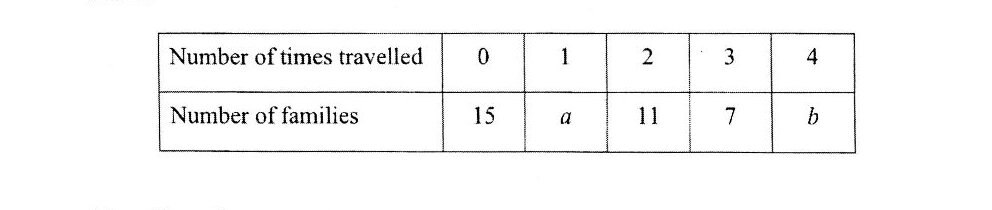
A survey was conducted among 50 families to find out the number of times they travelled together as a family in a year. The data collected is shown in the table below.
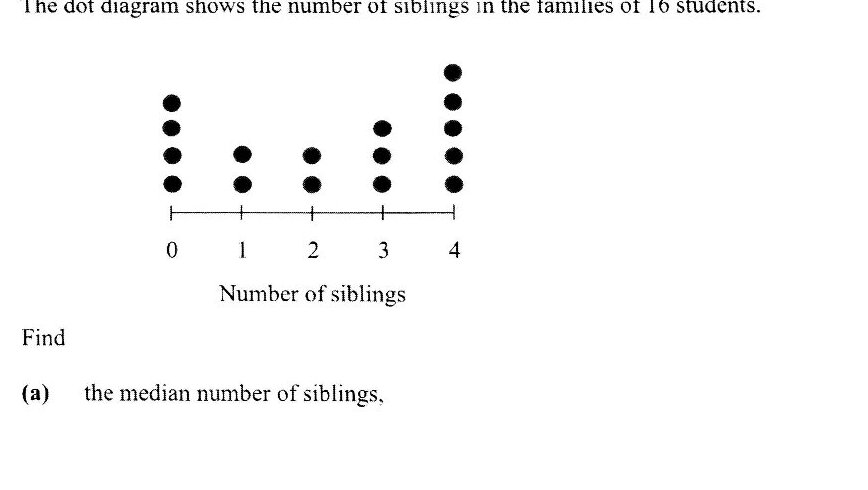
Find the probability that a student chosen randomly has at least 2 siblings.
What is the probability of getting an Action or a Wild card?
A store has a total of 120 size 6 and size 7 basketballs. A basketball is chosen at random by a student and the probability of choosing a size 7 ball is 3/5.
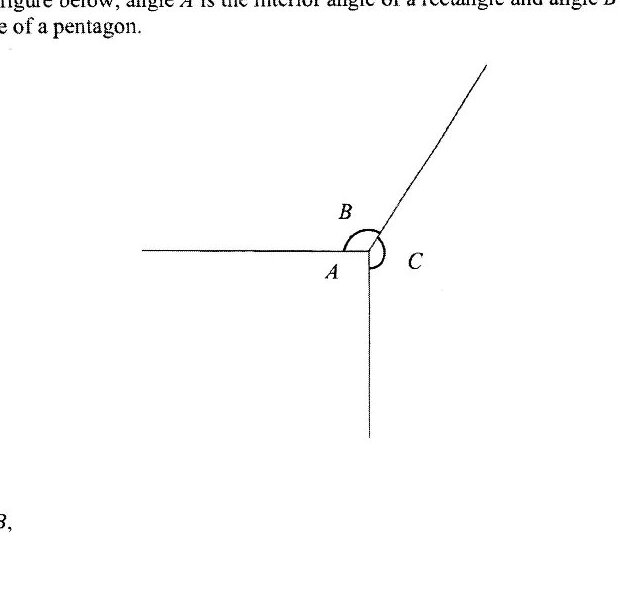
Find the number of size 6 basketballs in the store.
After losing x number of size 7 basketballs, the probability of choosing a size 6 ball is now 1/2. Find the value of x.
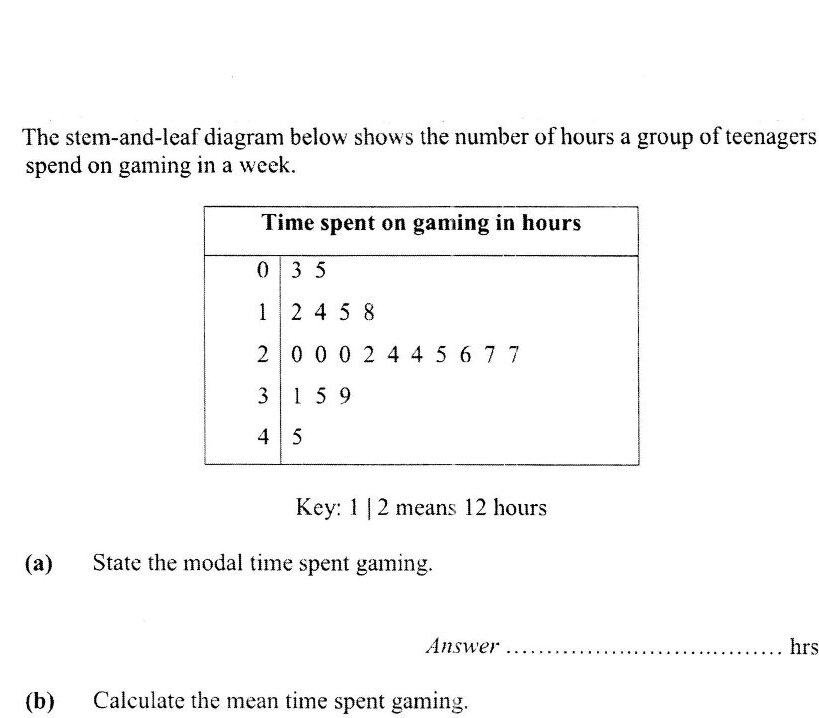
A teenager is randomly selected from the group. What is the probability of the teenager spending less than 20 hours on gaming?
A bag contains 20 balls which are numbered 1 to 20. Find the probability of drawing at random, a ball that is an even number.
Find the probability of drawing at random, a ball that is greater than 6 but smaller than 12.
Find the probability of drawing at random, a ball that is a prime number.
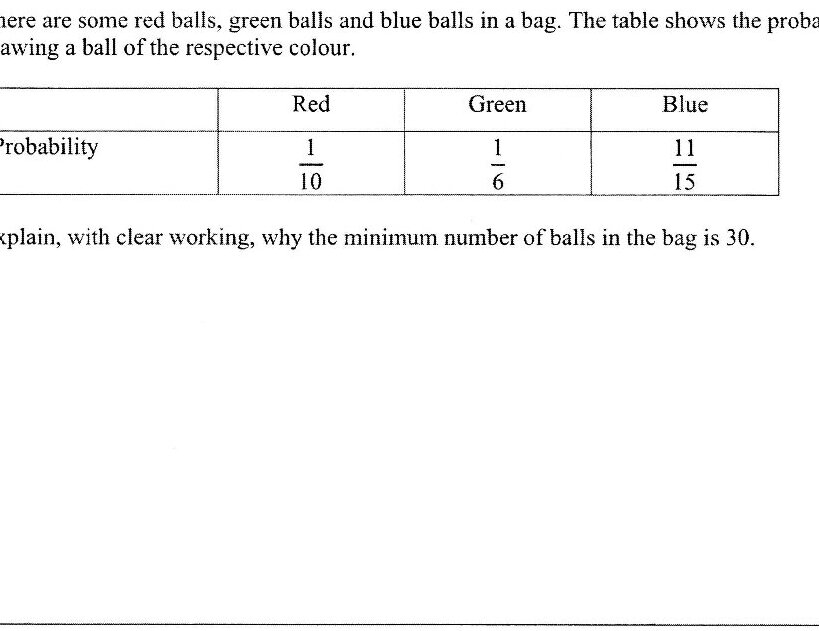
There are some red balls, green balls and blue balls in a bag. The table shows the probability of drawing a ball of the respective colour. Explain, with clear working, why the minimum number of balls in the bag is 30.
A bag contains 12 balls, numbered 1 to 12. A ball is drawn at random from the bag. Find the probability that the ball drawn is an even number.
A bag contains 12 balls, numbered 1 to 12. A ball is drawn at random from the bag. Find the probability that the ball drawn is greater than 8.
A bag contains 12 balls, numbered 1 to 12. A ball is drawn at random from the bag. Find the probability that the ball drawn is a prime number.
A bag contains 12 balls, numbered 1 to 12. A ball is drawn at random from the bag. Find the probability that the ball drawn is a negative number.
A box contains 40 markers, of which some are red, some are blue and the rest are yellow. The probability of drawing a red marker is 3/8 while the probability of drawing a blue marker is 2/5. Find the number of yellow markers in the box.
Find the probability of drawing a green marker from the box.
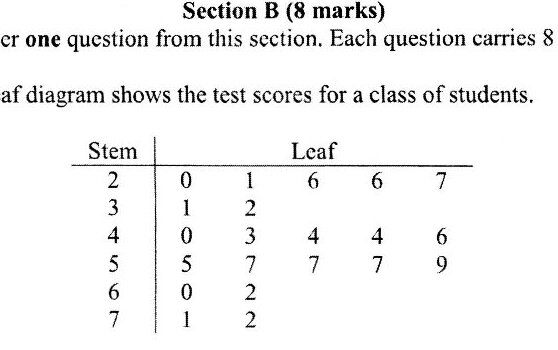
The passing mark of the test is 40 marks. A student is selected at random. Find the probability of selecting a student who passed the test. Give your answer as a fraction in the simplest form.
A bag contains 5 blue balls, 8 green balls and 3 yellow balls. A ball is drawn at random. Find the probability of getting a green ball.
x yellow balls are added to the bag. The probability of getting a yellow ball becomes 1/2. Find the value of x.
One book is selected at random from the box. Find, as a fraction in its simplest form, the probability that the book is a hardcover book.
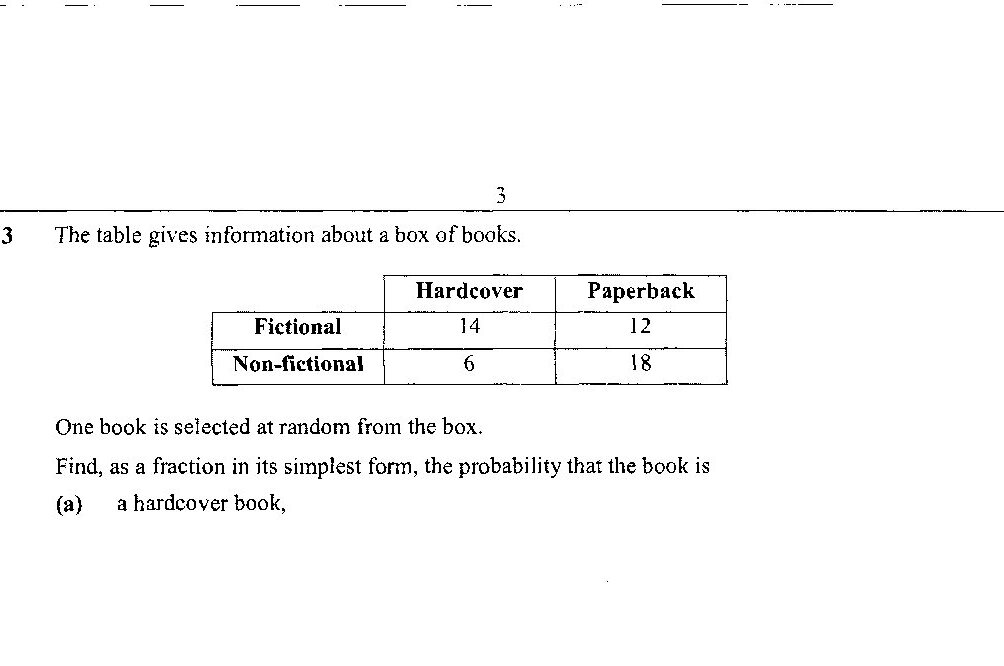
One book is selected at random from the box. Find, as a fraction in its simplest form, the probability that the book is a non-fictional book.
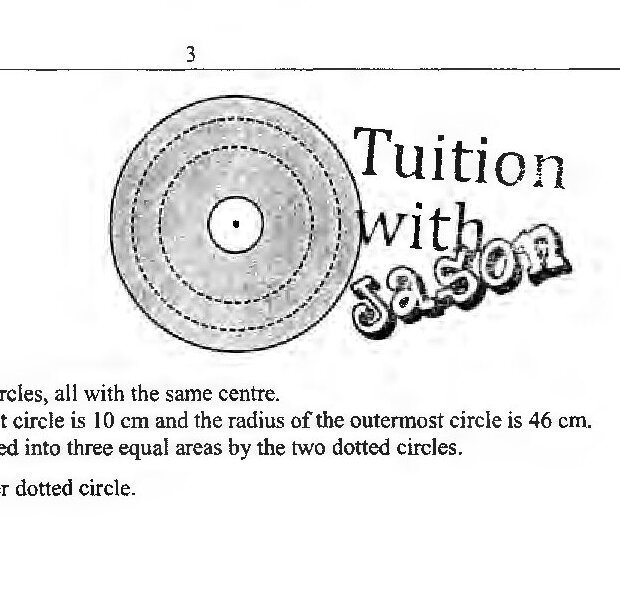
One book is selected at random from the box. Find, as a fraction in its simplest form, the probability that the book is a fictional paperback book.
A bag contains 5 red marbles, 6 green marbles and 3 yellow marbles. Matilda draws a marble at random.
Find the probability that a green marble is drawn.
Find the probability that the marble drawn is not red.
If Calos adds 3 blue marbles into the bag, find the probability that Matilda draws out a blue marble.
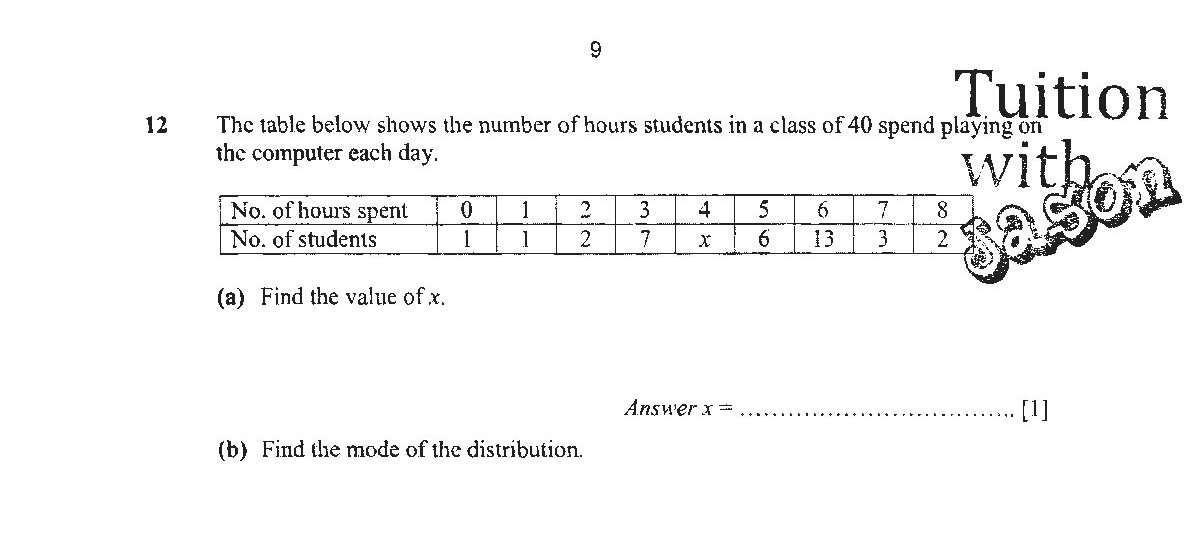
Find the probability that one student chosen at random spent more than six hours playing on the computer each day.
Past year papers cover the full exam — browse by subject below.
View All Papers ›