Paper 1 — Writing (写作) P6 PSLE Chinese

Continuous Writing (写作)

核心概念 (Key Concepts)

看图作文kàn tú zuò wénpicture-based composition shìis 华文huá wénChinese language 试卷一shì juàn yīPaper 1 deof 唯一wéi yīonly 部分bù fèncomponentgòngtotal 40分考生kǎo shēngcandidate 须根据xū gēn jùmust write based on 3至4幅sān zhì sì fú3 to 4 连环图lián huán túpicture sequence写出xiě chūwrite out 一篇yì piāna piece of 不少于bù shǎo yúno fewer than 150字 deof 叙事文xù shì wénnarrative essay内容nèi róngcontent 必须bì xūmust 紧扣jǐn kòuclosely follow 图片所呈现的情节tú piàn suǒ chéng xiàn de qíng jiéthe plot shown in the pictures并且bìng qiěand 有条理yǒu tiáo lǐwell-organised感情真实gǎn qíng zhēn shíemotions genuine

文章结构 (Essay Structure)

一篇yì piāna piece of hǎogood 作文zuò wéncomposition 通常tōng chángusually 分为fēn wéiis divided into 三个sān gèthree 部分bù fènparts

  1. 开头kāi tóuopening / beginning
    作用zuò yòngpurpose shìis 交代jiāo dàiintroduce 时间shí jiāntime地点dì diǎnplace人物rén wùcharacters背景bèi jǐngbackground并且bìng qiěand 吸引xī yǐnattract 阅卷老师yuè juàn lǎo shīmarker 继续jì xùcontinue 读下去dú xià qùreading

  2. 发展fā zhǎndevelopment / 高潮gāo cháoclimax
    作用zuò yòngpurpose shìis 推动tuī dòngpush forward 情节qíng jiéplot 发展fā zhǎndevelopment写出xiě chūwrite out 事情shì qingevent 怎样zěn yànghow 发生fā shēnghappen变化biàn huàchange升级shēng jíintensify高潮gāo cháoclimax shìis 全文quán wénthe whole essay zuìmost 紧张jǐn zhāngtensezuìmost 精彩jīng cǎiexciting deof 部分bù fènpart

  3. 结尾jié wěiending
    作用zuò yòngpurpose shìis 总结zǒng jiésum up 事情shì qingevent 结果jié guǒresult点出diǎn chūpoint out 感受gǎn shòufeelings道理dào lǐlesson huòor 启示qǐ shìinsighthǎogood 结尾jié wěiending néngcan ràngmake 文章wén zhāngessay gèngmore 完整wán zhěngcomplete

精彩开头 (Strong Openings)

强而有力qiáng ér yǒu lìpowerful deof 开头kāi tóuopening 能够néng gòucan 立刻lì kèimmediately 抓住zhuā zhùgrab 读者dú zhěreader 注意力zhù yì lìattention常见cháng jiàncommon 方法fāng fǎmethods yǒuhave

  • 对话开头duì huà kāi tóudialogue opening直接zhí jiēdirectly 进入jìn rùenter 情节qíng jiéplot自然zì ránnaturally 介绍jiè shàointroduce 人物关系rén wù guān xìcharacter relationship
  • 动作开头dòng zuò kāi tóuaction opening一开始yì kāi shǐat the start jiùright away yǒuhave 动感dòng gǎnsense of action节奏jié zòupace 明快míng kuàibrisk
  • 景物描写开头jǐng wù miáo xiě kāi tóuweather/setting openingxiānfirst xiěwrite 天气tiān qìweather环境huán jìngenvironment气氛qì fēnatmospherewèifor 下文xià wénlater part 铺垫pū diànset up
  • 反问开头fǎn wèn kāi tóurhetorical question openingyònguse 问题wèn tíquestion 引发yǐn fātrigger 思考sī kǎothinking增强zēng qiángstrengthen 吸引力xī yǐn lìappeal

描写方法 (Descriptive Writing Methods)

高分gāo fēnhigh-scoring 作文zuò wéncomposition 不只是bù zhǐ shìis not only take 事情shì qingevent 写出来xiě chū láiwrite out还要hái yàoalso need to 会用huì yòngknow how to use 描写miáo xiědescription ràngmake 人物rén wùcharacters and 场面chǎng miànscene gèngmore 生动shēng dòngvivid

  • 外貌描写wài mào miáo xiěappearance descriptionxiěwrite 人物rén wùcharacter deof 脸色liǎn sèfacial expression眼神yǎn shénlook in the eyes穿着chuān zhuóclothing神态shén tàiexpression
  • 动作描写dòng zuò miáo xiěaction descriptionxiěwrite 人物rén wùcharacter 怎样zěn yànghow zuòdo动作dòng zuòactions yàoshould 具体jù tǐspecific
  • 心理描写xīn lǐ miáo xiěinner thoughts descriptionxiěwrite 人物rén wùcharacter 心里xīn lǐin the heart 想什么xiǎng shén mewhat is being thought表现biǎo xiànshow 紧张jǐn zhāngnervousness后悔hòu huǐregret感动gǎn dòngmoved feeling děngand so on 情绪qíng xùemotion
  • 语言描写yǔ yán miáo xiědialogue description通过tōng guòthrough 说话内容shuō huà nèi róngspeech content 表现biǎo xiànshow 人物rén wùcharacter 性格xìng gépersonality and 关系guān xìrelationship

连接词与过渡 (Connectives and Transitions)

连接词lián jiē cíconnectives néngcan 帮助bāng zhùhelp 文章wén zhāngessay gèngmore 有条理yǒu tiáo lǐwell-organized常用cháng yòngcommonly used 连接词lián jiē cíconnectives 包括bāo kuòinclude

  • 首先shǒu xiānfirst
  • 其次qí cìsecondly
  • 最后zuì hòufinally
  • 突然tū ránsuddenly
  • 忽然hū ránall of a sudden
  • 原来yuán láiit turned out
  • 没想到méi xiǎng dàounexpectedly
  • 从此cóng cǐfrom then on
  • 自从zì cóngsince

看图作文要求 (Picture-Based Composition Requirements)

PSLE 2026 华文试卷一为看图作文kàn tú zuò wénpicture-based composition,考生须根据3至4幅连环图写出完整故事,字数不少于150字

看图要点:

  • 仔细观察每一幅图的人物rén wùcharacters地点dì diǎnsetting动作dòng zuòactions表情biǎo qíngexpressions
  • 找出图与图之间的因果关系yīn guǒ guān xìcause-and-effect时间顺序shí jiān shùn xùsequence
  • 根据图片推断人物的心情xīn qíngfeelings想法xiǎng fǎthoughts
  • 所有图片内容必须在文章中有所呈现chéng xiànreflected,不可忽略任何一幅图

注意: 看图作文不是自由命题,作文内容必须与图片情节紧密结合。

常考题材 (Common Essay Types)

小六xiǎo liùPrimary 6 看图作文kàn tú zuò wénpicture-based composition 常见cháng jiàncommon 题材tí cáithemes 多半duō bànmostly 属于shǔ yúbelong to 叙事文xù shì wénnarrative essay重点zhòng diǎnfocus 包括bāo kuòinclude

  • 帮助别人bāng zhù bié rénhelping others
  • 坚持不懈jiān chí bù xièperseverance
  • 友谊yǒu yìfriendship
  • 一次意外的事情yí cì yì wài de shì qingan unexpected event

规则与例子 (Rules and Examples)

结构完整 (Complete Structure)

规则guī zérule作文zuò wéncomposition 必须bì xūmust yǒuhave 开头kāi tóuopening发展fā zhǎndevelopment高潮gāo cháoclimax结尾jié wěiending不能bù néngcannot 只写zhǐ xiěonly write 经过jīng guòprocess没有méi yǒuwithout 结果jié guǒresult and 感想gǎn xiǎngreflection

正确zhèng quècorrect

  • 开头kāi tóuopening 交代jiāo dàiintroduce 学校义卖会xué xiào yì mài huìschool charity sale 即将开始jí jiāng kāi shǐis about to startI 主动zhǔ dòngvoluntarily 帮忙bāng mánghelp
  • 发展fā zhǎndevelopment xiěwrite I 遇到yù dàoencounter 困难kùn nandifficultysuch as 货物huò wùgoods 掉落diào luòfall down顾客gù kècustomers 误会wù huìmisunderstand
  • 高潮gāo cháoclimax xiěwrite 关键时刻guān jiàn shí kècritical moment I 如何rú héhow 冷静lěng jìngcalmly 处理chǔ lǐhandle
  • 结尾jié wěiending 点出diǎn chūpoint out 帮助别人bāng zhù bié rénhelping others 让我ràng wǒmakes me 快乐kuài lèhappy

错误cuò wùincorrect

  • 一开始yì kāi shǐat the start jiùright away xiěwrite 结果jié guǒresult中间zhōng jiānmiddle 没有méi yǒuno 经过jīng guòprocess
  • 事情shì qingevent 写完xiě wánfinished writing jiùthen 结束jié shùend没有méi yǒuwithout 感受gǎn shòufeelings huòor 启示qǐ shìinsight

开头要吸引人 (Opening Must Be Engaging)

规则guī zérule开头kāi tóuopening 不要bú yàodo not tàitoo 平淡píng dànflat可以kě yǐcan 选用xuǎn yòngchoose 对话duì huàdialogue动作dòng zuòaction景物描写jǐng wù miáo xiěsetting description huòor 反问fǎn wènrhetorical question

正确zhèng quècorrect

  1. 对话开头duì huà kāi tóudialogue opening
    你没事吧nǐ méi shì baare you alright ?” I 连忙lián mánghurriedly 扶起fú qǐhelp up 跌倒diē dǎofallen deof 老爷爷lǎo yé yeold grandfather

  2. 动作开头dòng zuò kāi tóuaction opening
    I 抓起zhuā qǐgrabbed 书包shū bāoschool bag飞快地fēi kuài deswiftly 冲出chōng chūrushed out of 教室jiào shìclassroom因为yīn wèibecause 操场cāo chǎngfield 那边nà biānthat side 传来chuán láicame 呼救声hū jiù shēngcry for help

  3. 反问开头fǎn wèn kāi tóurhetorical question opening
    难道nán dàocould it be that 真正zhēn zhèngtrue deof 友谊yǒu yìfriendship huìwill 因为yīn wèibecause of 一次yí cìone time 误会wù huìmisunderstanding érand 破裂pò lièbreak apart maquestion particle

错误cuò wùincorrect

  • 今天jīn tiāntoday I 很开心hěn kāi xīnvery happy我要wǒ yàoI want to xiěwrite 一件事yí jiàn shìan event
  • 有一天yǒu yì tiānone day I went 学校xué xiàoschool

描写要具体 (Description Must Be Specific)

规则guī zérule不要bú yàodo not 只写zhǐ xiěonly write 他很伤心tā hěn shāng xīnhe was very sad我很紧张wǒ hěn jǐn zhāngI was very nervous 这样zhè yànglike this 笼统lǒng tǒnggeneral deof 句子jù zisentenceyàoneed to 通过tōng guòthrough 外貌wài màoappearance动作dòng zuòaction心理xīn lǐthoughts语言yǔ yánspeech láito 表现biǎo xiànshow

正确zhèng quècorrect

  • he 低着头dī zhe tóuhung his head眼眶yǎn kuàngeye sockets 红红的hóng hóng dereddened双手shuāng shǒuboth hands 不停地bù tíng denon-stop 揉着róu zherubbing 衣角yī jiǎohem of clothes
  • I 的心de xīnmy heart 怦怦直跳pēng pēng zhí tiàopounded hard心想xīn xiǎngthought to myself: “ 要是yào shìif I 失败shī bàifail lecompleted aspect怎么办zěn me bànwhat should I do ?”
  • 别担心bié dān xīndo not worry我来帮你wǒ lái bāng nǐI will help you !” she 坚定地jiān dìng defirmly shuōsaid

错误cuò wùincorrect

  • 他很伤心tā hěn shāng xīnhe was very sad
  • 我很紧张wǒ hěn jǐn zhāngI was very nervous

使用连接词 (Use Connectives)

规则guī zérule段落duàn luòparagraphs 之间zhī jiānbetween 要有yào yǒushould have 过渡guò dùtransition不要bú yàodo not 每一句měi yí jùevery sentence 都用dōu yòngall use 然后rán hòuthen

正确zhèng quècorrect

  • 首先shǒu xiānfirstI xiàngtoward 老师lǎo shīteacher 说明shuō míngexplained 情况qíng kuàngsituation其次qí cìsecondlyI péiaccompanied 同学tóng xuéclassmate dàoto 医务室yī wù shìsick bay最后zuì hòufinallyI cáionly then 回到huí dàoreturned to 教室jiào shìclassroom
  • 突然tū ránsuddenly天空tiān kōngsky 响起xiǎng qǐrang out 一声yì shēnga 巨雷jù léiloud thunder
  • 原来yuán láiit turned out那位nà wèithat 陌生人mò shēng rénstranger shìwas 新来的xīn lái denewly arrived 校工xiào gōngschool worker

错误cuò wùincorrect

  • I 去了qù lewent 礼堂lǐ tánghall然后rán hòuthen I 看到kàn dàosaw 老师lǎo shīteacher然后rán hòuthen I 跑过去pǎo guò qùran over然后rán hòuthen I 帮忙bāng mánghelped

高潮要明显 (Climax Must Be Clear)

规则guī zérule叙事文xù shì wénnarrative essay 一定yí dìngmust yǒuhave 最关键zuì guān jiànmost crucial deof 冲突chōng tūconflict huòor 转折zhuǎn zhéturning point没有méi yǒuwithout 高潮gāo cháoclimax文章wén zhāngessay jiùthen 显得xiǎn deseems píngflat

正确zhèng quècorrect

  • 正当zhèng dāngjust as I 不知所措bù zhī suǒ cuòdid not know what to do shíwhen那位nà wèithat 老奶奶lǎo nǎi naiold grandmother 突然tū ránsuddenly 晕倒yūn dǎofainted 在地zài dìon the ground现场xiàn chǎngscene 顿时dùn shíinstantly 乱成一团luàn chéng yì tuánbecame chaotic

错误cuò wùincorrect

  • I 帮助了bāng zhù lehelped 别人bié rénothers然后rán hòuthen 回家huí jiāwent home

范文与技巧 (Model Sentences and Techniques)

高分佳句 (High-Scoring Sentences)

佳句jiā jùexcellent sentence 不一定bù yí dìngnot necessarily yàomust 很难hěn nánvery difficult重点zhòng diǎnkey point shìis 具体jù tǐspecific自然zì ránnatural贴切tiē qièappropriate下面xià miànbelow shìare 适合shì hésuitable for 写作xiě zuòwriting deof 高分句型gāo fēn jù xínghigh-scoring sentence patterns

  1. 就在这时jiù zài zhè shíjust at this moment意想不到yì xiǎng bù dàounexpected deof 事情shì qingevent 发生了fā shēng lehappened
    好处hǎo chùadvantage适合shì hésuitable for 引出yǐn chūbring out 高潮gāo cháoclimax

  2. I 的心de xīnmy heart xiànglike 十五个吊桶打水shí wǔ gè diào tǒng dǎ shuǐmany buckets drawing water——七上八下qī shàng bā xiàextremely uneasy
    好处hǎo chùadvantageyònguse 比喻bǐ yùsimile/metaphor 写出xiě chūwrite out 紧张jǐn zhāngnervousness

  3. he 二话不说èr huà bù shuōwithout saying anything立刻lì kèimmediately 冲上前去chōng shàng qián qùrushed forward
    好处hǎo chùadvantage动作dòng zuòaction 鲜明xiān míngclear and vivid人物rén wùcharacter 形象xíng xiàngimage 突出tū chūstands out

  4. 望着wàng zhelooking at him 渐渐远去jiàn jiàn yuǎn qùgradually going far away deof 背影bèi yǐngback viewI 久久jiǔ jiǔfor a long time 不能平静bù néng píng jìngcould not calm down
    好处hǎo chùadvantage结尾jié wěiending yǒuhas 余韵yú yùnlingering effect

  5. 经过jīng guòafter going through 这件事zhè jiàn shìthis matterI 明白了míng bái leunderstood 一个yí gèone 道理dào lǐlesson帮助别人bāng zhù bié rénhelping others 其实qí shíactually also 是在shì zàiis 温暖wēn nuǎnwarming 自己zì jǐoneself
    好处hǎo chùadvantage适合shì hésuitable for 点题diǎn tílink back to topic and 总结zǒng jiésummarize

高分句型模板 (Useful Sentence Patterns)

  • 因为yīn wèibecause……所以suǒ yǐtherefore……
  • 虽然suī ránalthough……但是dàn shìbut……
  • 不但bú dànnot only……而且ér qiěbut also……
  • 如果rú guǒif……jiùthen……
  • 一边yì biānwhile……一边yì biānwhile……

范文段落 (Model Paragraph)

题材tí cáitheme帮助别人bāng zhù bié rénhelping others

放学后fàng xué hòuafter school天空tiān kōngsky 乌云密布wū yún mì bùcovered with dark clouds阵阵zhèn zhènbursts of 冷风lěng fēngcold wind 迎面吹来yíng miàn chuī láiblew toward my faceI 刚走到gāng zǒu dàohad just walked to 巴士站bā shì zhànbus stop忽然hū ránsuddenly 看见kàn jiànsaw 一位yí wèian 老奶奶lǎo nǎi naiold grandmother 提着tí zhecarrying 沉重chén zhòngheavy deof 购物袋gòu wù dàishopping bag吃力地chī lì destrenuously 走着zǒu zhewalking就在这时jiù zài zhè shíjust at this momentshe 脚下一滑jiǎo xià yì huáslipped整个人zhěng gè rénwhole body 向前倒去xiàng qián dǎo qùfell forwardI 二话不说èr huà bù shuōwithout saying anything立刻lì kèimmediately 冲上前去chōng shàng qián qùrushed forward一手yì shǒuone hand 扶住fú zhùsupported her一手yì shǒuone hand 捡起jiǎn qǐpicked up 散落一地sàn luò yí dìscattered all over the ground deof 水果shuǐ guǒfruit。 “ 谢谢你xiè xie nǐthank you小朋友xiǎo péng yǒuchild。” she 感激地gǎn jī degratefully shuōsaid那一刻nà yí kèthat momentI 心里xīn lǐin my heart 暖暖的nuǎn nuǎn dewarmalso 明白了míng bái leunderstood帮助别人bāng zhù bié rénhelping others 原来yuán láiit turns out shìis 这么zhè meso 快乐kuài lèjoyful deof 一件事yí jiàn shìa thing

常见错误 (Common Mistakes)

错别字 (Wrong Characters)

错别字cuò bié zìwrongly written character huìwill 影响yǐng xiǎngaffect 内容nèi róngcontent 表达biǎo dáexpression and 语言yǔ yánlanguage 分数fēn shùmarks常见cháng jiàncommon 错误cuò wùerrors 包括bāo kuòinclude

  • ✗ 我在在zài zàiwrong form去上海 → ✓ 我zàiagain去上海 (going to Shanghai again — use 再 “again”, not 在 “at”)
  • 因该yīn gāiwrong form → ✓ 应该yīng gāishould
  • 己经jǐ jīngwrong form → ✓ 已经yǐ jīngalready
  • 忽然间hū rán jiānall of a sudden deof sudden 写成xiě chéngwritten as call
  • 旁边páng biānbeside 写成xiě chéngwritten as 傍边bàng biānwrong form

句子开头重复 (Repetitive Sentence Beginnings)

很多hěn duōmany 学生xué shēngstudents 喜欢xǐ huanlike 连续lián xùcontinuously yònguse I 开头kāi tóuat the beginning 每一句měi yí jùevery sentence或者huò zhěor 一直yì zhíall the way yònguse 然后rán hòuthen这样zhè yàngthis way huìwill ràngmake 文章wén zhāngessay 单调dān diàomonotonous

避免方法bì miǎn fāng fǎway to avoid

  • 交替jiāo tìalternate 使用shǐ yònguse 连接词lián jiē cíconnectives
  • 有时yǒu shísometimes 先写xiān xiěwrite first 动作dòng zuòaction huòor 环境huán jìngenvironment
  • take 长句cháng jùlong sentence and 短句duǎn jùshort sentence 搭配dā pèimix 使用shǐ yònguse

没有清楚高潮 (No Clear Climax)

有些yǒu xiēsome 作文zuò wéncompositions 从头到尾cóng tóu dào wěifrom start to finish xiànglike 流水账liú shuǐ zhàngrunning account做了什么zuò le shén medid what去了哪里qù le nǎ lǐwent where看见什么kàn jiàn shén mesaw what但是dàn shìbut 没有méi yǒuno 最紧张zuì jǐn zhāngmost tense deof 部分bù fènpart
解决方法jiě jué fāng fǎsolutionxiānfirst 问自己wèn zì jǐask yourself这件事zhè jiàn shìthis matter 最危险zuì wēi xiǎnmost dangerous huòor 最感动zuì gǎn dòngmost touching deof 时刻shí kèmoment shìis 什么shén mewhat

的 / 地 / 得 用法 (Use of 的 / 地 / 得)

这三个字zhè sān gè zìthese three words 很常见hěn cháng jiànare very commonalso 最容易zuì róng yìmost easily 写错xiě cuòwrite wrongly

  1. deof放在fàng zàiplaced before 名词míng cínoun 前面qián miànin front表示biǎo shìshows 修饰xiū shìmodify

    • 美丽的花园měi lì de huā yuánbeautiful garden
    • 紧张的心情jǐn zhāng de xīn qíngnervous mood
  2. deadverbial marker放在fàng zàiplaced before 动词dòng cíverb 前面qián miànin front表示biǎo shìshows 动作dòng zuòaction 怎样zěn yànghow 进行jìn xíngis carried out

    • 飞快地跑fēi kuài de pǎorun quickly
    • 高兴地说gāo xìng de shuōsay happily
  3. decomplement marker放在fàng zàiplaced after 动词dòng cíverb 后面hòu miànbehind补充说明bǔ chōng shuō míngsupplement and explain 动作dòng zuòaction deof 程度chéng dùdegree huòor 结果jié guǒresult

    • 跑得很快pǎo de hěn kuàirun very fast
    • 高兴得跳起来gāo xìng de tiào qǐ láiso happy that one jumps up

正确zhèng quècorrect

  • he 认真地rèn zhēn decarefully tīnglistened 老师lǎo shīteacher deof 讲解jiǎng jiěexplanation
  • 妹妹mèi meiyounger sister 哭得kū decried to the extent of 双眼通红shuāng yǎn tōng hóngboth eyes completely red

错误cuò wùincorrect

  • he 认真得rèn zhēn dewrong form tīnglistened
  • 妹妹mèi meiyounger sister 哭地kū dewrong form 很伤心hěn shāng xīnvery sadly

应试技巧 (Exam Tips)

华文huá wénChinese language 试卷一shì juàn yīPaper 1 总分zǒng fēntotal marks shìis 40分sì shí fēn40 marks试卷一shì juàn yīPaper 1 只有zhǐ yǒuconsists only of 看图作文kàn tú zuò wénpicture-based composition全部quán bùall 40分sì shí fēn40 marks

时间分配 (Time Management)

连续作文lián xù zuò wéncontinuous writing 最有效zuì yǒu xiàomost effective deof 时间分配shí jiān fēn pèitime allocation shìis

  • 5分钟wǔ fēn zhōng5 minutes 审题shěn tíanalyze the topic and 构思gòu sīplan ideas
  • 35分钟sān shí wǔ fēn zhōng35 minutes 正式写作zhèng shì xiě zuòformal writing
  • 5分钟wǔ fēn zhōng5 minutes 检查jiǎn chácheck

审题步骤 (Topic Analysis Steps)

  1. xiānfirst 找出zhǎo chūidentify 关键词guān jiàn cíkeywords
    例如lì rúfor example帮助bāng zhùhelp坚持jiān chípersist误会wù huìmisunderstanding意外yì wàiunexpected event

  2. 确定què dìngdetermine 文体wén tǐgenre
    如果rú guǒif 题目tí mùtopic 要求yāo qiúrequires xiěwrite 一件事yí jiàn shìan event一次经历yí cì jīng lìan experience难忘的回忆nán wàng de huí yìunforgettable memory通常tōng chángusually 就是jiù shìis 叙事文xù shì wénnarrative essay

  3. 快速列出kuài sù liè chūquickly list out 四点sì diǎnfour points

    • 起因qǐ yīncause
    • 经过jīng guòprocess
    • 高潮gāo cháoclimax
    • 结果和感想jié guǒ hé gǎn xiǎngresult and reflection

阅卷老师看什么 (What Examiners Look For)

阅卷老师yuè juàn lǎo shīmarker 主要zhǔ yàomainly kànlook at

  • 是否shì fǒuwhether 切题qiè tírelevant to topic
  • 内容nèi róngcontent 是否shì fǒuwhether 完整wán zhěngcomplete
  • 情节qíng jiéplot 是否shì fǒuwhether 合理hé lǐlogical
  • 高潮gāo cháoclimax 是否shì fǒuwhether 突出tū chūstands out
  • 描写miáo xiědescription 是否shì fǒuwhether 生动shēng dòngvivid
  • 语言yǔ yánlanguage 是否shì fǒuwhether 通顺tōng shùnfluent
  • 有无yǒu wúwhether there is 错别字cuò bié zìwrongly written character and 病句bìng jùfaulty sentence

检查清单 (Checking Checklist)

最后zuì hòufinally 5分钟wǔ fēn zhōng5 minutes 一定要yí dìng yàomust 检查jiǎn chácheck

  • 题目tí mùtopic 有没有yǒu méi yǒuwhether there is 写偏xiě piānoff-topic writing
  • 人物rén wùcharacters 名称míng chēngnames 是否shì fǒuwhether 前后一致qián hòu yí zhìconsistent
  • 标点符号biāo diǎn fú hàopunctuation 是否shì fǒuwhether 正确zhèng quècorrect
  • deof / deadverbial marker / decomplement marker 是否shì fǒuwhether 用对yòng duìused correctly
  • 有无yǒu wúwhether there is 漏字lòu zìmissing character多字duō zìextra character错别字cuò bié zìwrongly written character

快速总结 (Quick Summary)

  • 看图作文kàn tú zuò wénpicture-based composition 属于shǔ yúbelongs to 试卷一shì juàn yīPaper 1gòngtotal 40分sì shí fēn40 marks试卷一全卷shì juàn yī quán juànthe entire Paper 1)。
  • 文章结构wén zhāng jié gòuessay structure yàomust 完整wán zhěngcomplete开头kāi tóuopening发展fā zhǎndevelopment / 高潮gāo cháoclimax结尾jié wěiending
  • 开头kāi tóuopening 可以kě yǐcan yònguse 对话duì huàdialogue动作dòng zuòaction景物描写jǐng wù miáo xiěsetting description反问fǎn wènrhetorical question
  • 描写人物miáo xiě rén wùdescribe characters 要用yào yòngmust use 外貌描写wài mào miáo xiěappearance description动作描写dòng zuò miáo xiěaction description心理描写xīn lǐ miáo xiěinner thoughts description语言描写yǔ yán miáo xiědialogue description
  • 连接词lián jiē cíconnectives néngcan ràngmake 文章wén zhāngessay gèngmore 有条理yǒu tiáo lǐwell-organized例如lì rúfor example首先shǒu xiānfirst突然tū ránsuddenly原来yuán láiit turned out从此cóng cǐfrom then on
  • 常考cháng kǎocommonly tested 题材tí cáithemes 包括bāo kuòinclude帮助别人bāng zhù bié rénhelping others坚持不懈jiān chí bù xièperseverance友谊yǒu yìfriendship意外事件yì wài shì jiànunexpected event
  • 高分gāo fēnhigh-scoring 作文zuò wéncomposition 一定yí dìngmust yǒuhave 清楚qīng chǔclear deof 高潮gāo cháoclimax
  • 避免bì miǎnavoid 流水账liú shuǐ zhàngrunning account and 重复chóng fùrepetitive 句子开头jù zi kāi tóusentence beginnings
  • 注意zhù yìpay attention to 错别字cuò bié zìwrongly written character尤其yóu qíespecially deof / deadverbial marker / decomplement marker deof 用法yòng fǎusage
  • 时间分配shí jiān fēn pèitime allocation5分钟wǔ fēn zhōng5 minutes 构思gòu sīplan ideas35分钟sān shí wǔ fēn zhōng35 minutes 写作xiě zuòwrite5分钟wǔ fēn zhōng5 minutes 检查jiǎn chácheck
✏️ 24 practice questions available

30 questions from school exam papers

Q1

我认为小文做题目时的态度不正确。因为小文不自己努力去考试,总靠别人帮忙,自己不思考,就学不到任何东西和知识。

2022-P6-Chinese-Prelim-Henry_Park 2022
Q2

我觉得陈老师是个有耐心和有爱心的老师。小文就算做老师说了很多次都不按照老师的方法做,但陈老师依然耐心的教导小文做题。陈老师是至诚敬观察小文,发现陈茂到了谷笑后才放心。当陈老师得知小文做题时的谷笑时,不仅不责怪,还鼓励小文要自己努力去考试,从错误里学习,变得更加强大!

2022-P6-Chinese-Prelim-Henry_Park 2022
Q3

我差一点儿失去了这位挚爱朋友 在作文时,你可以参考下面的提示: • 这位好朋友是谁? • 你们之间发生了什么事? • 你们是怎么和好的? • 你从这件事学到了什么?

100 marks
2022-P6-Chinese-Prelim-MGS 2022
Q4

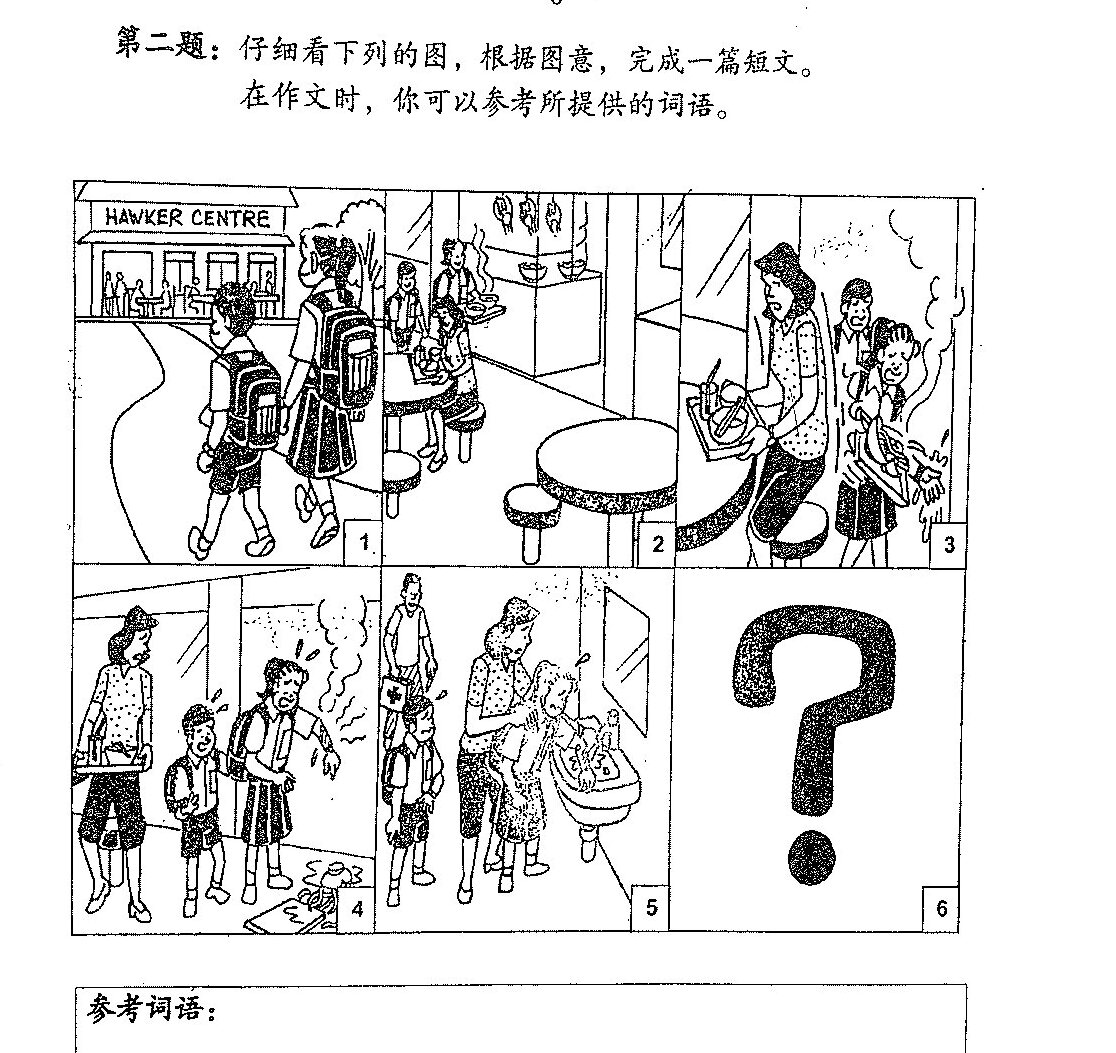
仔细看下列的图,根据图意,完成一篇短文。在作文时,你可以参考所提供的词语。

A comic strip with 6 panels showing a sequence of events at a 'Hawker Centre'. Panel 1 shows people entering a hawker centre. Panel 2 shows people sitting at a table. Panel 3 shows people standing and appearing distressed or hot. Panel 4 shows people standing indoors, some appear unwell. Panel 5 shows people in what appears to be an indoor setting with multiple figures. Panel 6 contains a large question mark, indicating the student must complete the story.
📊 Diagram: A comic strip with 6 panels showing a sequence of events at a 'Hawker Centre'. Panel 1 shows people entering a hawker centre. Panel 2 shows people sitting at a table. Panel 3 shows people standing and appearing distressed or hot. Panel 4 shows people standing indoors, some appear unwell. Panel 5 shows people in what appears to be an indoor setting with multiple figures. Panel 6 contains a large question mark, indicating the student must complete the story.
2022-P6-Chinese-Prelim-MGS 2022
Q5

第二题:看图作文。根据下列的图,排挫图意,完成一篇短文。在作文时,你可以参考所提供的词语。
A 6-panel comic strip showing a sequence of events at a Hawker Centre. Panel 1: Children and adults walking outside the Hawker Centre entrance. Panel 2: Family eating at tables in the hawker centre. Panel 3: Family cooking or preparing food. Panel 4: Children appear to have spilled or scattered something (marked with 'S'). Panel 5: An adult attending to children who seem distressed or injured. Panel 6: A large question mark indicating the missing final panel that students must write about.
📊 Diagram: A 6-panel comic strip showing a sequence of events at a Hawker Centre. Panel 1: Children and adults walking outside the Hawker Centre entrance. Panel 2: Family eating at tables in the hawker centre. Panel 3: Family cooking or preparing food. Panel 4: Children appear to have spilled or scattered something (marked with 'S'). Panel 5: An adult attending to children who seem distressed or injured. Panel 6: A large question mark indicating the missing final panel that students must write about.
2022-P6-Chinese-Prelim-Nan_Hua 2022
Q6

仔细看下列的图,根据图意,完成一篇短文。选作文时,你可以参考所提供的词语。
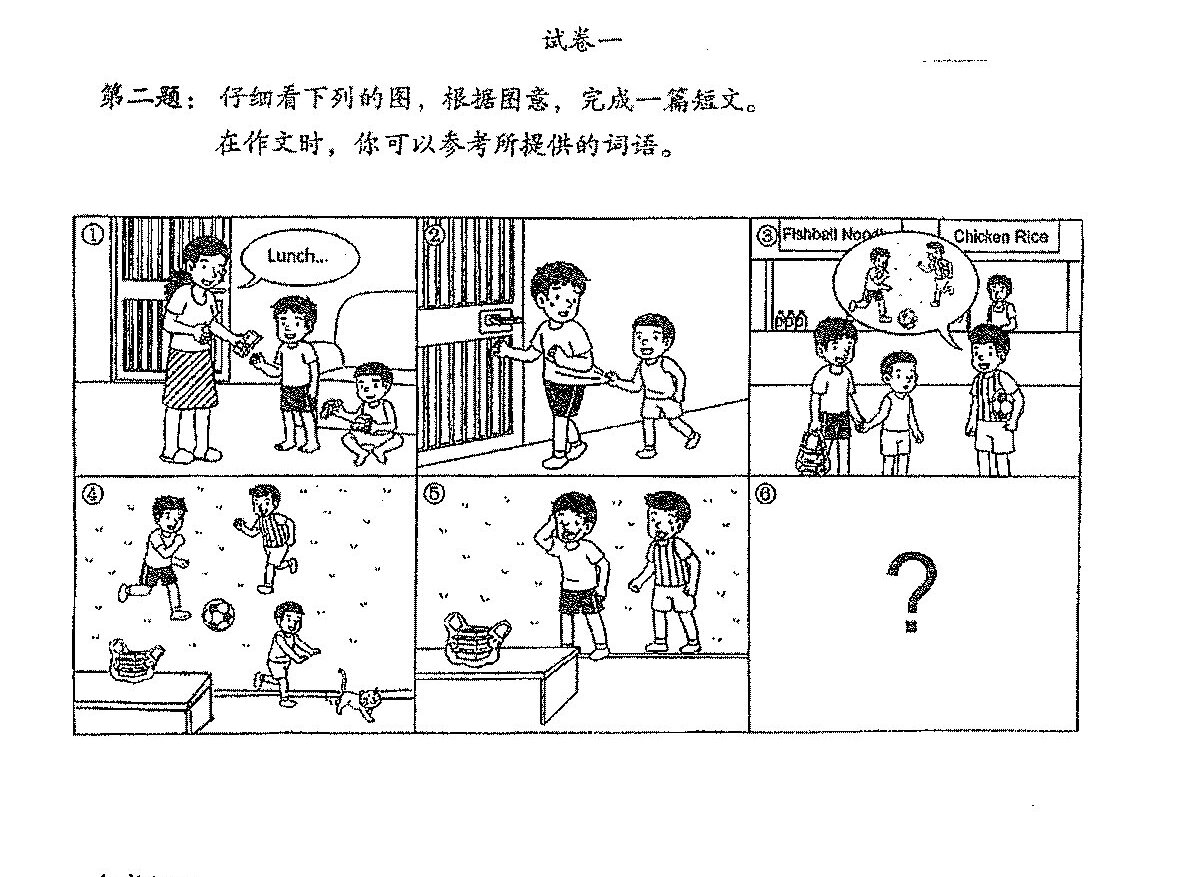
A series of 6 comic-style panels showing children's daily activities: (1) A mother saying 'Lunch...' to children in a kitchen/dining area. (2) Children going outside/entering a doorway. (3) Children in what appears to be a food court or restaurant setting with a 'Food Court' sign and 'Chicken Rice' label visible. (4) Children playing with a soccer ball in what appears to be a recreational area. (5) Children playing with a ball and a dog in an outdoor setting. (6) A question mark, indicating the next scene is to be determined or imagined.
📊 Diagram: A series of 6 comic-style panels showing children's daily activities: (1) A mother saying 'Lunch...' to children in a kitchen/dining area. (2) Children going outside/entering a doorway. (3) Children in what appears to be a food court or restaurant setting with a 'Food Court' sign and 'Chicken Rice' label visible. (4) Children playing with a soccer ball in what appears to be a recreational area. (5) Children playing with a ball and a dog in an outdoor setting. (6) A question mark, indicating the next scene is to be determined or imagined.
2022-P6-Chinese-Prelim-Nanyang 2022
Q7

仔细看下列的图,根据图意,写一篇短文。在作文时,你可以参考所提供的词语。

A comic strip with 5 numbered panels showing a sequence of events at a Hawker Centre. Panel 1: Shows the entrance of Hawker Centre with people standing outside. Panel 2: Shows children sitting at a table eating. Panel 3: Shows children eating and one appears to be choking or in distress. Panel 4: Shows adults (likely parents) with concerned expressions, one appears to be calling for help or reacting urgently. Panel 5: Shows what appears to be a medical or emergency response situation. A large question mark appears in the bottom right, indicating students must write about or complete the story.
📊 Diagram: A comic strip with 5 numbered panels showing a sequence of events at a Hawker Centre. Panel 1: Shows the entrance of Hawker Centre with people standing outside. Panel 2: Shows children sitting at a table eating. Panel 3: Shows children eating and one appears to be choking or in distress. Panel 4: Shows adults (likely parents) with concerned expressions, one appears to be calling for help or reacting urgently. Panel 5: Shows what appears to be a medical or emergency response situation. A large question mark appears in the bottom right, indicating students must write about or complete the story.
2022-P6-Chinese-Prelim-Red_Swastika 2022
Q8

___________________,我深深地被吸引住在。

A. 外头传来一声巨响
B. 听到分无无气思考
C. 看到同学们从其准备
D. 窗外传来美妙的歌声
2022-P6-Chinese-Prelim-Red_Swastika 2022
Q9

"今天的晚餐由我们女女来准备!"我和姐姐听了,都

1 咦呀
2 辩释
3 宣布
4 介绍
2022-P6-Chinese-Prelim-SCGS 2022
Q10

"何"的一声。原来是爸爸切到手,伤口流了

1 传来
2 发出
3 播竖
4 听到
2022-P6-Chinese-Prelim-SCGS 2022
Q11

的时刻,妈妈冲进厨房,把姐姐拖开,她才渐被热油烫伤。

1 最后
2 巧妙
3 关键
4 急促
2022-P6-Chinese-Prelim-SCGS 2022
Q12

________,我得了大家的称赞。

A. 小云说计的因素很有创意
B. 班长在操场上捡到了一个钱包
C. 弟弟把这个好消息告诉了妈妈
D. 政府鼓励人们在公共场所戴口罩
2022-P6-Chinese-Prelim-Tao_Nan 2022
Q13

我原谅了他 在作文时,你可以参考下面的提示: • 他是谁 • 他做了什么错事 • 你为什么原谅他 • 你从这件事中明白了什么

2023-P6-Chinese-Prelim-Ai_Tong 2023
Q14

仔细看下列的图,根据图意,完成一篇短文。在作文时,你可以参考所提供的词语。 (Look carefully at the series of pictures below. Based on the pictures, write a short composition. You may refer to the words provided when writing.)
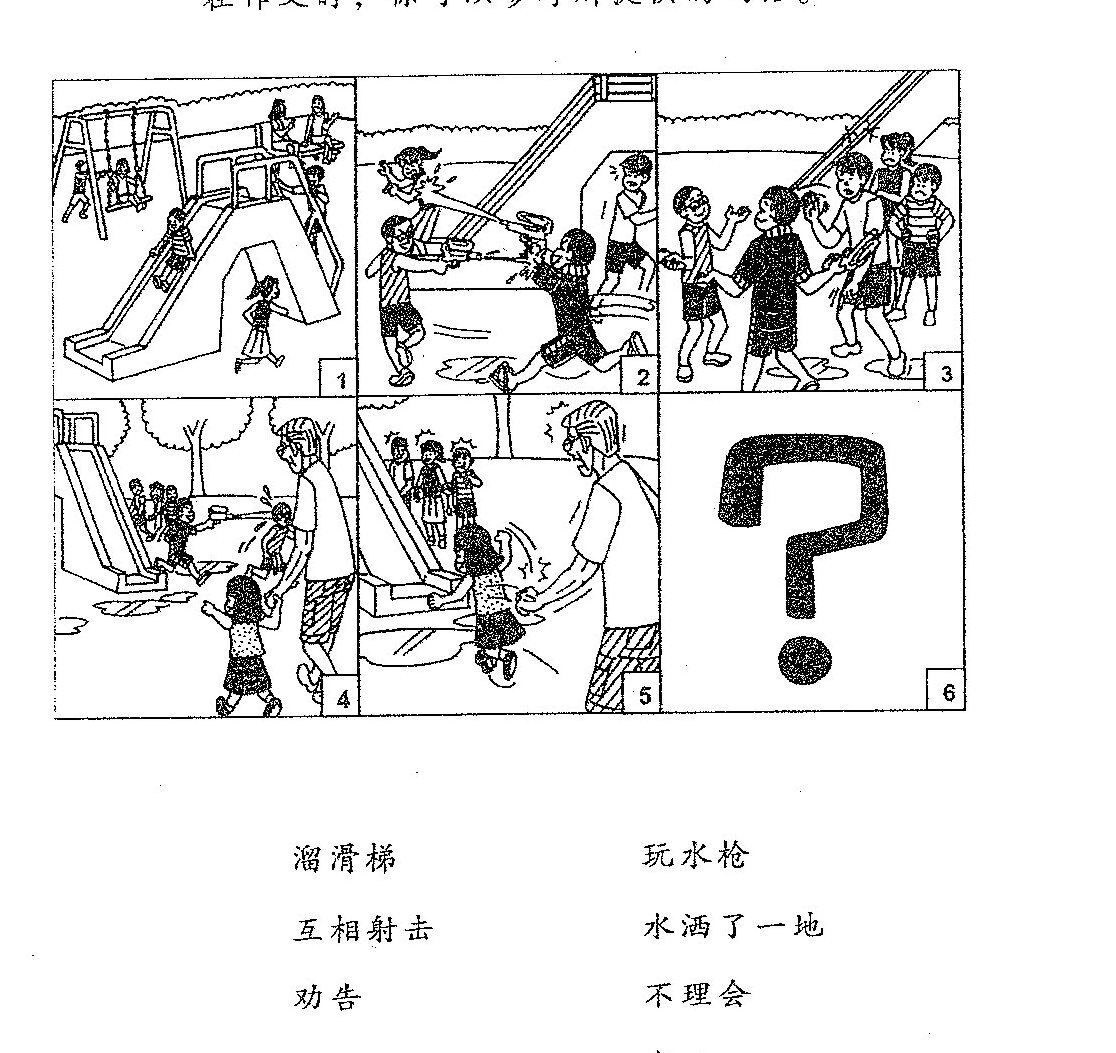
A series of 6 sequential pictures showing children's activities:
1. Children on a slide/playground equipment
2. Children playing with a ball/toy near a slope
3. A group of children playing together
4. Children on what appears to be playground equipment (slide or similar structure)
5. Children engaged in some activity
6. A large question mark symbol

The pictures depict various playground and recreational activities of children.
📊 Diagram: A series of 6 sequential pictures showing children's activities: 1. Children on a slide/playground equipment 2. Children playing with a ball/toy near a slope 3. A group of children playing together 4. Children on what appears to be playground equipment (slide or similar structure) 5. Children engaged in some activity 6. A large question mark symbol The pictures depict various playground and recreational activities of children.
2023-P6-Chinese-Prelim-Ai_Tong 2023
Q15

一件让我印象最深刻的事 在作文时,你可以参考下面的提示: • 这是一件什么事。 • 哪些人和这件事有关 • 这件事是如何影响你的 • 为什么你对这件事印象深刻

2023-P6-Chinese-Prelim-Catholic_High 2023
Q16

仔细看下列的图,根据图回答,完成一篇短文。在作文时,你可以参考所提供的词语。
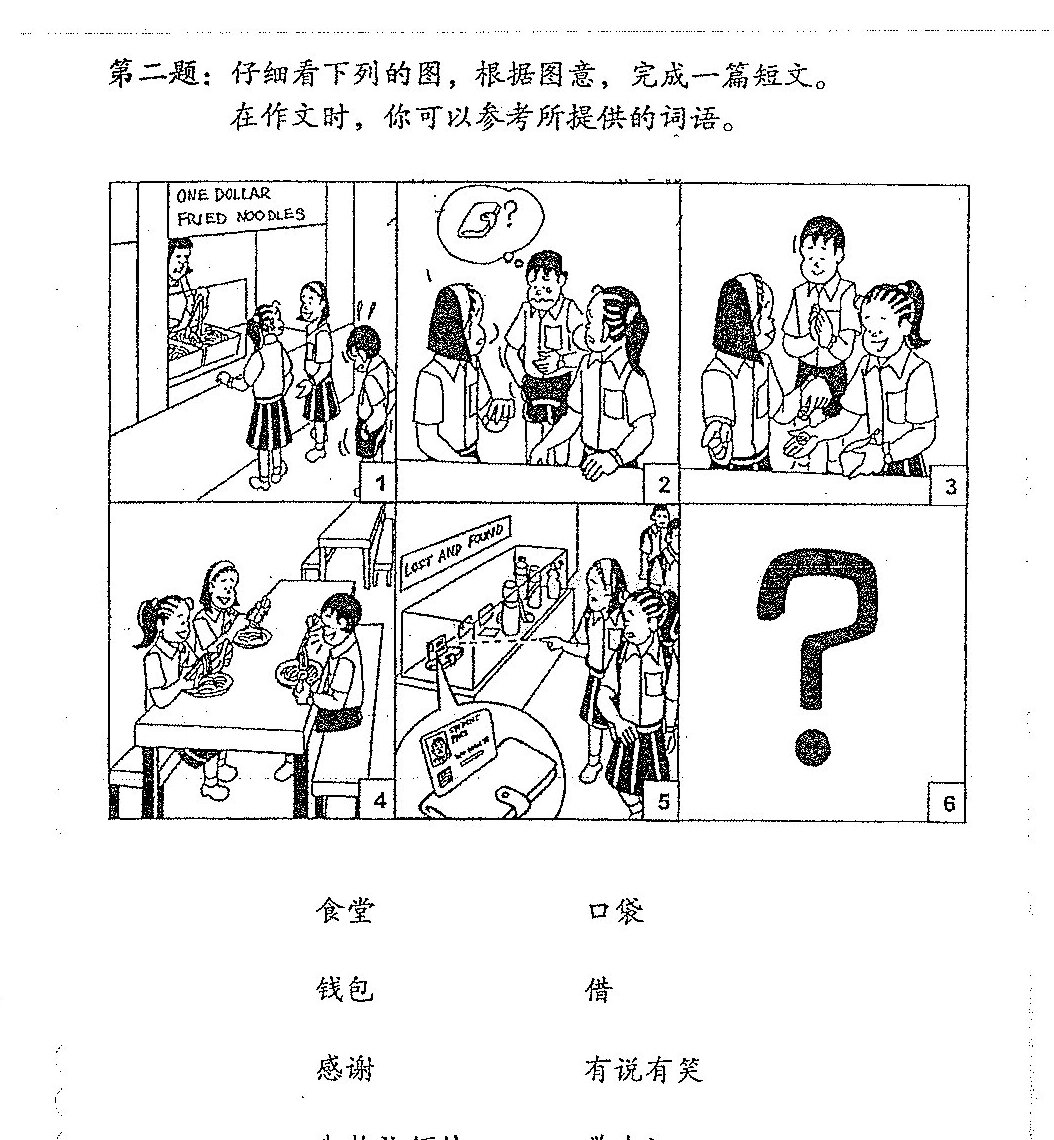
A comic strip with 6 panels showing a sequence of events in what appears to be a school setting. Panel 1 shows a teacher at a board with students entering a classroom (labeled 'ONE DOLLAR BURIED IMAGINES'). Panel 2 shows students gathered around what appears to be a found item. Panel 3 shows students with the found item. Panel 4 shows students at what appears to be a canteen or food service area. Panel 5 shows students with a 'LOST AND FOUND' sign or box. Panel 6 shows a question mark, suggesting the student must determine the outcome or continue the story.
📊 Diagram: A comic strip with 6 panels showing a sequence of events in what appears to be a school setting. Panel 1 shows a teacher at a board with students entering a classroom (labeled 'ONE DOLLAR BURIED IMAGINES'). Panel 2 shows students gathered around what appears to be a found item. Panel 3 shows students with the found item. Panel 4 shows students at what appears to be a canteen or food service area. Panel 5 shows students with a 'LOST AND FOUND' sign or box. Panel 6 shows a question mark, suggesting the student must determine the outcome or continue the story.
2023-P6-Chinese-Prelim-Catholic_High 2023
Q17

对先生和对太太花了很多时间学习细护分。思则的小顾与其他生和对太太的活动差,让更多人知造他们的娘定/爱全记序知先生和对太的该该责任在金同班,让更多人知道他们的主宅,后米他们的时去满满同好了是来。

2023-P6-Chinese-Prelim-Catholic_High 2023
Q18

地缘于原谅了我 在作文时,你可以参考下面的提示: • 你和地之间发生了什么事? • 后来怎么了? • 你有什么感受? • 结果怎样? • 你从中学到或意明白了什么?

2023-P6-Chinese-Prelim-MGS 2023
Q19

仔细看下列的图,根据图意,完成一篇短文。在作文时,你可以参考所提供的词语。 (Carefully look at the following picture. Based on the picture, complete a short essay. When writing, you may refer to the vocabulary provided.)
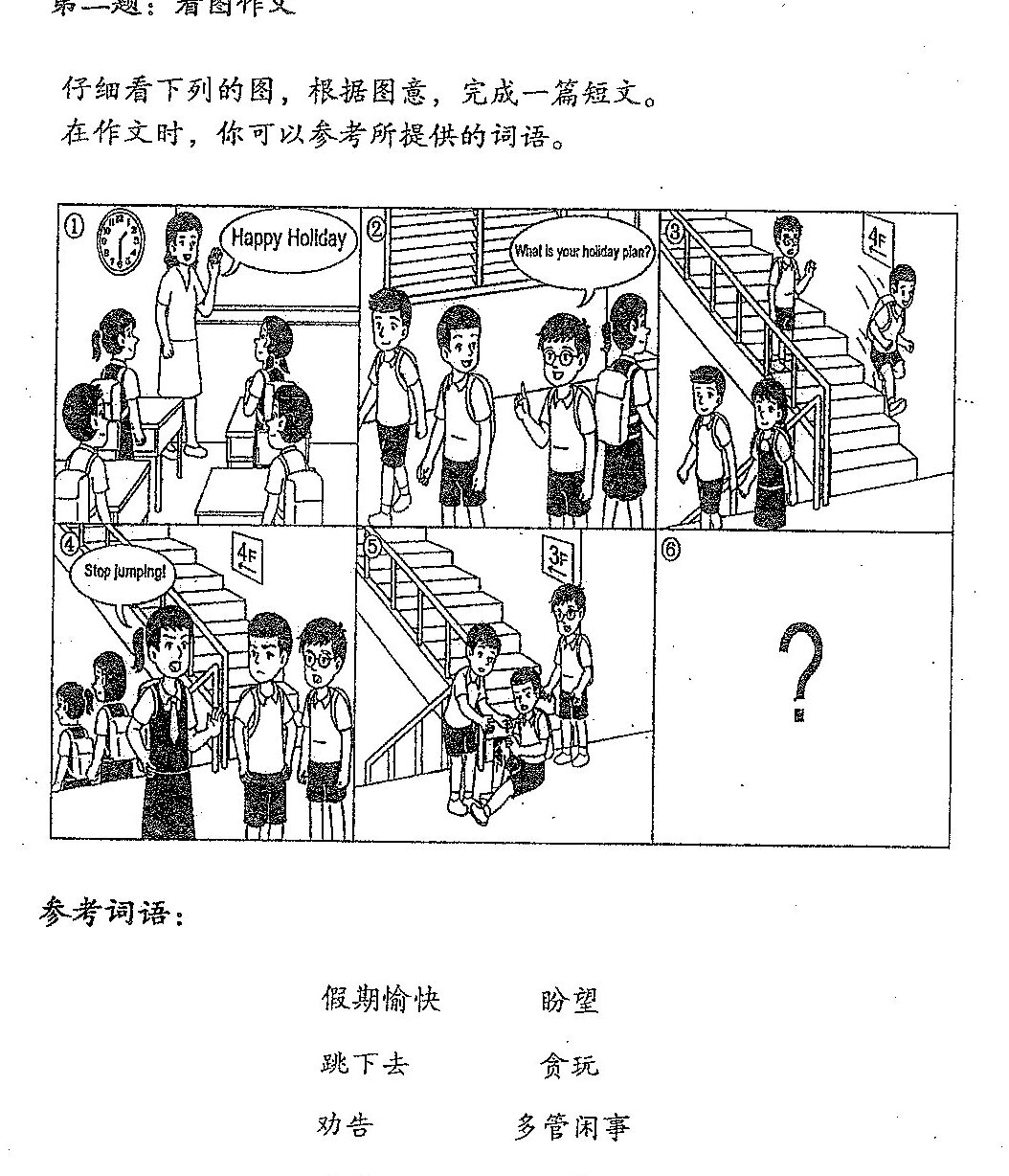
A comic strip style illustration showing a school scene with multiple panels. Panel 1 (top left): A teacher at a blackboard with 'Happy Holiday' written on it, talking to a student. Panel 2 (top middle): Students talking with speech bubble 'What is your holiday plan?'. Panel 3 (top right): A group of students standing near stairs. Panel 4 (bottom left): A student on stairs with label 'Stop jumping'. Panel 5 (bottom middle): Students on stairs. The illustration shows various school activities and interactions between students and a teacher. A large question mark appears on the right side of the page, indicating space for the essay response.
📊 Diagram: A comic strip style illustration showing a school scene with multiple panels. Panel 1 (top left): A teacher at a blackboard with 'Happy Holiday' written on it, talking to a student. Panel 2 (top middle): Students talking with speech bubble 'What is your holiday plan?'. Panel 3 (top right): A group of students standing near stairs. Panel 4 (bottom left): A student on stairs with label 'Stop jumping'. Panel 5 (bottom middle): Students on stairs. The illustration shows various school activities and interactions between students and a teacher. A large question mark appears on the right side of the page, indicating space for the essay response.
2023-P6-Chinese-Prelim-MGS 2023
Q20

___________________,他为此感到非常自豪。

(1) 太卫所选择的珍珠项链样式普通
(2) 小豆在这场短跑比赛中无意犯规
(3) 弟弟因为偷吃雪糕而身体不舒服
(4) 爷爷年经时曾时为陆家卫国做出贡献
2023-P6-Chinese-Prelim-MGS 2023
Q21

我参加了一个有趣的活动 在作文时,你可以参考下的提示: • 这是一个什么活动 • 你为什么觉得这个活动有趣 • 你有什么感受 • 你从这个活动中学到了什么

40 marks
2023-P6-Chinese-Prelim-Maris_Stella 2023
Q22

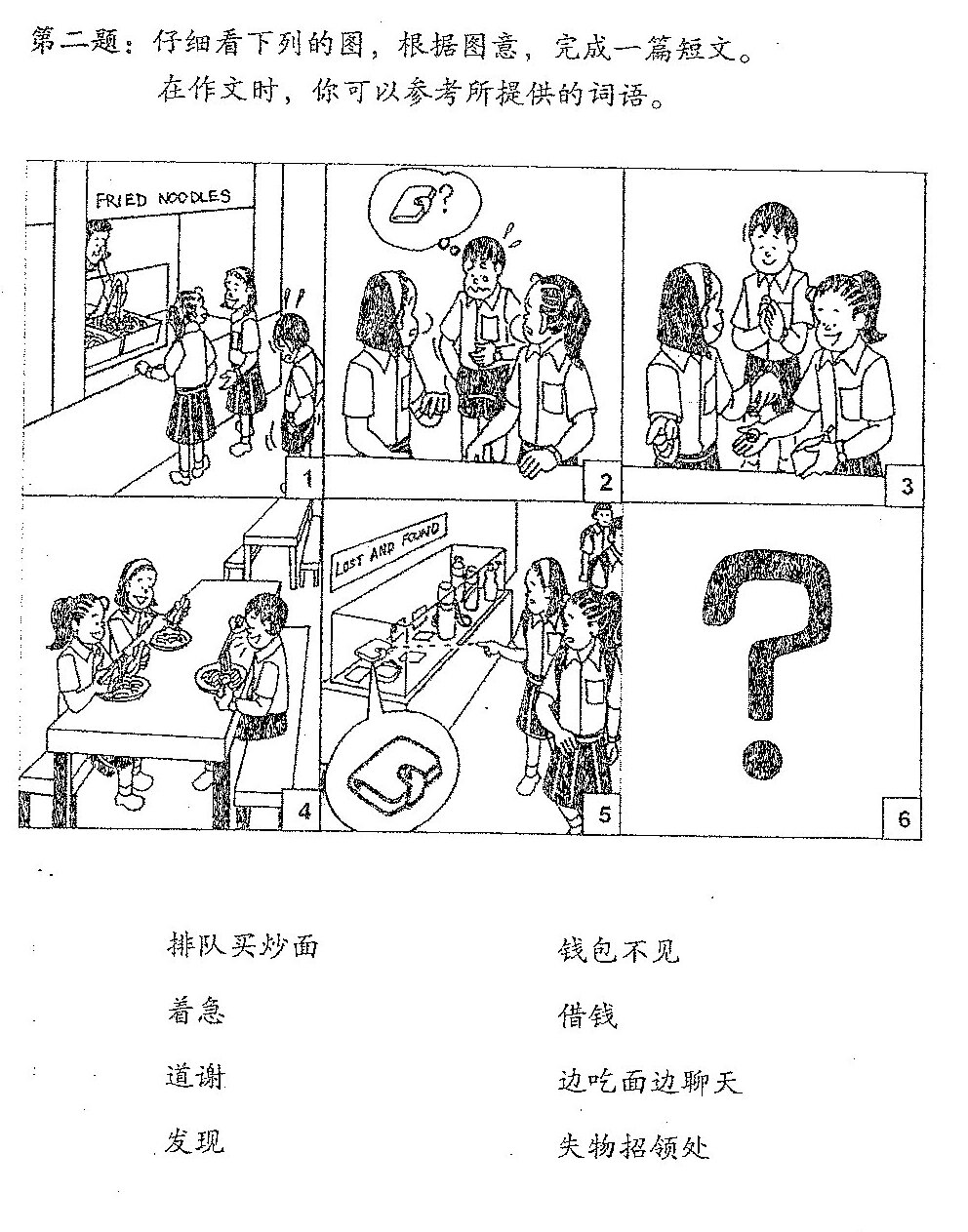
仔细看下列的图,根据图意,完成一篇短文。在作文时,你可以参考所提供的词语。

A 6-panel comic strip showing a sequence of events at a fast food restaurant (labeled 'FRIED NOODLES'). Panel 1: Children looking at a sign in a shop window. Panel 2: Children queuing/standing with a question mark speech bubble. Panel 3: More children in a group. Panel 4: Children sitting at a table eating. Panel 5: Children at a counter with a 'LOST AND FOUND' sign visible, with a question mark speech bubble. Panel 6: A large question mark. The sequence appears to tell a story about a lost item at a food establishment.
📊 Diagram: A 6-panel comic strip showing a sequence of events at a fast food restaurant (labeled 'FRIED NOODLES'). Panel 1: Children looking at a sign in a shop window. Panel 2: Children queuing/standing with a question mark speech bubble. Panel 3: More children in a group. Panel 4: Children sitting at a table eating. Panel 5: Children at a counter with a 'LOST AND FOUND' sign visible, with a question mark speech bubble. Panel 6: A large question mark. The sequence appears to tell a story about a lost item at a food establishment.
2023-P6-Chinese-Prelim-Maris_Stella 2023
Q23

做事没有责任心的后果 在作文时,你可以参考下面的提示: • 这是一件什么事 • 书情的经过是怎样的 • 不负责任造成了什么后果 • 你从这件事学到了什么

2023-P6-Chinese-Prelim-Nanyang 2023
Q24

第二题:仔细看下列的图,提握图意,完成一篇短文。 在作文时,你可以参考所提供的词语。
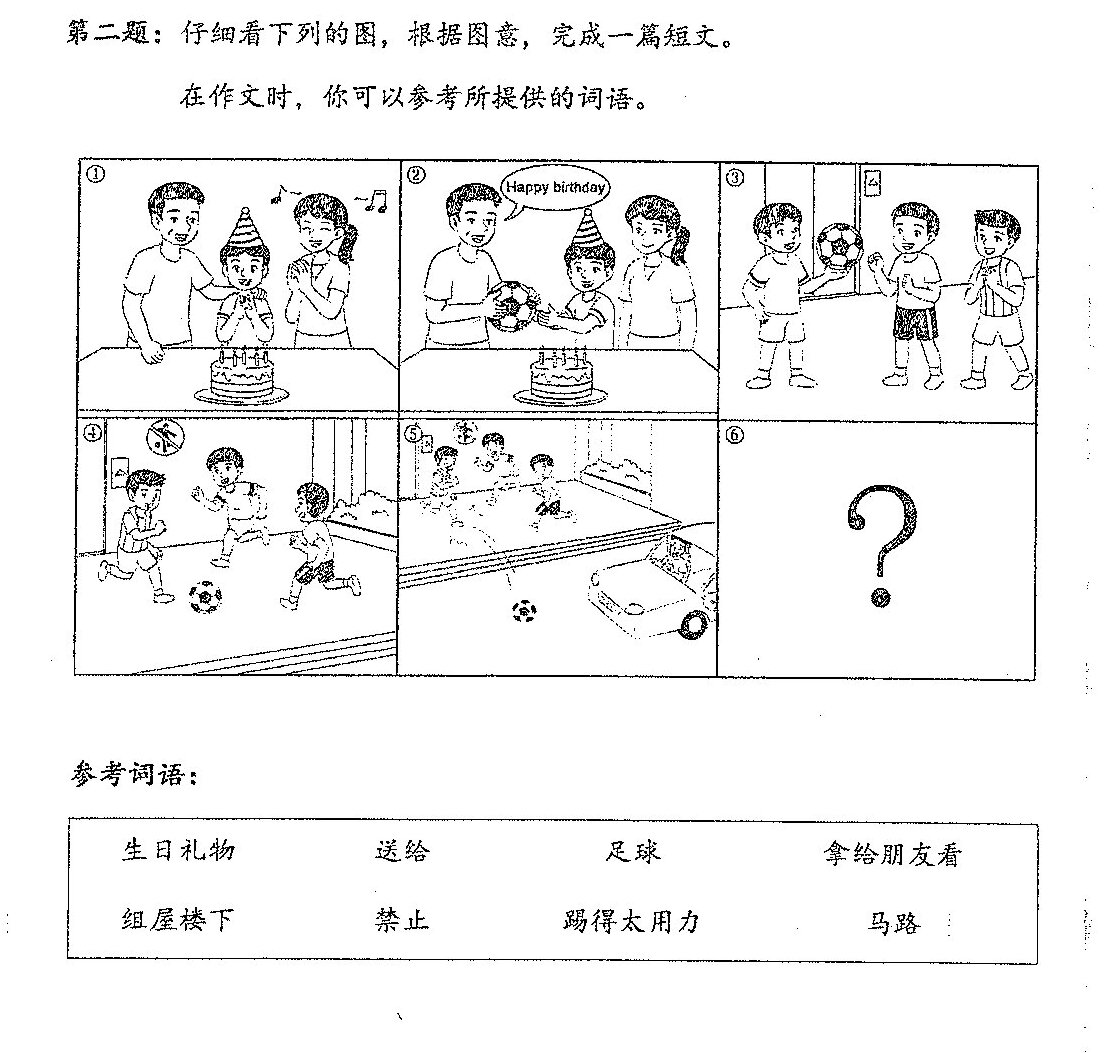
A 6-panel comic strip showing:
① Children celebrating a birthday with a birthday cake
② Children with 'Happy Birthday' sign and birthday cake
③ Children standing and one appears to be presenting or giving something
④ Children playing with a ball indoors
⑤ Children playing soccer/football outdoors
⑥ A large question mark (indicating students need to complete the story)
📊 Diagram: A 6-panel comic strip showing: ① Children celebrating a birthday with a birthday cake ② Children with 'Happy Birthday' sign and birthday cake ③ Children standing and one appears to be presenting or giving something ④ Children playing with a ball indoors ⑤ Children playing soccer/football outdoors ⑥ A large question mark (indicating students need to complete the story)
2023-P6-Chinese-Prelim-Nanyang 2023

Past year papers cover the full exam — browse by subject below.