Ratio
Ratio
Key Concepts
-
A ratio compares two or more quantities.
- It shows how much of one quantity there is compared with another.
- Ratios are written using a colon, for example 3 : 5.
- This means “3 parts to 5 parts”.
-
A ratio can compare:
- part to part
Example: 2 red balls and 3 blue balls → ratio of red to blue = 2 : 3 - part to whole
Example: 2 red balls and 3 blue balls, total = 5 balls → ratio of red balls to total balls = 2 : 5
- part to part
-
The order in a ratio is very important.
- Ratio of boys to girls is not the same as ratio of girls to boys.
- Example:
- boys : girls = 2 : 3
- girls : boys = 3 : 2
-
Ratios can be written in equivalent forms.
- Equivalent ratios name the same comparison.
- Example:
- 1 : 2
- 2 : 4
- 3 : 6
These are all equivalent because both sides are multiplied by the same number.
-
A ratio should usually be given in its simplest form.
- This means the numbers in the ratio have no common factor other than 1.
- Example:
- 8 : 12
- divide both terms by 4
- simplest form = 2 : 3
-
To simplify a ratio:
- Write the ratio clearly.
- Find the greatest common factor (GCF) or a common factor of both numbers.
- Divide both terms by the same number.
-
A ratio is different from a fraction, but they are related.
- Ratio compares quantities.
- Fraction shows a part of a whole.
- Example:
- ratio of red to blue = 2 : 3
- fraction of red out of total = 2 out of 5 = 2/5
-
When dividing a quantity in a given ratio:
- First find the total number of parts.
- Then divide the total quantity by the total number of parts.
- This gives the value of 1 part.
- Then multiply to find each share.
-
In before and after ratio problems:
- Something may be added, removed, eaten, spent, or transferred.
- You must be careful about:
- what changed
- what stayed the same
- whether the total changed
- It often helps to use units or a bar model.
-
In some ratio questions:
- The actual amount is unknown.
- Use equal units to represent the quantities.
- Then compare the “before” and “after” situations carefully.
-
Ratios can only compare quantities with the same unit.
- Example:
- 200 g : 500 g = 2 : 5
- If the units are different, convert first.
- Example:
- 1 m : 50 cm
- convert 1 m to 100 cm
- 100 : 50 = 2 : 1
- Example:
- Example:
Three-Term Ratios
-
A three-term ratio compares three quantities using two colons.
- Example: A : B : C = 2 : 3 : 5 means A gets 2 parts, B gets 3 parts and C gets 5 parts.
-
To simplify a three-term ratio:
- Find the HCF of all three numbers.
- Divide all three terms by the HCF.
- Example:
- 4 : 6 : 10
- HCF of 4, 6 and 10 = 2
- Divide each term by 2: 2 : 3 : 5
-
To divide a quantity in a three-term ratio:
- Add all the parts to find the total number of parts.
- Divide the total quantity by the total parts to find 1 part.
- Multiply to find each share.
- Example: “Share $100 in the ratio 2 : 3 : 5.”
- Total parts = 2 + 3 + 5 = 10
- 1 part = $100 ÷ 10 = $10
- A gets 2 × $10 = $20
- B gets 3 × $10 = $30
- C gets 5 × $10 = $50
-
To combine two ratios into a three-term ratio:
- Make the shared quantity (B) the same number in both ratios.
- Then read off A : B : C.
- Example:
- A : B = 1 : 2 and B : C = 3 : 4
- Multiply A : B by 3 → A : B = 3 : 6
- Multiply B : C by 2 → B : C = 6 : 8
- Now B is 6 in both, so A : B : C = 3 : 6 : 8
Worked Example: Dividing in a Three-Term Ratio
$180 is shared among Ali, Ben and Carol in the ratio 1 : 2 : 3. How much does each person get?
Step 1: Find the total number of parts
- 1 + 2 + 3 = 6 parts
Step 2: Find the value of 1 part
- $180 ÷ 6 = $30
Step 3: Find each person’s share
- Ali gets 1 part: 1 × $30 = $30
- Ben gets 2 parts: 2 × $30 = $60
- Carol gets 3 parts: 3 × $30 = $90
Final Answer
- Ali gets $30, Ben gets $60, Carol gets $90.
Check
- $30 + $60 + $90 = $180 ✔
- Ratio: 30 : 60 : 90 = 1 : 2 : 3 ✔
Important Definitions
-
Ratio: a comparison of two or more quantities using division.
-
Term of a ratio: each number in a ratio.
Example: in 3 : 4, the terms are 3 and 4. -
Equivalent ratios: ratios that show the same comparison even though the numbers are different.
Example: 1 : 2 and 3 : 6. -
Simplest form: a ratio written using the smallest whole numbers possible.
-
Common factor: a number that divides exactly into two or more numbers.
-
Greatest common factor (GCF): the largest number that divides exactly into both terms of a ratio.
-
Part-part comparison: a ratio comparing one part of a group to another part of the same group.
Example: apples to oranges. -
Part-whole comparison: a ratio comparing one part of a group to the total number in the group.
Example: apples to all fruits. -
Total parts: the sum of the terms in a ratio.
Example: in 2 : 5, total parts = 2 + 5 = 7. -
Unit value: the value of 1 part when a total quantity is divided according to a ratio.
Worked Examples
Example 1: Equivalent Ratios and Simplest Form
The ratio of pencils to pens is 12 : 18. Write the ratio in simplest form.
Step 1: Find a common factor
- Factors of 12: 1, 2, 3, 4, 6, 12
- Factors of 18: 1, 2, 3, 6, 9, 18
- Greatest common factor = 6
Step 2: Divide both terms by 6
- 12 ÷ 6 = 2
- 18 ÷ 6 = 3
Step 3: Write the simplified ratio
- Ratio in simplest form = 2 : 3
Check
- 2 : 3, 4 : 6, 6 : 9, 12 : 18 are all equivalent ratios.
Example 2: Dividing a Quantity in a Given Ratio
A sum of $72 is divided between Sarah and Mei in the ratio 5 : 4. How much does each girl get?
Step 1: Find total parts
- 5 + 4 = 9 parts
Step 2: Find the value of 1 part
- $72 ÷ 9 = $8
Step 3: Find each share
- Sarah gets 5 parts:
- 5 × $8 = $40
- Mei gets 4 parts:
- 4 × $8 = $32
Final Answer
- Sarah gets $40
- Mei gets $32
Check
- $40 + $32 = $72 ✔
Example 3: Before and After Ratio Problem
The ratio of red beads to blue beads was 3 : 5. After 12 blue beads were removed, the ratio became 3 : 2. How many blue beads were there at first?
Step 1: Understand what stayed the same
- The number of red beads stayed the same.
- Only blue beads changed.
Step 2: Compare the two ratios
Before:
- red : blue = 3 : 5
After:
- red : blue = 3 : 2
Since the red part is 3 in both ratios, we can compare directly.
Step 3: Find the change in blue parts
- Blue beads changed from 5 parts to 2 parts.
- Difference = 5 − 2 = 3 parts
We are told this difference is 12 blue beads.
Step 4: Find the value of 1 part
- 12 ÷ 3 = 4 beads
Step 5: Find the original number of blue beads
- At first, blue beads = 5 parts
- 5 × 4 = 20 beads
Final Answer
- There were 20 blue beads at first.
Check
- Red beads = 3 parts = 3 × 4 = 12
- Before: 12 : 20 = 3 : 5 ✔
- After removing 12 blue beads:
- blue = 20 − 12 = 8
- New ratio:
- 12 : 8 = 3 : 2 ✔
Common Mistakes to Avoid
-
Writing the ratio in the wrong order.
- If the question asks for cats to dogs, do not write dogs to cats.
-
Forgetting to simplify the ratio.
- Example: writing 4 : 8 instead of 1 : 2.
-
Dividing only one term when simplifying.
- You must divide both terms by the same number.
-
Adding ratio terms wrongly.
- For 2 : 3, total parts is 5, not 6.
-
Mixing up part-part and part-whole ratios.
- If red : blue = 2 : 3, then red : total is 2 : 5, not 2 : 3.
-
Using different units without converting first.
- Example: do not compare 1 kg and 500 g directly.
- Convert 1 kg to 1000 g first.
-
In before-and-after questions, changing the wrong quantity.
- Read carefully to know what was added, removed, or unchanged.
-
Assuming “3 parts” always means 3 items.
- A part can stand for many items.
-
Forgetting to check whether the total quantity changed.
- If something is added or removed, the total may not stay the same.
-
Not checking the final answer against the new ratio.
Exam Tips
-
Underline key words in the question:
- to
- out of
- total
- remaining
- shared
- simplest form
- before
- after
-
For ratio sharing questions, always write:
- Total parts =
- 1 part =
- Required amount =
-
Use a bar model for word problems.
- It helps you avoid guessing.
-
If the question says “in the ratio”, the numbers are parts, not actual amounts unless stated.
-
If the question asks for part to whole, remember:
- whole = sum of all parts
-
In before-and-after questions:
- Identify what did not change.
- That unchanged quantity helps you match the ratios.
-
Always give ratios in simplest form unless the question says otherwise.
-
Do a quick check:
- Does the answer match the total?
- Does the answer fit the ratio?
- Is the order correct?
-
Good mark-earning working should include clear statements such as:
- Total parts = 3 + 4 = 7
- 1 part = 56 ÷ 7 = 8
- Therefore, …
- Check: …
Quick Summary
- A ratio compares two or more quantities.
- The order of the terms in a ratio matters.
- Equivalent ratios are made by multiplying or dividing both terms by the same number.
- Write ratios in simplest form using the greatest common factor.
- Part-part ratio compares one part with another part.
- Part-whole ratio compares one part with the total.
- For part-whole questions, total = sum of all parts.
- To divide a quantity in a ratio:
- find total parts
- find 1 part
- multiply to get each share
- In before-and-after problems, look for the quantity that stays the same.
- Convert to the same units before forming or simplifying a ratio.
- Use a bar model to organise information clearly.
- Always check that your final answer matches the ratio and the total.
There are red, blue and yellow pens in a box. The ratio of the number of red pens to blue pens is 2 : 3. The ratio of the number of yellow pens to the total number of red and blue pans is 5 : 6. What fraction of the pans in the box are blue pens?
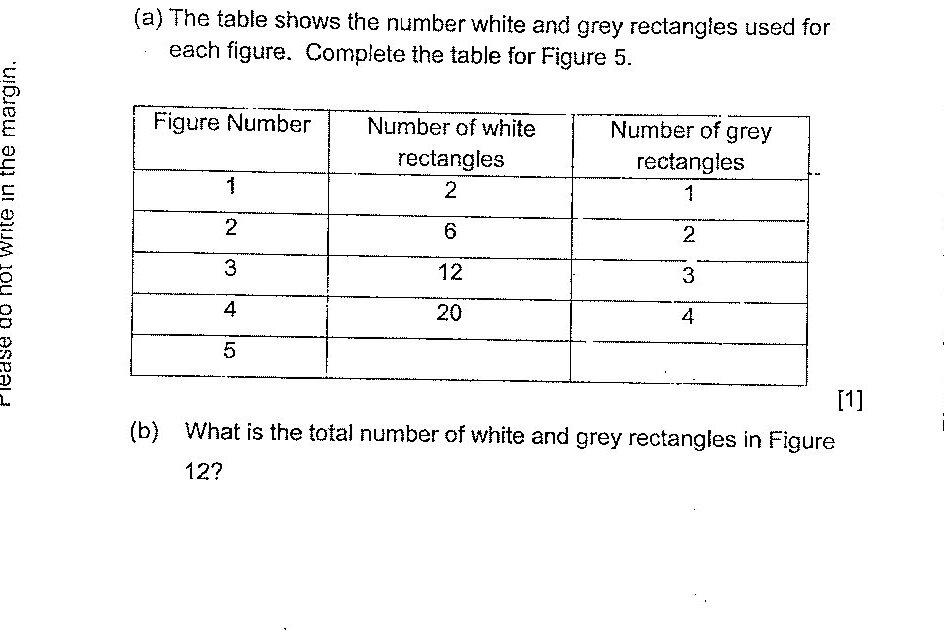
Students joined only one co-curricular activity (CCA) in school — art club, rugby or swimming. 1/3 of them joined swimming. The number of students who joined art club was 2/4 of the number who joined rugby. The bar graph represents the number of students who joined each CCA. Label the bar graph by writing R for rugby, A for art club and S for swimming in the blanks below.
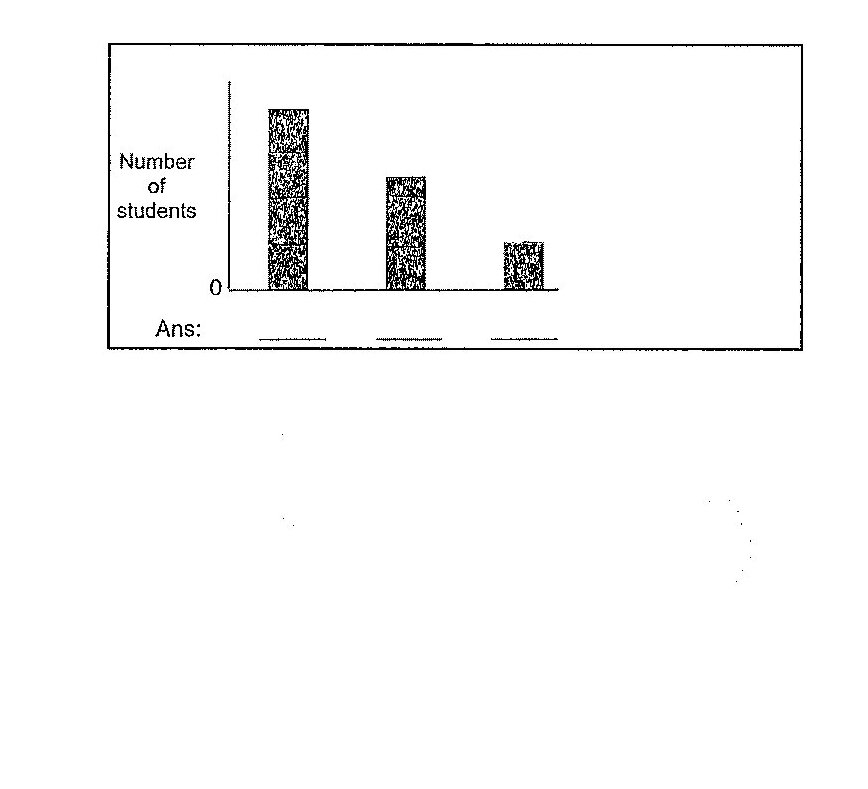
The ratio of the number of curry puffs to the number of tuna puffs in a pastry shop was 7 : 4 at first. After 26 curry puffs were sold, the ratio of the number of curry puffs to the number of tuna puffs became 3 : 2. What was the total number of curry puffs and tuna puffs in the pastry shop at first?
Mr Fam paid a total of $384 for the T-shirts. The costs of Yellow, Blue and Purple T-shirts were in the ratio of 2 : 1 : 1. How much did Mr Fam pay for all the Purple T-shirts?
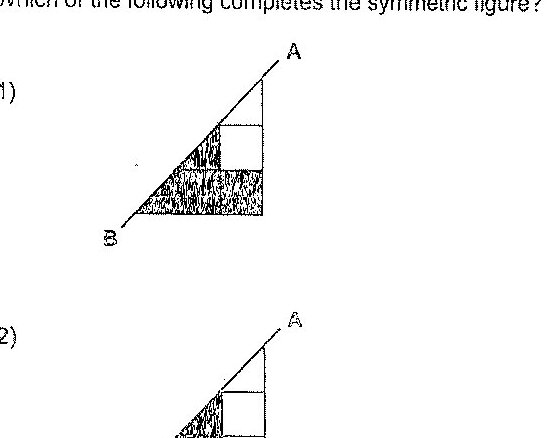
Zephyr bought 4 times as many chocolates as sweets. For every 5 chocolates packed into a party bag, he packed 3 sweets. He had 35 chocolates left when all the sweets were completely packed. How many chocolates did he buy at first?
A metal box filled completely with 30 identical bolts weighs 1.18 kg. The same metal box when filled completely with 70 identical nuts weighs 1.54 kg. The ratio of the mass of a bolt to that of a nut is 5 : 3.
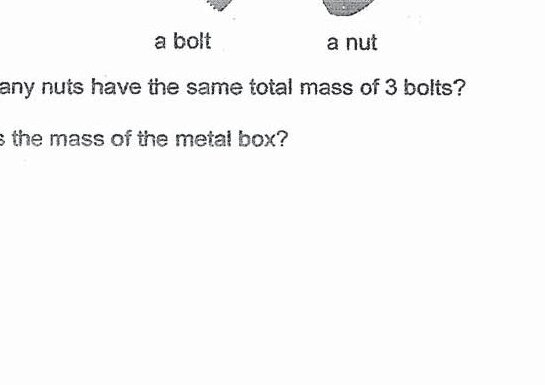
How many nuts have the same total mass of 3 bolts?
Raju used white and grey squares to form the following patterns as shown below. The table below shows the number of white and grey squares in each figure. (a) Fill in the table for Figure 5. (b) What is the total number of squares in Figure 40? (c) How many more white squares then grey squares are used in Figure 40?
![Four figures showing patterns made of white and grey squares arranged in a cross/diamond-like formation:
- Figure 1: Single grey square
- Figure 2: Cross pattern with 1 grey square in center and 4 grey squares around it (total 5 grey squares)
- Figure 3: Larger cross pattern with grey squares forming a cross and white squares at top and bottom
- Figure 4: Even larger cross pattern with grey squares forming the cross structure, white squares at the top, and additional white squares on the sides
Table showing:
Figure Number: 1, 2, 3, 4, 5
Number of white squares: 0, 0, 2, 6, [blank]
Number of grey squares: 1, 4, 7, 10, [blank]](/assets/question-images/p6-math_2022-P6-Maths-Prelim-Catholic_High_p40_q17.jpg)
Given that the shop sold 20 green pens, how many red pens did it sell?

Bryan kept his black and white caps in two boxes. The number of black caps and white caps in the first box was in the ratio 2 : 1. The number of black caps and white caps in the second box was in the ratio 5 : 7. The two boxes had the same number of caps. What fraction of Bryan's caps were white?
3 : 12 = ? : 18. What is the missing number in the box?
![A proportion equation: 3 : 12 = [box with ?] : 18](/assets/question-images/p6-math_2022-P6-Maths-Prelim-Henry_Park_p10_q18.jpg)
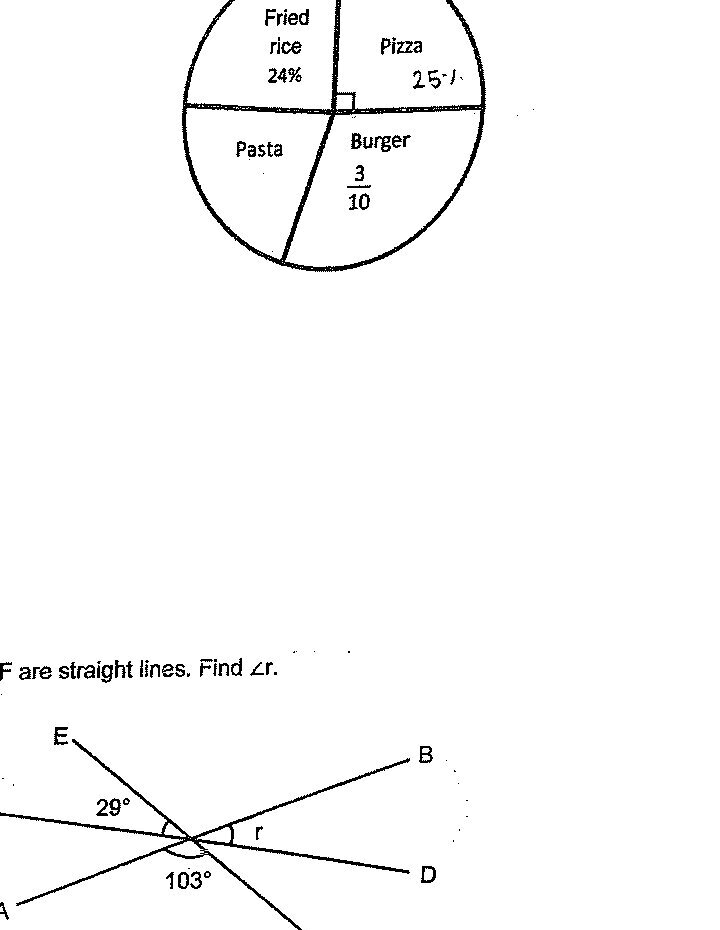
The pie chart below shows the favourite food of a group of children. What is the ratio of the number of children who like burger to the number of children who like pasta?
Alex and Ben started cycling at the same time from the start of a 6.12 km cycling path. Both did not change their speeds from the start to finish. Alex cycled at 340 m/min. When he reached the end of the path, Ben was 460 m behind him. Find Ben's speed in m/min.
A bookshop had 600 pens to sell over two weeks. In the first week, the ratio of the number of pens sold to the number of pens unsold was 1 : 2. In the second week, the ratio of the number of pens sold to the number of pens unsold was 5 : 3. How many pens did the bookshop sell in the second week?
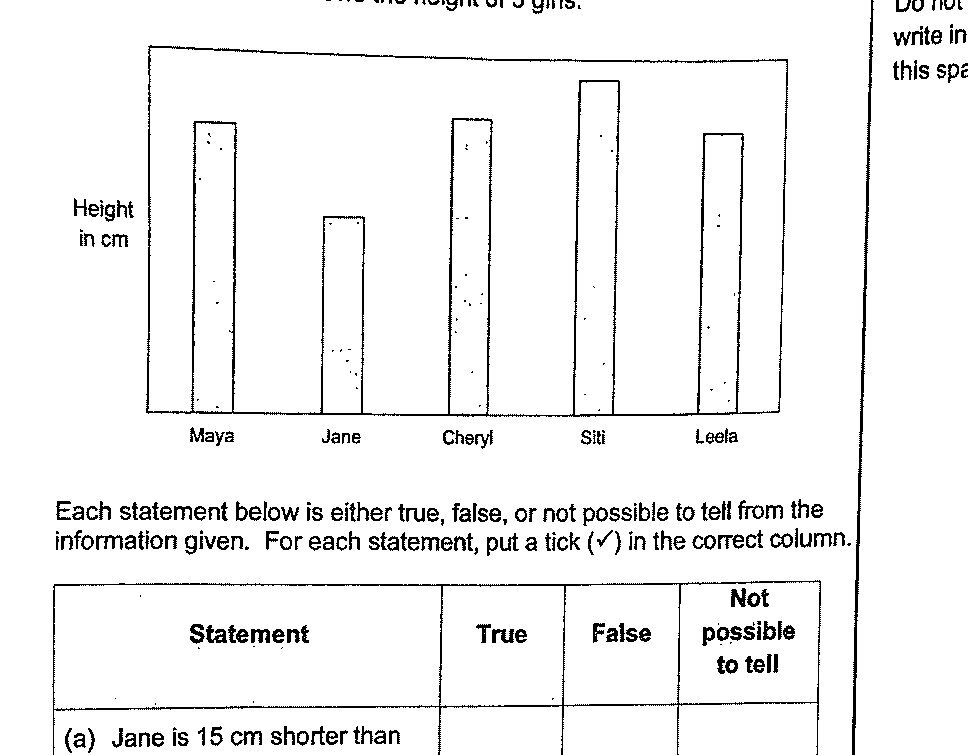
The ratio of Jane's height to Siti's height is 1 : 2.
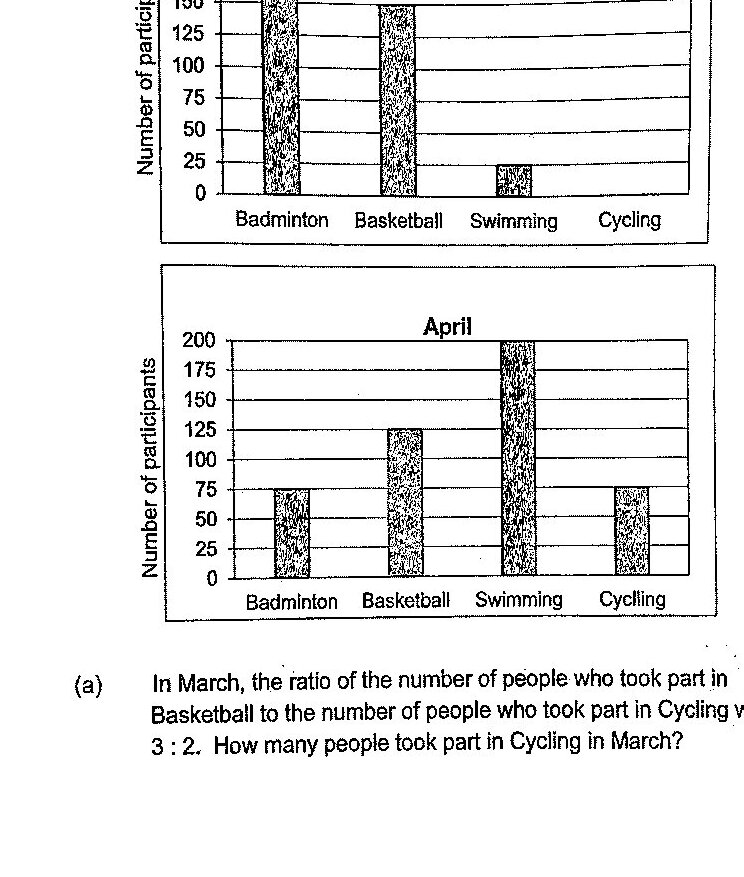
In March, the ratio of the number of people who took part in Basketball to the number of people who took part in Cycling was 3 : 2. How many people took part in Cycling in March?
Anne, Beth and Crystal bought a present for their friend. The ratio of the amount Anne paid to the total amount Beth and Crystal paid was 3 : 5. The ratio of the amount Crystal paid to the total amount Anne and Beth paid was 2 : 3. Crystal paid $21 more than Beth. Who paid the least for the present? How much did she pay for the present?
In a marathon, there are 40 Malay participants, 70 Chinese participants and 30 Indian participants. What is the ratio of the number of Malay participants to the total number of Chinese and Indian participants?
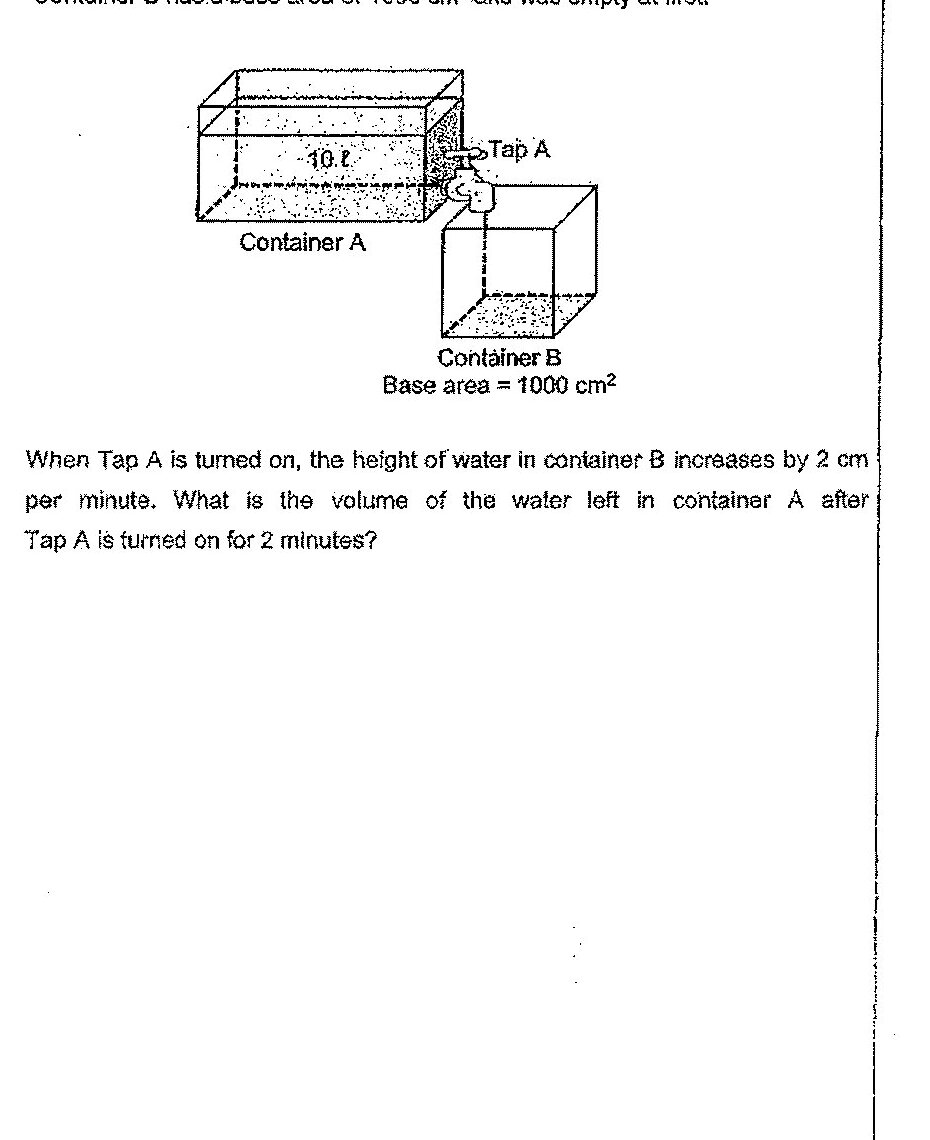
The ratio of the number of apples to the number of pears in a supermarket was 5 : 8. ¾ of the apples and 171 pears were rotten. The rotten apples and pears were thrown away. In the end, there was an equal number of apples and pears left. How many apples were there at first?
There are more red beads than green beads.
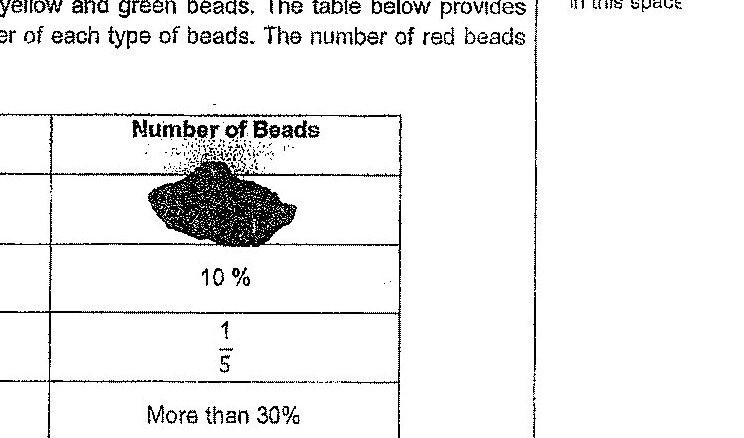
The participants of a run were divided equally into Group A and Group B. The ratio of the number of boys to the number of girls was 1 : 2 in Group A and 4 : 3 in Group B. A total of 345 girls took part in the run. How many more boys were there in Group B than in Group A?
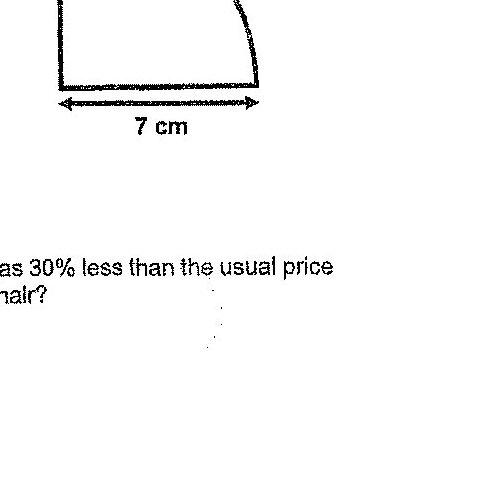
What was the ratio of the number of bowls sold to the number of bowls left in Mr Ahmad's shop? Express your answer in its simplest form.
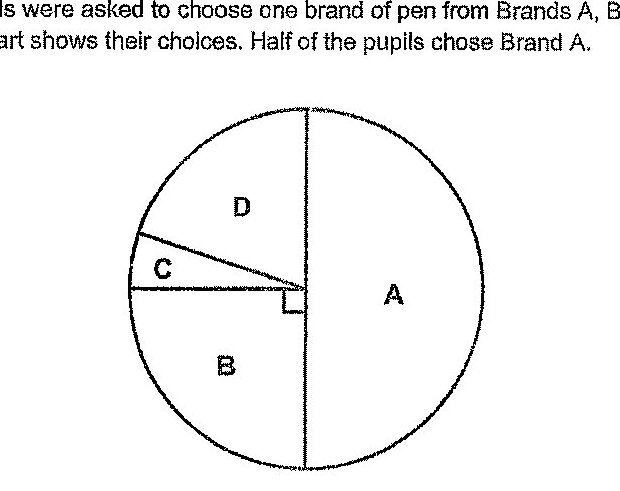
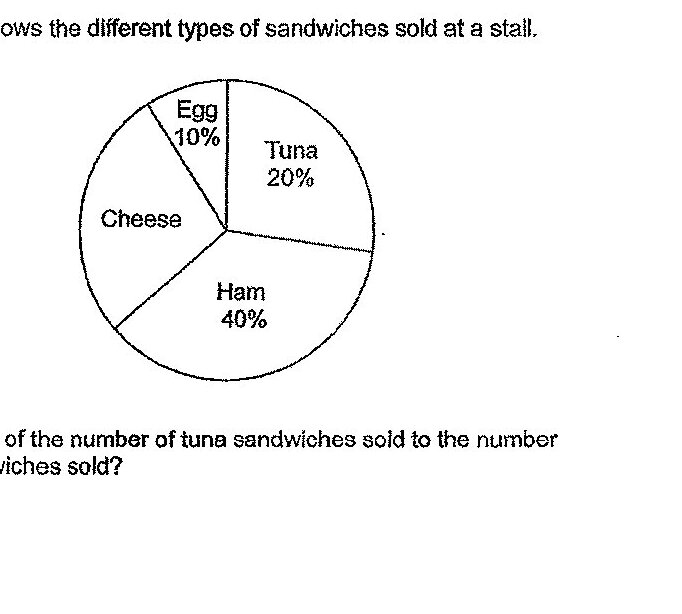
The pie chart shows the different types of sandwiches sold at a stall. What is the ratio of the number of tuna sandwiches sold to the number of cheese sandwiches sold?
Mrs Lee prepared some nuggets and chicken wings for a group of children. The ratio of the number of nuggets prepared to the number of chicken wings prepared was 8 : 3. Each child was given 5 nuggets and 2 chicken wings. There were 9 nuggets left when all the chicken wings were distributed. How many chicken wings did Mrs Lee prepare?
How many children were there in the group?
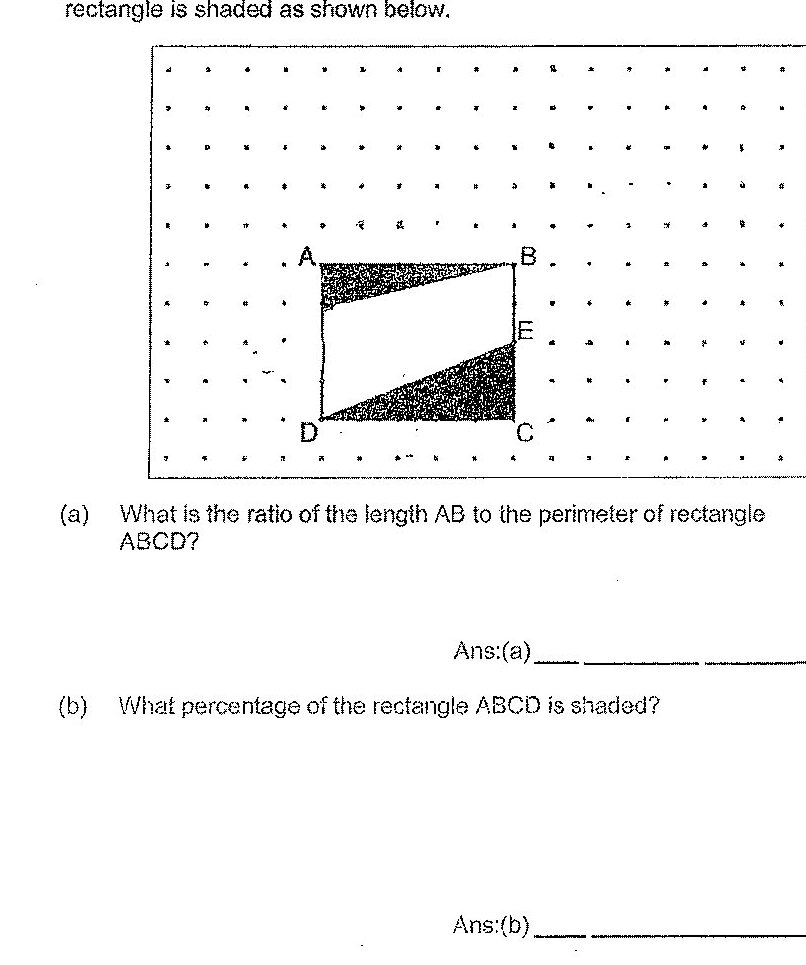
What is the ratio of the length AB to the perimeter of rectangle ABCD?
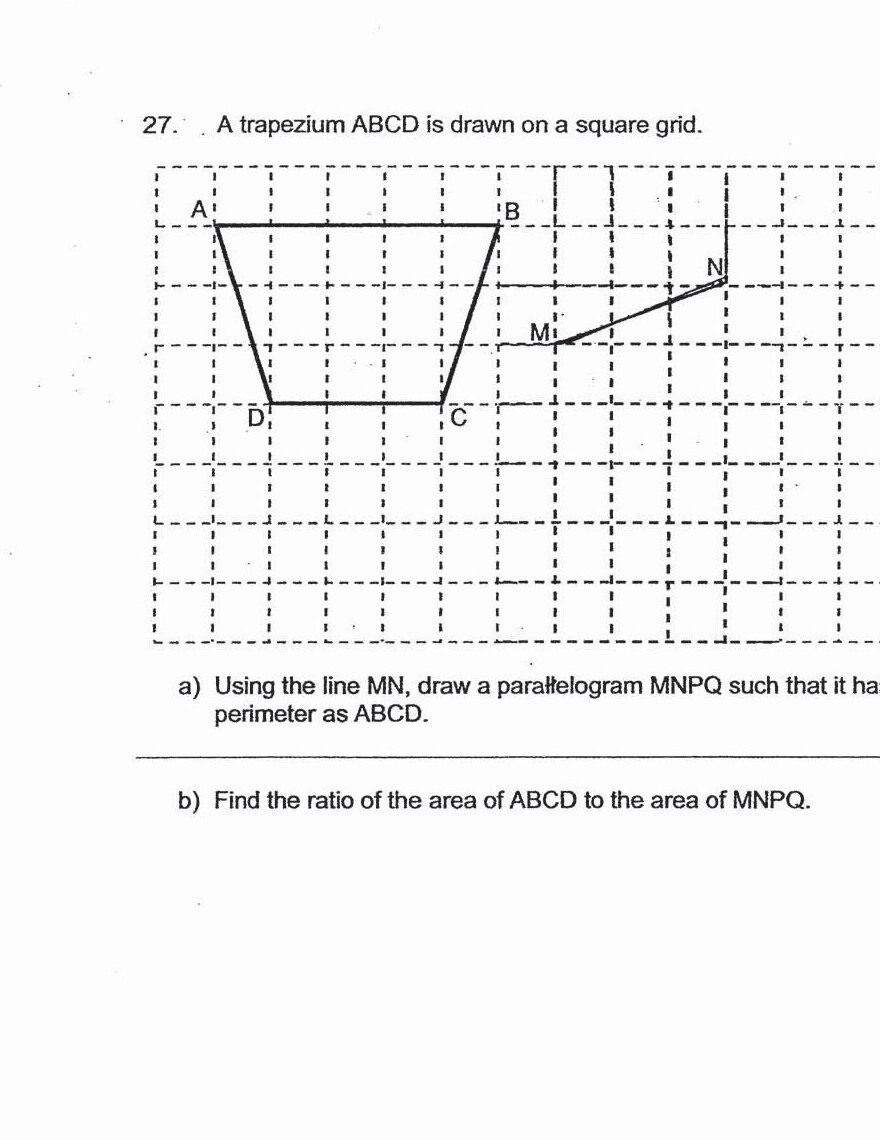
Find the ratio of the area of ABCD to the area of MNPQ.
A crate contains apples, oranges and pears. 1/5 of the fruits are pears. The ratio of the number of apples to oranges is 3 : 4. What is the ratio of the number of pears to the number of oranges?
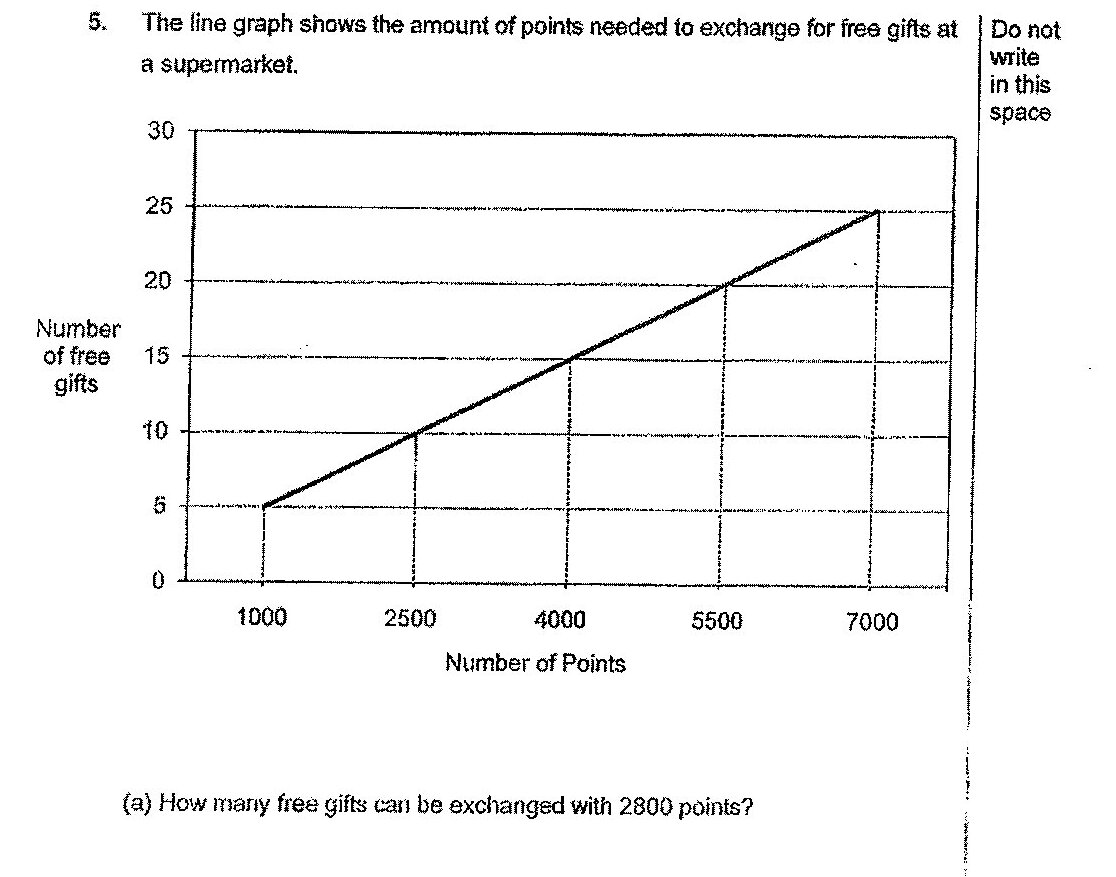
How many free gifts can be exchanged with 2800 points?
Past year papers cover the full exam — browse by subject below.