Heat Energy Transfer
Heat Energy Transfer - Comprehensive Study Notes
Key Concepts
What is Heat Energy?
- Heat energy is the energy that flows from a hotter object to a cooler object
- Heat always flows from regions of higher temperature to regions of lower temperature
- Temperature is a measure of how hot or cold an object is
- When heat flows into an object, its temperature increases
- When heat flows out of an object, its temperature decreases
Three Methods of Heat Transfer
Heat energy can be transferred in three different ways:
1. Conduction
- Heat transfer through solids by direct contact
- Energy passes from particle to particle through the material
- Does not require the particles to move from place to place
- The particles vibrate more vigorously and pass energy to neighbouring particles
- Works best in solids, particularly metals
2. Convection
- Heat transfer through liquids and gases (fluids)
- Involves the actual movement of the heated particles
- Hot fluid becomes less dense and rises
- Cool fluid becomes more dense and sinks
- Creates a convection current - a circular pattern of movement
3. Radiation
- Heat transfer through electromagnetic waves (infrared radiation)
- Does not require a medium (can travel through vacuum/space)
- All objects emit infrared radiation
- Hotter objects emit more radiation than cooler objects
- Can travel through empty space (this is how the Sun’s heat reaches Earth) — it does not need air to travel through
Conductors and Insulators
Good Conductors:
- Materials that allow heat to pass through them easily and quickly
- Metals are the best conductors (e.g., copper, aluminium, iron, silver)
- Metals have free electrons that can move and carry energy quickly
- Used when we want heat to transfer rapidly
Poor Conductors (Insulators):
- Materials that allow heat to pass through them slowly
- Examples: wood, plastic, cloth, paper, air, wool, rubber
- Do not have free electrons
- Used when we want to prevent or slow down heat transfer
- Air is an excellent insulator when trapped in small pockets
Thermal Equilibrium
- Thermal equilibrium occurs when two objects in contact reach the same temperature
- At thermal equilibrium, there is no net heat flow between the objects
- Heat continues to flow in both directions, but at equal rates
- Example: A hot cup of tea eventually reaches room temperature
Important Definitions
Heat energy: The form of energy that flows from a hotter region to a cooler region due to temperature difference.
Temperature: A measure of how hot or cold an object is; measured in degrees Celsius (°C).
Conduction: The transfer of heat energy through a solid material without the material itself moving, by passing energy from particle to particle.
Convection: The transfer of heat energy through a liquid or gas by the actual movement of the heated particles.
Convection current: The circular movement of fluid where hot fluid rises and cool fluid sinks.
Radiation: The transfer of heat energy by electromagnetic waves (infrared radiation) without requiring a medium.
Conductor: A material that allows heat to pass through it easily.
Insulator: A material that does not allow heat to pass through it easily; a poor conductor.
Thermal equilibrium: The state when two objects in contact have the same temperature and there is no net heat flow between them.
Infrared radiation: Electromagnetic waves that transfer heat energy; invisible to the human eye.
Free electrons: Electrons in metals that are not bound to specific atoms and can move freely to transfer energy.
Worked Examples
Example 1: Identifying Heat Transfer Methods
Question: State the method of heat transfer in each of these situations:
a) A metal spoon becomes hot when placed in a cup of hot tea b) Water in a kettle heats up when placed on a hot stove c) You feel warm when standing near a bonfire
Solution:
a) Conduction
- The metal spoon is a solid
- Heat passes through the metal from the hot end (in tea) to the cold end (handle)
- Energy is transferred from particle to particle through the metal
b) Convection
- Water is a liquid (fluid)
- Hot water at the bottom becomes less dense and rises
- Cooler water at the top sinks to replace it
- Convection currents form, heating all the water
c) Radiation
- You are not touching the fire (no conduction)
- You can feel heat through the air (radiation can travel through air)
- The fire emits infrared radiation that travels through space to your skin
Example 2: Explaining Design Features
Question: A cooking pot has a metal base but a plastic handle. Explain why these materials are chosen.
Solution:
Metal base:
- Metal is a good conductor of heat
- It allows heat from the stove to transfer quickly to the food
- This ensures efficient cooking
- The food heats up faster, saving time and energy
Plastic handle:
- Plastic is a poor conductor of heat (insulator)
- It prevents heat from being conducted from the hot pot to your hand
- This protects you from burns
- You can safely hold the pot while cooking
Key point: Different materials are chosen for different parts based on whether we want heat to transfer quickly (use conductor) or slowly (use insulator).
Example 3: Thermal Equilibrium
Question: A metal spoon at 25°C is placed in a cup of hot tea at 80°C. After 5 minutes, both the spoon and the tea are at 75°C.
a) What has happened to the tea’s temperature? b) What has happened to the spoon’s temperature? c) Explain what will happen next.
Solution:
a) The tea’s temperature has decreased
- It went from 80°C to 75°C
- The tea has lost heat energy
- Heat flowed from the hot tea to the cooler spoon
b) The spoon’s temperature has increased
- It went from 25°C to 75°C
- The spoon has gained heat energy
- Heat flowed from the hot tea into the spoon by conduction
c) What happens next:
- Both the tea and spoon will continue to cool down
- They will lose heat to the cooler surroundings (air, cup)
- Eventually, they will reach room temperature (e.g., 25°C)
- When the spoon and tea are both at 75°C, they are in thermal equilibrium with each other
- They are not yet in thermal equilibrium with the surroundings
- Heat will continue to flow from the warmer objects (tea and spoon) to the cooler surroundings until all reach the same temperature
Common Mistakes to Avoid
Mistake 1: Confusing Heat and Temperature
- ❌ Wrong: “Heat is measured in degrees Celsius”
- ✅ Correct: “Temperature is measured in degrees Celsius. Heat is energy that flows due to temperature difference”
Mistake 2: Saying Heat Can Transfer by Convection in Solids
- ❌ Wrong: “Heat travels through the metal by convection”
- ✅ Correct: “Heat travels through the metal by conduction. Convection only occurs in liquids and gases”
Mistake 3: Confusing the Direction of Heat Flow
- ❌ Wrong: “Cold travels from the ice to the drink”
- ✅ Correct: “Heat travels from the warmer drink to the colder ice”
- Remember: Cold is just the absence of heat. Only heat energy flows, always from hot to cold.
Mistake 4: Thinking Radiation Requires Air
- ❌ Wrong: “Radiation needs air to travel”
- ✅ Correct: “Radiation does not need any medium and can travel through vacuum”
- This is the only method that works in space!
Mistake 5: Not Explaining WHY a Material is Chosen
- ❌ Wrong: “The pot has a wooden handle because wood is an insulator”
- ✅ Correct: “The pot has a wooden handle because wood is an insulator. This prevents heat from being conducted from the hot pot to your hand, protecting you from burns”
- Always explain the consequence or benefit of the property
Mistake 6: Using “Heat Up” When Objects Are at Thermal Equilibrium
- ❌ Wrong: “When both objects are at the same temperature, they continue to heat up”
- ✅ Correct: “When both objects reach the same temperature (thermal equilibrium), there is no net heat flow between them”
Mistake 7: Incomplete Descriptions of Convection
- ❌ Wrong: “Hot water rises”
- ✅ Correct: “Hot water becomes less dense and rises. Cooler, denser water sinks to replace it, creating a convection current”
- Must mention: density change, rising AND sinking, convection current
Mistake 8: Forgetting That All Methods May Occur Together
- Real-life situations often involve more than one method
- Example: Heating a pot of water involves conduction (through pot), convection (in water), and some radiation (from flame)
Exam Tips
For Conduction Questions
Must include these keywords:
- “solid material”
- “particle to particle” or “from particle to neighbouring particle”
- “particles vibrate”
- “without the material itself moving”
Good answer structure: “Heat is conducted through the [material name]. The particles vibrate and pass energy to neighbouring particles through the solid material, without the particles themselves moving from place to place.”
For Convection Questions
Must include these keywords:
- “liquid” or “gas” or “fluid”
- “less dense” and “more dense”
- “rises” and “sinks”
- “convection current”
- “actual movement of particles”
Good answer structure: “The [fluid] near the heat source becomes hot and expands, becoming less dense. The less dense hot [fluid] rises. The cooler, denser [fluid] sinks to replace it. This creates a convection current.”
For Radiation Questions
Must include these keywords:
- “infrared radiation” or “electromagnetic waves”
- “no medium required” or “can travel through vacuum”
- “does not need particles”
Good answer structure: “Heat is transferred by infrared radiation (electromagnetic waves). This does not require a medium and can travel through vacuum/empty space.”
For Application Questions (Why is this material used?)
Answer in THREE parts:
- State the property: “[Material] is a good/poor conductor”
- Explain what happens: “It allows heat to transfer quickly/slowly…”
- State the benefit: “This prevents burns / cooks food faster / keeps things warm/cool, etc.”
For Thermal Equilibrium Questions
Mark-earning phrases:
- “Both objects reach the same temperature”
- “No net heat flow between them”
- “Heat still flows in both directions but at equal rates”
General Exam Tips
- Always specify which method when asked about heat transfer
- Use scientific terms (not “heat goes up” but “hot air/water rises because it is less dense”)
- Draw arrows on diagrams to show direction of heat flow or movement
- Give full explanations - don’t just name the process, explain HOW it works
- Look for the number of marks - a 3-mark question needs 3 separate points
- Use comparative language when comparing conductors: “Metal conducts heat faster/better than wood”
Quick Summary
Essential points for revision:
- ✓ Heat energy always flows from hot to cold, never the reverse
- ✓ Conduction = through solids, particle to particle, no particle movement, best in metals
- ✓ Convection = through liquids and gases, actual movement of particles, hot rises (less dense), cool sinks (more dense)
- ✓ Radiation = by infrared waves, no medium needed, can travel through vacuum
- ✓ Good conductors (mostly metals) transfer heat quickly; have free electrons
- ✓ Insulators (wood, plastic, air, cloth) transfer heat slowly; no free electrons
- ✓ Trapped air is an excellent insulator (used in blankets, winter clothing, double-glazed windows)
- ✓ Thermal equilibrium = two objects at same temperature, no net heat flow
- ✓ Applications: Choose conductors when you want fast heat transfer; choose insulators when you want to prevent heat transfer
- ✓ Real-life examples: Cooking pots (metal + plastic handle), winter clothing (trapped air), refrigerators (insulation), solar panels (absorb radiation)
- ✓ The Sun’s heat reaches Earth by radiation only (space is a vacuum)
- ✓ When explaining material choice, always state: property → what happens → benefit/consequence
Remember: Understanding WHY things happen is more important than memorizing facts. Always think about the particles and energy!
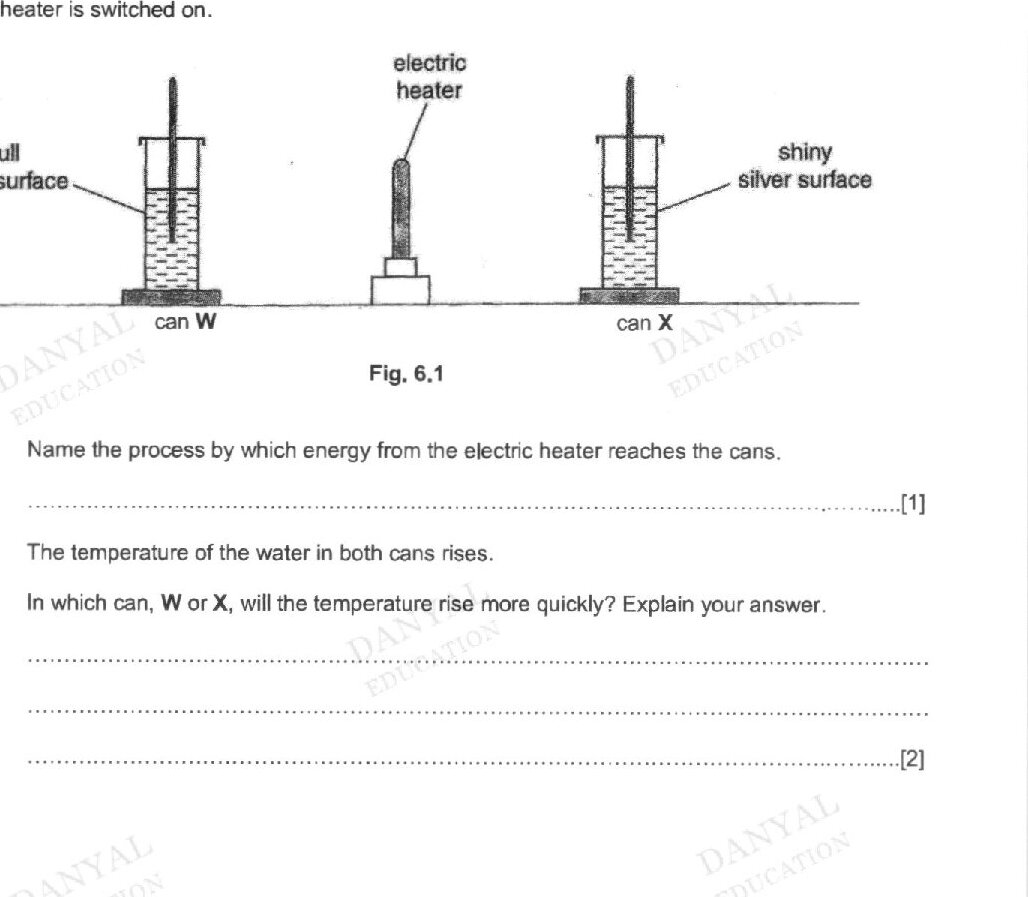
Name the process by which energy from the electric heater reaches the cans.
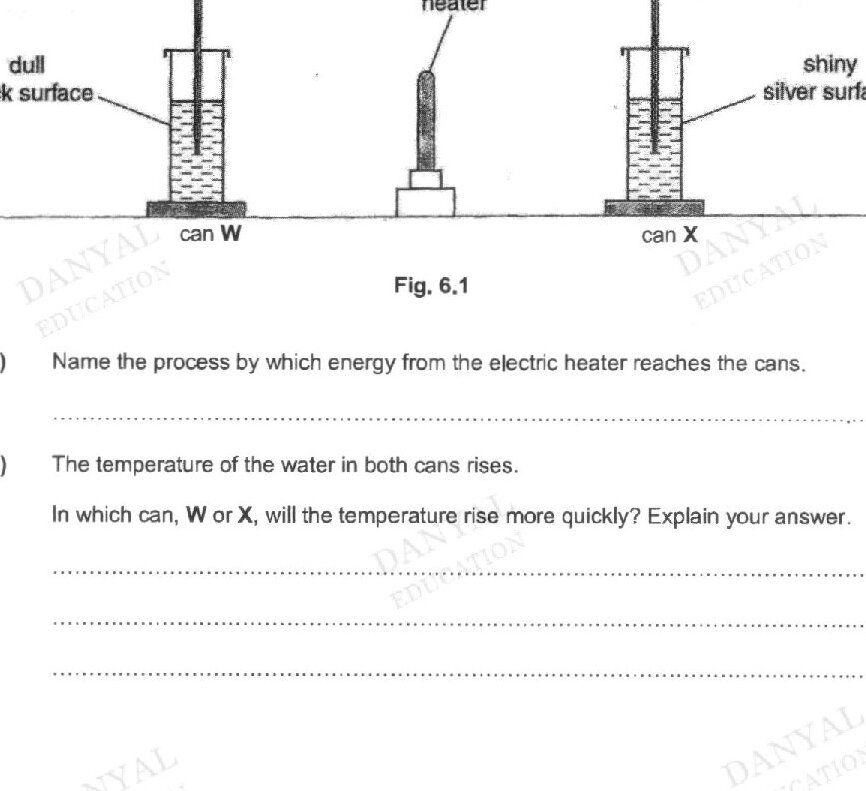
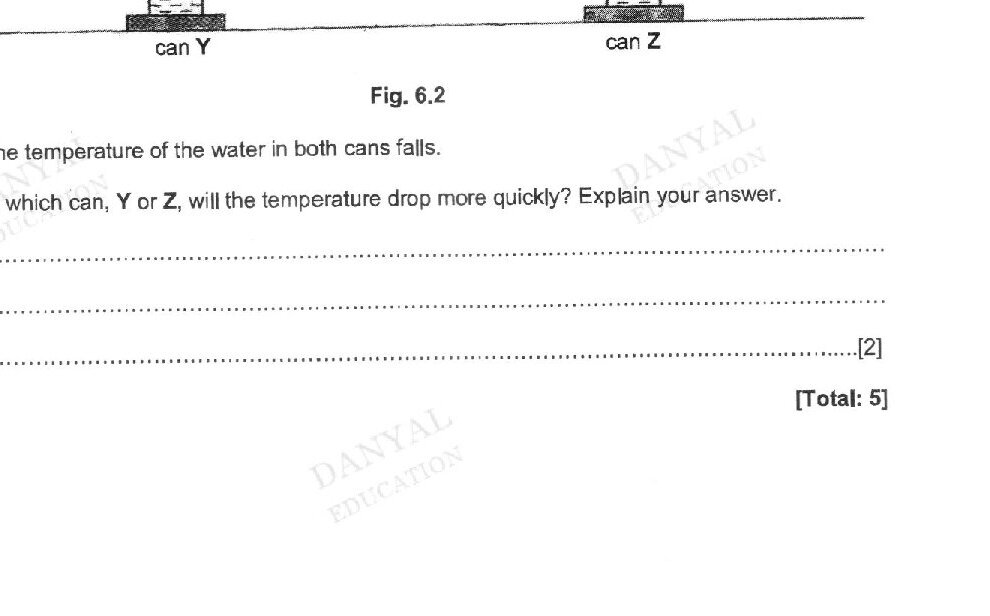
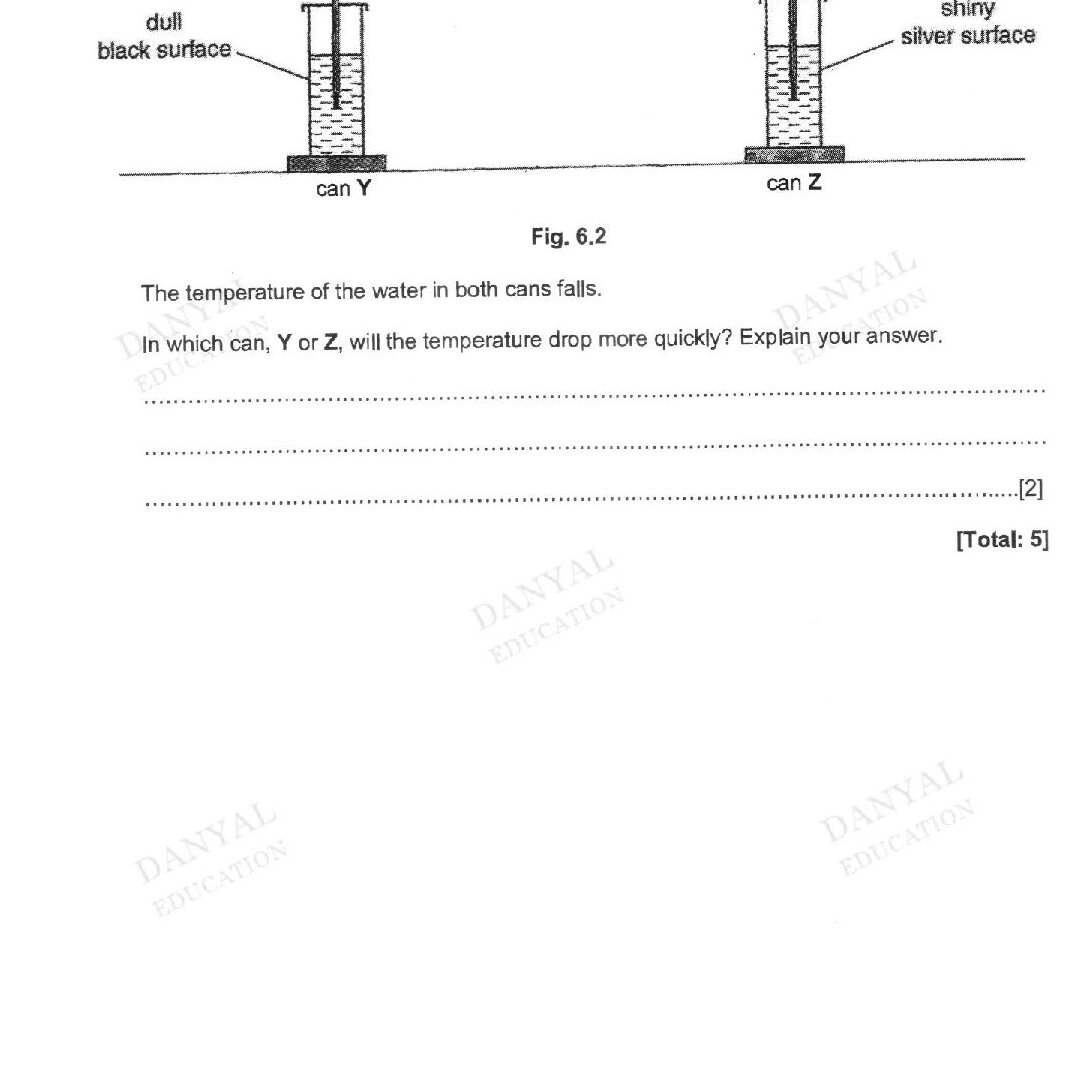
Fig. 6.2 shows two similar cans Y and Z. The cans are filled with the same volume of water at 80 °C. A lid, with a thermometer, is placed on each can. The temperature of the water in both cans falls. In which can, Y or Z, will the temperature drop more quickly? Explain your answer.
Explain your answer for (a).
Name the method heat is transferred throughout the water in the glass apparatus.
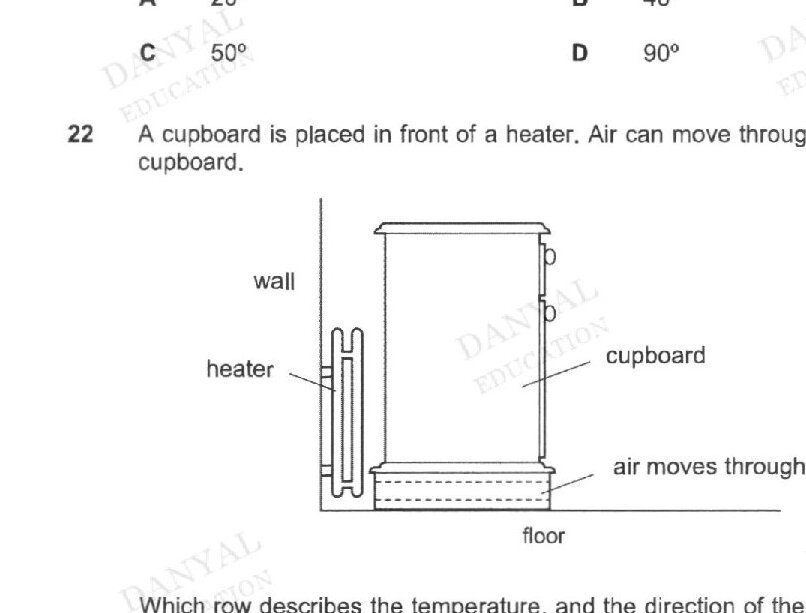
A cupboard is placed in front of a heater. Air can move through a gap under the cupboard. Which row describes the temperature, and the direction of the movement, of the air in the gap by convection?
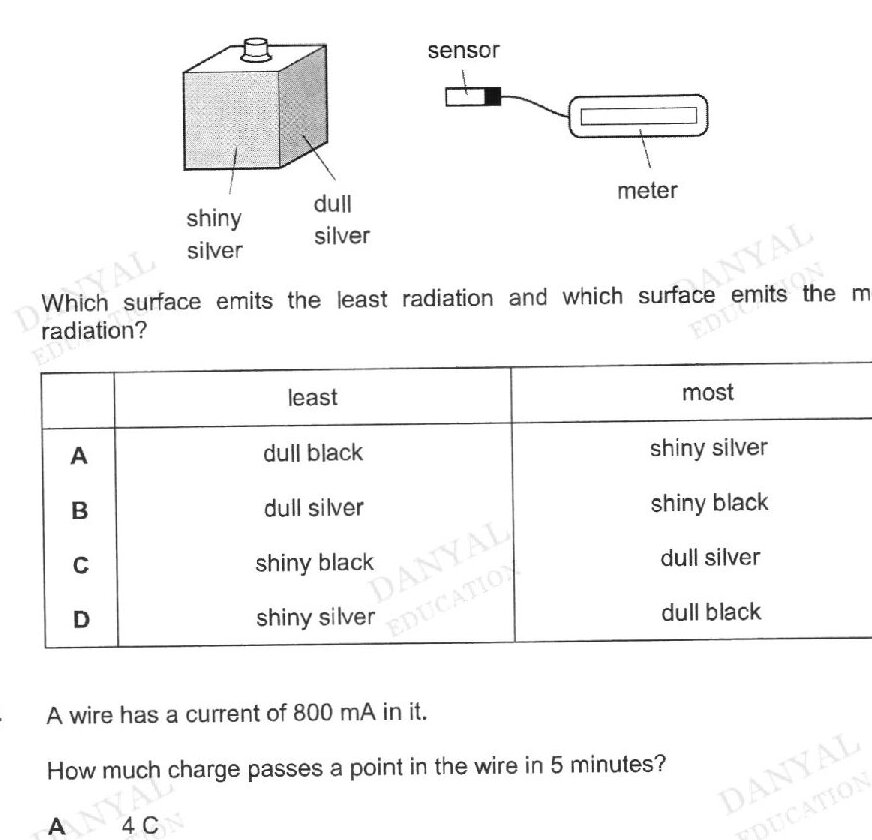
A metal box has four different surfaces: dull black, shiny black, dull silver and shiny silver. The box is filled with boiling water so that each surface is at the same temperature. A sensor measures the amount of radiation from each surface. The box is rotated such that the sensor will be facing the surface when a measurement is taken. Which surface emits the least radiation and which surface emits the most radiation?
Which part of the thermos flask reduces heat transfer by radiation?
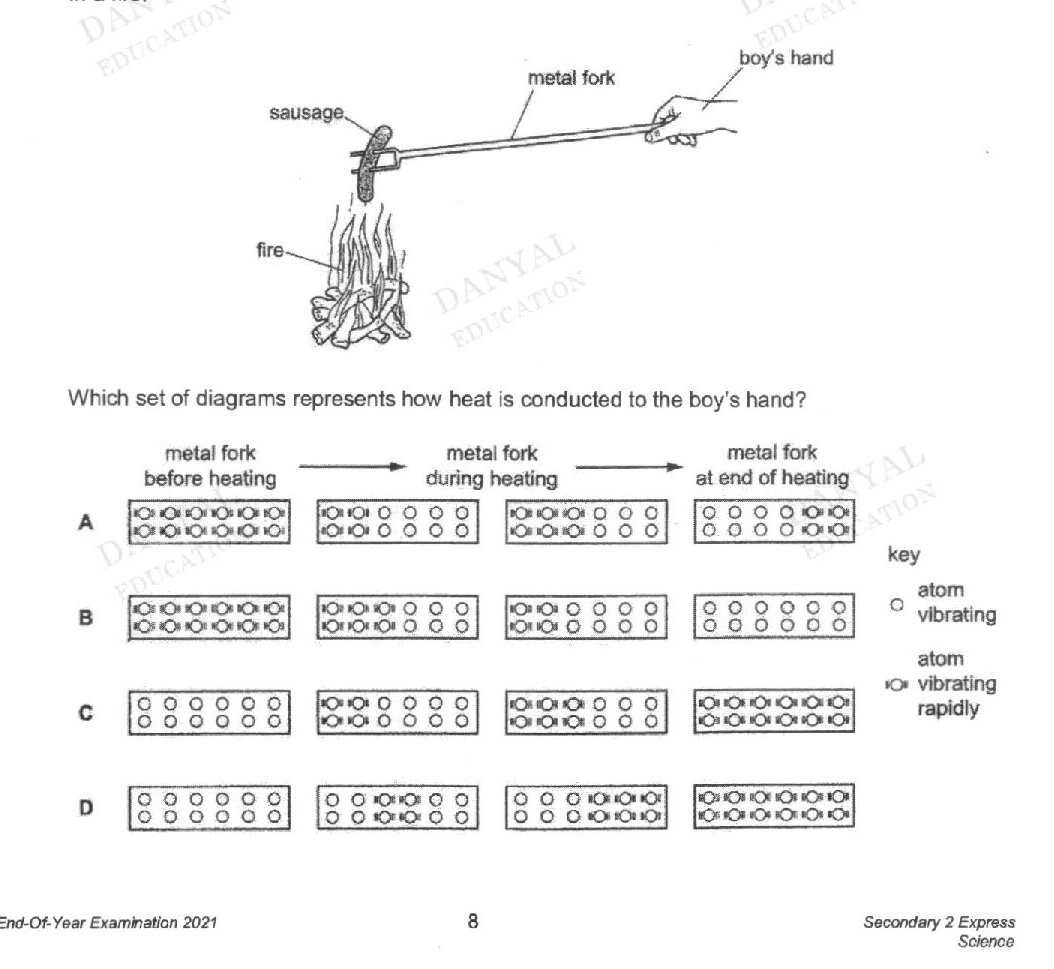
The diagram shows a boy cooking a sausage on a metal fork. He holds the sausage and the fork in a fire. Which set of diagrams represents how heat is conducted to the boy's hand?
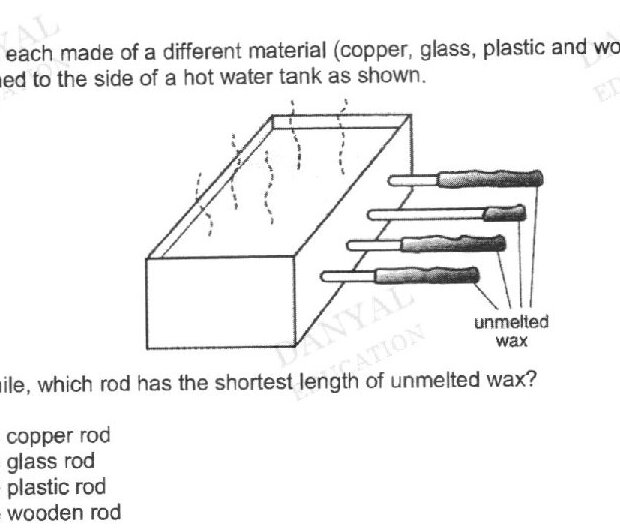
Four rods, each made of a different material (copper, glass, plastic and wood) are coated with wax and attached to the side of a hot water tank as shown. After a while, which rod has the shortest length of unmelted wax?
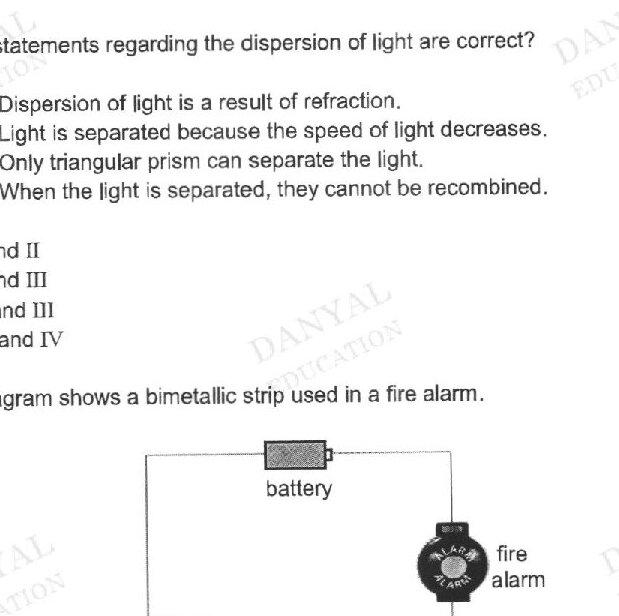
The diagram shows a bimetallic strip used in a fire alarm. Which situation will result in the ringing of the fire alarm bell in the event of a fire?
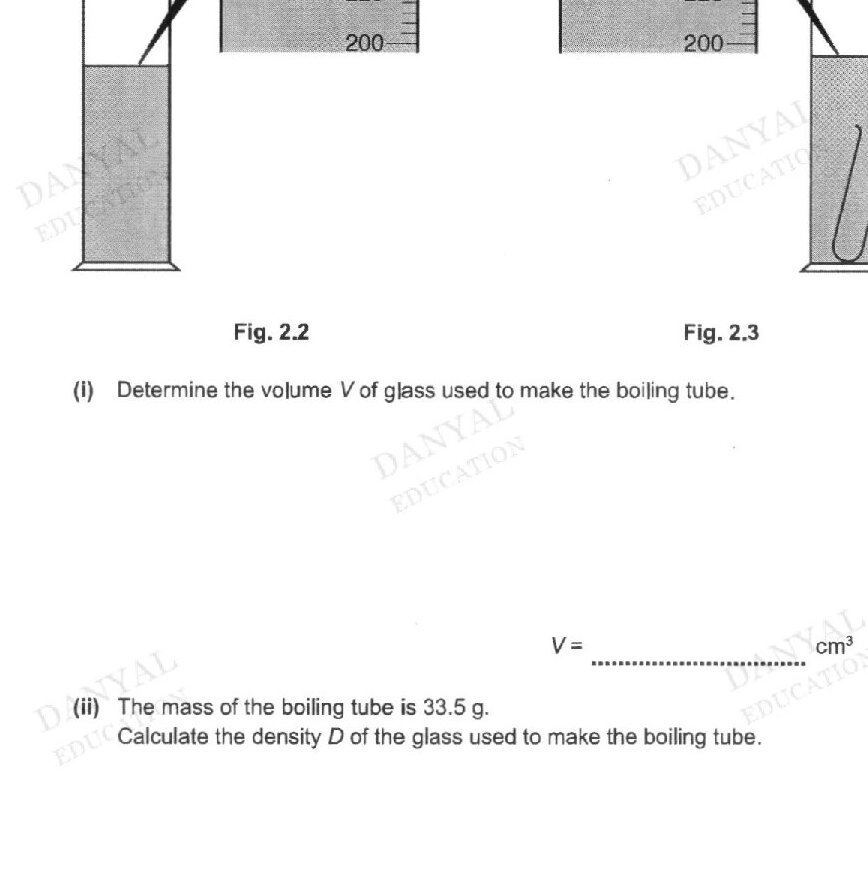
The mass of the boiling tube is 33.5 g. Calculate the density D of the glass used to make the boiling tube.
State which material, A, B, C or D, is the best thermal conductor. Explain your answer.
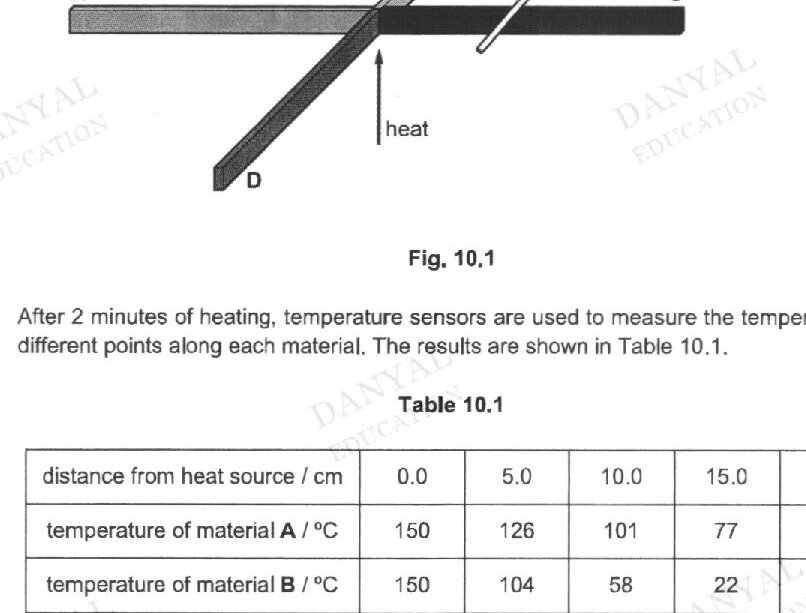
Fig. 9.2 is an electron micrograph showing a sperm cell trying to penetrate through the membrane of an egg cell. Describe what happens between the event shown in Fig. 9.2 and implantation in the uterus.
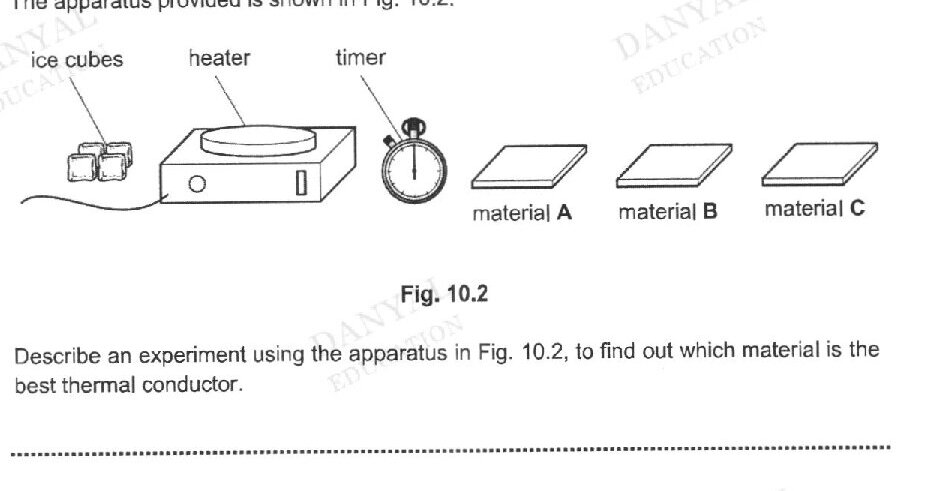
Describe an experiment using the apparatus in Fig. 10.2, to find out which material is the best thermal conductor.
When excess hydrochloric acid is added to potassium hydroxide, the solution changes from alkaline to acidic. Describe a test that could be carried out to show that the solution is acidic.
A cupboard is placed in front of a heater. Air can move through a gap under the cupboard. Which row describes the temperature, and the direction of the movement, of the air in the gap by convection?
Name the process how heat is transferred through the base of the metal pan.
On Fig. 7.1, draw the movement of water when it is heated.
The pan has a polished and silvery metallic surface. Explain how this feature minimises heat loss from the metal pan.
Name the process how heat is transferred through the base of the metal pan.
On Fig. 7.1, draw the movement of water when it is heated.
Explain the movement of water in (b)(i).
Suggest and explain a suitable material for the handle.
The pan has a polished and silvery metallic surface. Explain how this feature minimises heat loss from the metal pan.
Past year papers cover the full exam — browse by subject below.
View All Papers ›