Interactions within Ecosystems
Interactions within Ecosystems - Study Notes
Key Concepts
Food Webs and Energy Flow
- Energy enters ecosystems through sunlight, which is captured by producers (green plants) during photosynthesis
- Producers (also called autotrophs) convert light energy into chemical energy stored in glucose
- Consumers (also called heterotrophs) obtain energy by eating other organisms
- Energy flows in one direction through an ecosystem: from sun → producers → consumers
- Energy is lost at each level as:
- Heat energy during respiration
- Movement and other life processes
- Undigested material in faeces
- Only about 10% of energy is transferred from one trophic level to the next
- Food chains show a single pathway of energy transfer (e.g., grass → grasshopper → frog → snake)
- Food webs show multiple interconnected food chains in an ecosystem, giving a more realistic picture
- Food webs show:
- What organisms eat
- Feeding relationships between species
- How energy flows through the community
- How organisms depend on each other
Trophic Levels
- Trophic level = the position an organism occupies in a food chain
- First trophic level: Producers (plants, algae)
- Make their own food through photosynthesis
- Convert light energy to chemical energy
- Second trophic level: Primary consumers (herbivores)
- Feed directly on producers
- Examples: caterpillars, rabbits, cattle, deer
- Third trophic level: Secondary consumers (carnivores)
- Feed on primary consumers
- Examples: frogs, small birds, small fish
- Fourth trophic level: Tertiary consumers (carnivores)
- Feed on secondary consumers
- Often apex predators with no natural predators
- Examples: eagles, sharks, lions
- Pyramid of numbers: shows the number of organisms at each trophic level
- Pyramid of energy: shows the amount of energy at each trophic level (always pyramid-shaped)
- Pyramid of biomass: shows the total mass of living organisms at each trophic level
Decomposers and Nutrient Cycling
- Decomposers break down dead organisms and waste materials
- Main decomposers include:
- Bacteria (microscopic organisms)
- Fungi (including moulds and mushrooms)
- Functions of decomposers:
- Break down complex organic compounds into simpler substances
- Release nutrients back into the soil
- Recycle minerals like nitrogen, phosphorus, and carbon
- Prevent build-up of dead matter
- Nutrient cycling is the continuous movement of nutrients through ecosystems:
- Nutrients are absorbed by producers from soil/water
- Nutrients pass to consumers through feeding
- Nutrients return to environment through death and waste
- Decomposers break down materials and release nutrients
- Nutrients become available again for producers
- Without decomposers:
- Nutrients would be locked in dead organisms
- Soil would become depleted
- Producers could not grow
- Ecosystems would collapse
Symbiosis — Mutualism, Commensalism, Parasitism
- Symbiosis = a close relationship between two different species living together
- Three main types of symbiotic relationships:
1. Mutualism (+/+)
- Both species benefit from the relationship
- Examples:
- Nitrogen-fixing bacteria in root nodules: Bacteria get food and shelter from legume plants; plants get nitrogen compounds for protein synthesis
- Bees and flowers: Bees get nectar for food; flowers get pollinated for reproduction
- Oxpecker birds and cattle: Birds get food (ticks and parasites); cattle get cleaned and pest control
- Clownfish and sea anemones: Fish get protection from predators; anemones get cleaned and food scraps
2. Commensalism (+/0)
- One species benefits, the other is neither helped nor harmed
- Examples:
- Remora fish and sharks: Remoras attach to sharks for transportation and food scraps; sharks are unaffected
- Orchids growing on tree branches: Orchids get support and sunlight; trees are unaffected
- Birds nesting in trees: Birds get shelter; trees are unaffected
3. Parasitism (+/−)
- One species (parasite) benefits, the other species (host) is harmed
- Parasite gets nutrients/shelter from the host
- Host loses nutrients, may become weak or sick
- Parasites usually don’t kill the host immediately (host keeps parasite alive)
- Examples:
- Tapeworms in human intestines: Tapeworm gets digested food; human loses nutrients and may suffer malnutrition
- Head lice on humans: Lice feed on blood; humans experience itching and discomfort
- Mistletoe on trees: Mistletoe gets water and minerals; tree loses nutrients
- Plasmodium (malaria parasite) in mosquitoes and humans: Parasite reproduces; humans suffer fever and illness
Human Impact on Ecosystems
Negative Impacts
1. Deforestation
- Clearing forests for agriculture, development, or logging
- Effects:
- Loss of habitats → species extinction
- Disruption of food webs
- Soil erosion (no tree roots to hold soil)
- Reduced oxygen production
- Increased carbon dioxide (fewer trees to absorb CO₂)
- Climate change contribution
2. Pollution
- Water pollution: Industrial waste, sewage, oil spills, pesticides
- Kills aquatic organisms
- Disrupts food chains
- Eutrophication (excess nutrients cause algae blooms, oxygen depletion)
- Air pollution: Burning fossil fuels, vehicle emissions, factory smoke
- Acid rain damages plants and aquatic ecosystems
- Haze affects photosynthesis
- Respiratory problems in animals
- Plastic pollution: Non-biodegradable waste
- Animals ingest or get entangled in plastic
- Microplastics enter food chains
3. Overfishing and Hunting
- Excessive removal of species faster than they can reproduce
- Effects:
- Population decline or extinction
- Disrupted food webs
- Loss of biodiversity
4. Introduction of Invasive Species
- Non-native species introduced to new ecosystems
- Effects:
- Compete with native species for resources
- Prey on native species
- Introduce diseases
- Disrupt existing food webs
Positive Conservation Efforts
1. Reforestation
- Planting trees to replace those cut down
- Restores habitats and prevents soil erosion
2. Establishing Protected Areas
- Nature reserves, national parks, marine protected areas
- Preserves biodiversity and habitats
3. Sustainable Practices
- Sustainable fishing (size limits, quotas, seasonal restrictions)
- Sustainable agriculture (crop rotation, organic farming)
- Reduces environmental damage while meeting human needs
4. Recycling and Waste Management
- Reduces pollution and conserves resources
- Proper disposal of hazardous waste
5. Legislation and International Agreements
- Laws protecting endangered species
- Regulations controlling pollution
- International cooperation on climate change
Important Definitions
Producer: An organism that makes its own food through photosynthesis, converting light energy into chemical energy (e.g., green plants, algae)
Consumer: An organism that obtains energy by feeding on other organisms
Herbivore: A primary consumer that feeds only on plants
Carnivore: A consumer that feeds on other animals (can be secondary, tertiary, or higher level consumers)
Omnivore: A consumer that feeds on both plants and animals
Decomposer: An organism that breaks down dead organisms and waste materials, recycling nutrients back into the ecosystem (e.g., bacteria, fungi)
Food Chain: A diagram showing the transfer of energy from one organism to another in a single pathway
Food Web: A diagram showing multiple interconnected food chains in an ecosystem, illustrating all feeding relationships
Trophic Level: The position an organism occupies in a food chain, representing its feeding level
Pyramid of Numbers: A diagram showing the number of organisms at each trophic level in an ecosystem
Pyramid of Energy: A diagram showing the amount of energy available at each trophic level (always decreases upwards)
Pyramid of Biomass: A diagram showing the total mass of living organisms at each trophic level
Symbiosis: A close, long-term relationship between two different species living together
Mutualism: A symbiotic relationship where both species benefit (+/+)
Commensalism: A symbiotic relationship where one species benefits and the other is unaffected (+/0)
Parasitism: A symbiotic relationship where one species (parasite) benefits at the expense of the other (host) (+/−)
Parasite: An organism that lives in or on another organism (host), obtaining nutrients from it and causing harm
Host: An organism that harbours a parasite, providing it with nutrients or shelter
Biodiversity: The variety of different species living in an ecosystem
Deforestation: The large-scale removal of trees from forested areas
Conservation: The protection and careful management of natural resources and ecosystems
Worked Examples
Example 1: Analyzing Energy Transfer in a Food Chain
Question: In a food chain, the producer contains 50,000 kJ of energy. Calculate how much energy is available at each subsequent trophic level if 10% of energy is transferred at each stage.
Step-by-step solution:
-
Identify the starting energy:
- Producers: 50,000 kJ
-
Calculate energy at primary consumer level:
- Only 10% is transferred
- Energy = 50,000 kJ × 10% = 50,000 kJ × 0.1
- Primary consumers: 5,000 kJ
-
Calculate energy at secondary consumer level:
- 10% of primary consumer energy
- Energy = 5,000 kJ × 0.1
- Secondary consumers: 500 kJ
-
Calculate energy at tertiary consumer level:
- 10% of secondary consumer energy
- Energy = 500 kJ × 0.1
- Tertiary consumers: 50 kJ
Summary:
- Producers: 50,000 kJ
- Primary consumers: 5,000 kJ
- Secondary consumers: 500 kJ
- Tertiary consumers: 50 kJ
Explanation of energy loss: 90% of energy is lost at each level through:
- Heat from respiration
- Movement and life processes
- Undigested material
- Not all organisms are consumed
Example 2: Predicting Effects of Removing an Organism from a Food Web
Scenario: Consider this food web:
- Grass → Rabbit → Fox
- Grass → Grasshopper → Frog → Snake
- Grasshopper → Bird → Snake
Question: Predict what would happen if all the frogs were removed from this ecosystem.
Step-by-step analysis:
-
Identify what frogs eat:
- Frogs eat grasshoppers
- Effect: Grasshopper population will increase (fewer predators eating them)
-
Identify what eats frogs:
- Snakes eat frogs
- Effect: Snake population will decrease (less food available)
- Note: Snakes also eat birds, so they won’t disappear completely, but will decline
-
Follow the knock-on effects:
Effect on grasshoppers:
- More grasshoppers survive
- They will eat more grass
- Grass population may decrease
Effect on birds:
- More grasshoppers available as food
- Bird population may increase
- But more snakes may eat birds (compensating for lost frogs)
- Overall effect is uncertain
-
Long-term effects:
- If grasshopper population increases too much, grass may be overconsumed
- This could then lead to grasshopper population decline (not enough food)
- Ecosystem becomes unbalanced
Conclusion: Removing one organism creates a chain reaction throughout the food web, affecting multiple species and potentially destabilizing the entire ecosystem.
Example 3: Identifying Types of Symbiotic Relationships
Question: Classify each relationship as mutualism, commensalism, or parasitism, and explain why.
a) Cleaner fish and large fish:
- Cleaner fish eat parasites off large fish
- Answer: Mutualism (+/+)
- Explanation: Cleaner fish gets food (parasites); Large fish gets cleaned and healthier
b) Barnacles on whales:
- Barnacles attach to whale skin for transportation and access to plankton-rich waters
- Whales are unaffected
- Answer: Commensalism (+/0)
- Explanation: Barnacles benefit from transportation and feeding opportunities; Whales are neither helped nor harmed
c) Ticks on dogs:
- Ticks feed on dog’s blood
- Dogs may develop anemia, skin irritation, diseases
- Answer: Parasitism (+/−)
- Explanation: Ticks benefit by getting blood for nutrition; Dogs are harmed by blood loss and potential disease
d) Fungi and algae in lichen:
- Fungi provide structure and water retention
- Algae perform photosynthesis to produce food
- Both share nutrients
- Answer: Mutualism (+/+)
- Explanation: Fungi gets food from algae; Algae gets water, minerals, and protection from fungi
Common Mistakes to Avoid
-
Drawing arrows in the wrong direction in food chains
- ❌ Wrong: Grass ← Rabbit ← Fox
- ✓ Correct: Grass → Rabbit → Fox
- Remember: Arrow shows direction of energy flow (points to the organism receiving the energy)
-
Confusing the terms ‘eaten by’ and ‘eats’
- The arrow means “is eaten by” or “provides energy for”
- Grass → Rabbit means “Grass is eaten by rabbit”
-
Thinking all pyramids of numbers are pyramid-shaped
- Pyramids of energy are ALWAYS pyramid-shaped
- Pyramids of numbers can sometimes be inverted (e.g., one tree supporting many insects)
- Don’t confuse the two!
-
Forgetting that decomposers are essential to food webs
- Decomposers should be included when drawing complete ecosystem diagrams
- They operate at ALL trophic levels, breaking down dead organisms and waste
-
Misidentifying trophic levels
- Producers are ALWAYS first trophic level (never call them consumers)
- Herbivores are ALWAYS primary consumers (even if they’re large animals)
- Carnivores can be secondary, tertiary, or higher (depends on what they eat)
- Omnivores can occupy multiple trophic levels
-
Confusing the three types of symbiosis
- Remember: Mutualism = both benefit (MUtual benefit)
- Commensalism = one benefits, one unaffected (think “common” = neutral)
- Parasitism = one benefits, one harmed (Parasite harms host)
-
Stating that energy is recycled in ecosystems
- ❌ Wrong: “Energy is recycled”
- ✓ Correct: “Energy flows in ONE direction and is lost as heat”
- Only NUTRIENTS/MATERIALS are recycled, not energy
-
Forgetting to explain WHY energy decreases at each trophic level
- Don’t just state “energy is lost”
- Explain: lost as heat during respiration, movement, undigested material, not all organisms consumed
-
Thinking parasites kill their hosts immediately
- Parasites usually keep hosts alive (dead host = dead parasite)
- They weaken hosts over time but rarely cause immediate death
-
Providing vague answers about human impact
- ❌ Weak answer: “Pollution is bad for animals”
- ✓ Strong answer: “Water pollution kills aquatic organisms and disrupts food chains by removing key species, causing populations of their prey to increase and their predators to decrease”
Exam Tips
Keywords to Use for Food Chains/Webs and Energy Flow:
- “Energy flows from… to…”
- “Energy is transferred when…”
- “Energy is lost as heat during respiration”
- “Energy is lost through movement and life processes”
- “Approximately 10% of energy is transferred to the next trophic level”
- “90% of energy is lost at each level”
- “Not all parts of organisms are consumed”
- “Energy cannot be recycled” (but nutrients can)
Keywords for Trophic Levels:
- “Producer/First trophic level”
- “Primary consumer/Herbivore/Second trophic level”
- “Secondary consumer/Carnivore/Third trophic level”
- “Tertiary consumer/Top predator/Fourth trophic level”
- Always specify the trophic level number when asked
Keywords for Decomposers:
- “Break down dead organisms and waste materials”
- “Release nutrients back into the soil/environment”
- “Recycle nutrients such as nitrogen, phosphorus, carbon”
- “Essential for nutrient cycling”
- “Include bacteria and fungi”
Keywords for Symbiosis:
- Always state BOTH organisms and how EACH is affected
- Mutualism: “Both species benefit because…”
- Commensalism: “Species A benefits while Species B is unaffected because…”
- Parasitism: “The parasite benefits while the host is harmed because…”
- Provide specific examples of the benefit/harm
Keywords for Human Impact:
- “Deforestation leads to habitat loss and species extinction”
- “Disruption of food webs when species are removed”
- “Loss of biodiversity reduces ecosystem stability”
- “Pollution affects organisms by…” (be specific)
- “Conservation efforts such as…” (name specific methods)
- “Sustainable practices ensure…” (explain long-term benefits)
For Data Analysis Questions:
- Identify trends clearly: “increases,” “decreases,” “remains constant”
- Compare specific numbers from tables/graphs
- Link changes to ecological concepts (population effects, energy transfer)
- Explain cause-and-effect relationships
For “Predict” Questions:
- State the immediate effect on the population mentioned
- Follow the knock-on effects through the food web
- Consider BOTH what the organism eats AND what eats it
- Mention at least 2-3 different populations affected
- Use terms like “increase,” “decrease,” or “remains stable”
Answer Structure for Long Questions:
- State the concept/definition
- Explain the mechanism/process
- Provide a specific example
- Link to the ecosystem/broader context
Drawing Diagrams:
- Use a ruler for arrows
- Label ALL organisms clearly
- Ensure arrows point in correct direction
- Include a key if necessary
- For food webs, show at least 3 interconnected chains
Quick Summary
Essential points to remember for exams:
✓ Energy flow: Energy flows one direction (sun → producers → consumers), cannot be recycled, ~10% transferred between levels, 90% lost as heat/movement/waste
✓ Food chains vs food webs: Chains show single pathways; webs show interconnected multiple chains and are more realistic
✓ Trophic levels: Producers (1st) → Primary consumers/herbivores (2nd) → Secondary consumers/carnivores (3rd) → Tertiary consumers (4th)
✓ Pyramids: Energy pyramids always pyramid-shaped; number pyramids can be inverted; show decreasing energy/biomass upwards
✓ Decomposers: Bacteria and fungi break down dead material, recycle nutrients (N, P, C) back to soil, essential for ecosystem functioning
✓ Nutrient cycling: Nutrients recycled continuously through absorption → feeding → death/waste → decomposition → back to soil (circular process)
✓ Mutualism: Both species benefit (+/+) – e.g., bees and flowers, nitrogen-fixing bacteria and legumes
✓ Commensalism: One benefits, one unaffected (+/0) – e.g., orchids on trees, barnacles on whales
✓ Parasitism: Parasite benefits, host harmed (+/−) – e.g., tapeworms in humans, ticks on dogs, parasites don’t immediately kill hosts
✓ Human negative impacts: Deforestation (habitat loss), pollution (kills organisms), overfishing/hunting (population decline), invasive species (competition/predation)
✓ Conservation efforts: Reforestation, protected areas, sustainable practices, recycling, legislation to protect species and reduce pollution
✓ Predicting ecosystem changes: Removing an organism affects its predators (decrease), prey (increase), and cascades through the entire food web creating chain reactions
Remember: Ecosystems are interconnected systems where every organism plays a role. Changes to one part affect the whole system. Always consider multiple effects when analyzing ecosystem interactions!
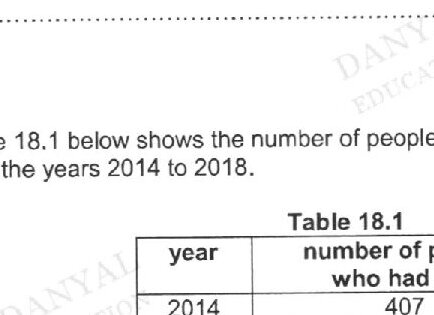
Describe and explain the change in the number of people who had HIV in the country from the years 2014 – 2018.
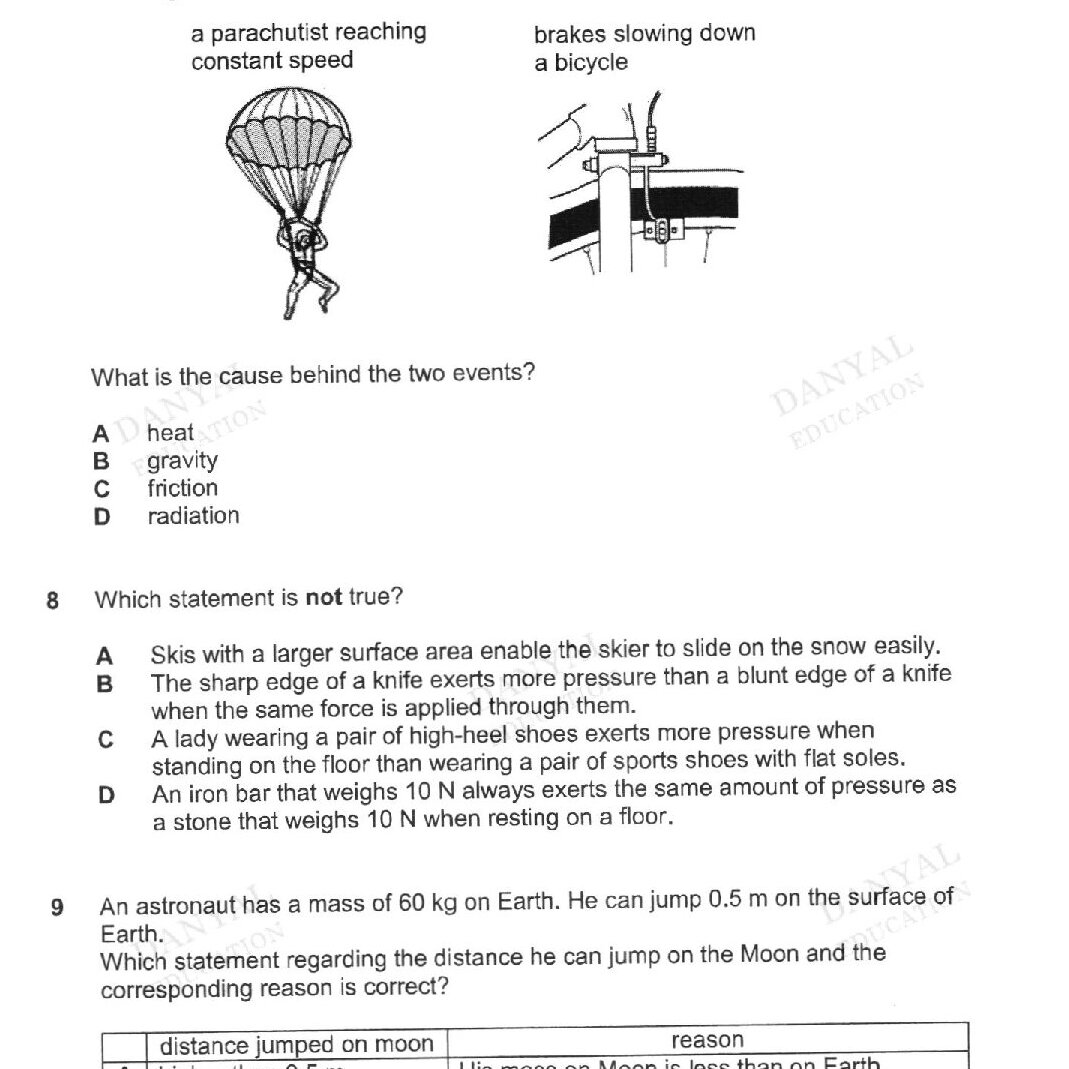
The diagram below shows two different events. What is the cause behind the two events?
Past year papers cover the full exam — browse by subject below.
View All Papers ›